
Ingredients
Tofu
- 600 gfirm tofu
- oil, for shallow frying
- salt
Rice
- 400 gshort grain rice, cooked
- 1 teaspoonsesame oil
- 1/2 teaspoonsalt
- 1 tablespoontoasted sesame seeds
Sauce
- 3 tablespoonsgochujang, chilli paste
- or 2 tablespoons chilli powder and 1 tablespoon miso
- 2 tablespoonssoy sauce
- 1 tablespoonsugar
- 1 tablespoonsesame oil
- 3garlic cloves, crushed
- 2 tablespoonswater
- 1spring onion, finely sliced
To serve
- extra sauce, for dipping
- sliced spring onion
Directions
- Press the tofu before you start. Wrap the block in a clean cloth. Set a plate and a weight on top of it. Leave it for at least thirty minutes. Wet tofu spits violently in hot oil. Cut the pressed tofu into thick rectangles. Aim for pieces about five centimetres long.
- Make them about two centimetres thick. They must be thick enough to hollow out. Heat oil in a wide pan to a shallow depth. It should come about half a centimetre up.
- Heat it until a scrap of tofu sizzles at once. Lay the pieces in without crowding the pan. Fry them for about four minutes a side. Every surface should be golden and firm.
- Lift them onto kitchen paper to drain. Let them cool enough to handle. Cut a slit along one long side of each piece. Cut deep but not all the way through. Do not tear through the outer skin. Use cooked short grain rice, still warm. Cold rice packs badly and tastes dull.
- Season it with sesame oil and salt. Stir in the toasted sesame seeds. Mix it through gently with a spatula. Do not mash the grains at all. Mix the gochujang with the soy sauce. Add the sugar and the sesame oil. Add all of the crushed garlic. Thin it down with the measured water.
- Stir in the sliced spring onion. It should be thick but spoonable. Taste it and adjust the heat and sugar. Take a piece of the fried tofu. Pack seasoned rice into the pocket. Use a small spoon or your fingers.
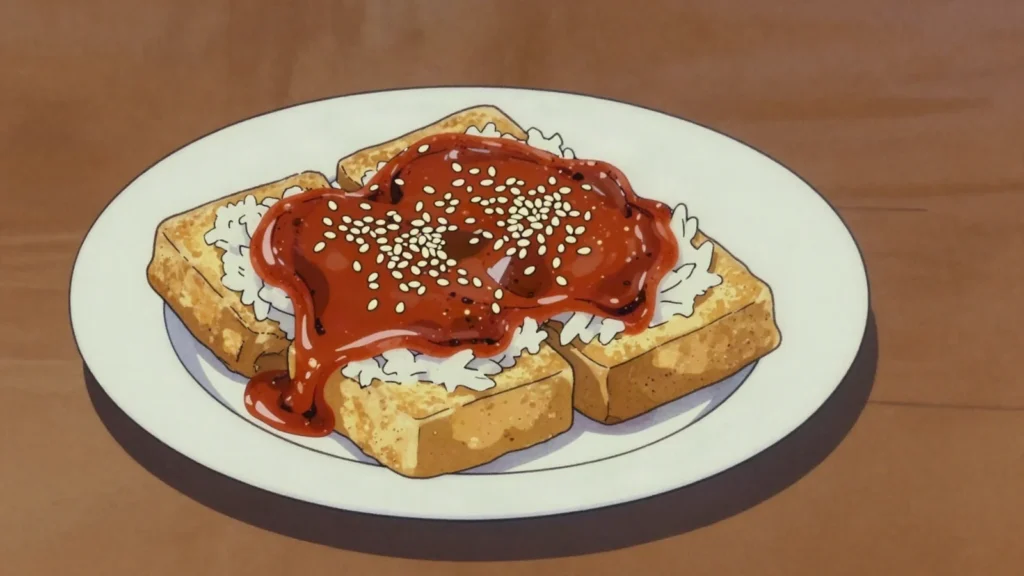
- Fill it generously but do not split it. Press the rice in quite firmly. Spoon sauce over the exposed rice. Both ways are done at the stalls. Set them out on a plate or in a paper cone. Scatter sliced spring onion over them. Serve extra sauce alongside for dipping. They are best warm and freshly made.
Technique
- Dubu-bap appeared in the informal jangmadang markets that grew up during North Korea’s famine of the nineteen nineties, often called the Arduous March, after the state food distribution system collapsed.
- Rice was scarce and tofu cheaper, so a fried tofu pocket stretched a small ration of rice into a filling snack, which is exactly why the dish exists.
- It is now sold widely in North Korean markets and is also made in South Korea, including at restaurants run by North Korean defectors.
Substitutions
- Chilli powder mixed with a little miso stands in for gochujang.
- Firm tofu is essential, since soft or silken tofu falls apart when fried.
Variations
- Some sellers pour the sauce over and others let customers add their own.
- A version with a little minced meat mixed into the rice is made where meat is available.
- Inari sushi in Japan uses a similar fried tofu pocket with quite different seasoning.
History
Appeared in the informal jangmadang markets of the 1990s famine years, when fried tofu skins stretched a small ration of rice.
Frequently asked questions
What is Dubu-bap?
Dubu-bap is a street food from North Korea: fried tofu pockets stuffed with rice and spicy sauce, market snack of the 1990s. Appeared in the informal jangmadang markets of the 1990s famine years, when fried tofu skins stretched a small ration of rice.
How long does Dubu-bap take to make?
Dubu-bap takes 30 minutes of preparation and 25 minutes of cooking. The recipe makes about 16 pieces. It is rated medium to make.
What can I substitute in Dubu-bap?
Yes, within limits. Chilli powder mixed with a little miso stands in for gochujang. Firm tofu is essential, since soft or silken tofu falls apart when fried.
What is the most important thing to get right in Dubu-bap?
Make them about two centimetres thick. They must be thick enough to hollow out. Heat oil in a wide pan to a shallow depth. It should come about half a centimetre up.