Ingredients
Dough
- 700 gplain flour
- 80 gsugar
- 10 gdried yeast
- 1 teaspoonsalt
- about 400 ml warm water
- 2 tablespoonsoil
To fry
- oil, for deep frying
Sometimes filled with
- cooked mince
- polony or sausage
- jam or syrup
- grated cheese
To serve
- hot, in paper
- at a taxi rank
- from a village stall
Directions
- Flour, water, yeast, sugar and oil. It is soft but firm enough to shape. Warm the water to blood temperature. Stir the yeast and a spoon of sugar in. Let it stand until it foams up. Give it about ten minutes to foam. Put the flour, sugar and salt in a bowl.
- Make a well in the middle of it. Pour in the foaming yeast liquid. Add the oil to the well as well. Bring it together into a soft dough. Turn it out onto a floured surface.
- Knead it for a good ten minutes. It should become smooth and elastic. Take the full ten minutes over it. Rising it takes about an hour. Put the dough in an oiled bowl. Cover it and leave it somewhere warm. Let it roughly double in size. Give it an hour or a little more. Divide it into even sized pieces.
- Roll each one into a smooth ball. Roll them under a cupped palm. Press down lightly as you circle. That tightens the surface into a smooth skin. Set the balls on a floured tray. Cover them loosely with a cloth. Let them prove for about thirty minutes. Heating the oil takes attention.
- Pour the oil into a deep heavy pot. Fill it no more than half full. Heat it to about one hundred and seventy degrees. It should rise and sizzle steadily. Keep a lid nearby to smother a flare-up. Never put water on an oil fire at all. Keep children well away from the pot. Too hot and they brown before cooking through.
- Check between batches and adjust it. Frying them takes care and batches. Turn them over with a slotted spoon. Give them another three or four minutes. Break the first one open to check. The inside should be light and open. Lift them out onto a wire rack. A rack keeps them crisp underneath.
- Let all the excess oil drip away. That softens the base within minutes. Leave one edge attached as a hinge. Spoon the filling into the hollow. Serving them is always done hot. Warm them briefly to revive them.
Technique
- The atlas also carries magwinya from Botswana: the same thing under another name, as are vetkoek and amagwinya and the plain English fat cake. They are made right across Southern Africa with the same dough and method, and each country has its own name for them.
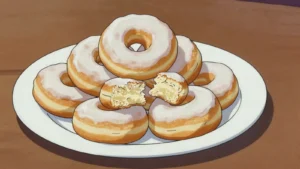
- A well made fat cake is hollow inside, because the gas from the yeast expands in the hot oil and pushes the dough out to the edges; that hollow is what holds a filling, and a dense one has not puffed properly.
- Both the ten minutes of kneading and the second prove matter for that: well kneaded dough traps more gas and the second rise refills it, so skipping either gives dense heavy cakes.
Substitutions
- Any plain bread dough fries the same way.
- They are eaten plain, or split and filled with mince, polony, cheese or jam.
Variations
- Magwinya, vetkoek and amagwinya are the same thing under other names.
- Women sell them from village stalls and at taxi ranks across Lesotho.
- They are sold in twists of paper to eat standing.
History
Fried dough balls, the Southern African fat cake, sold at taxi ranks and by women at village stalls.
Frequently asked questions
What is Makoenya?
Makoenya is a street food from Lesotho: basotho fat cakes, fried dough sold at taxi ranks. Fried dough balls, the Southern African fat cake, sold at taxi ranks and by women at village stalls.
How long does Makoenya take to make?
Makoenya takes 20 minutes plus rising of preparation and 30 minutes of cooking. The recipe makes about 20 cakes. It is rated medium to make.
What can I substitute in Makoenya?
Yes, within limits. Any plain bread dough fries the same way. They are eaten plain, or split and filled with mince, polony, cheese or jam.
What is the most important thing to get right in Makoenya?
Pour the oil into a deep heavy pot. Fill it no more than half full. Heat it to about one hundred and seventy degrees. It should rise and sizzle steadily. Keep a lid nearby to smother a flare-up. Never put water on an oil fire at all. Keep children well away from the pot. Too hot and they brown before cooking through.