
Ingredients
The beans
- 500 gdried cowpeas
- black-eyed beans
- soaked overnight
- skins rubbed off
- or 500 g cowpea flour
- or bean flour, from an African grocer
The batter
- about 400 ml water
- 1onion, roughly chopped
- 2 clovesgarlic
- 1 teaspoonsalt
- or 1 stock cube
- half a teaspoon ground black pepper
- 1hot chilli, optional
The wrappers
- banana leaves
- or large leaves, cut into squares
- passed over a flame
- or squares of foil
- or small heatproof bowls
- string or leaf strips, to tie
The chilli oil
- 150 mlgroundnut oil
- or red palm oil
- 3 tablespoonschilli powder
- or dried ground chilli
- 1onion, finely chopped
- 2 clovesgarlic, crushed
- 1stock cube
- or salt to taste
To serve
- hot, in the leaf
- chilli oil spooned over
- sliced raw onion
- cold water or bissap
Directions
- Soak the dried cowpeas overnight. Cover them generously with cold water. Soak them in the fridge in hot weather. Warm soaking water ferments and turns sour. Removing them gives a pale smooth cake. Rub the soaked beans between your palms. Work a handful at a time in a bowl of water.
- Pour the water off carefully, taking the skins. Add fresh water and rub again. Repeat until almost all the skins are gone. This takes real time and patience.
- Put the drained skinned beans in the bowl. Add the onion, garlic and chilli. Add water gradually while blending. Blend until completely smooth. This grinding takes several minutes. Blend for longer if it feels rough. The batter should be thick and smooth.
- Add the salt and the black pepper. If using bean flour, mix it with water instead. Whisk it into a smooth lump-free batter. Let it stand for twenty minutes to hydrate. Blend the onion and garlic in separately. Beat the batter hard for several minutes. Beat it with a wooden spoon or by hand. West African cooks take this step seriously.
- Beat it until it feels lighter to stir. Cut them into squares of about twenty-five centimetres. Cut along the grain rather than across it. Never leave a leaf over a flame unattended. Use a large pot with a rack inside. Fill it with water to just below the rack.
- Line the rack with spare leaf pieces. Bring the water underneath to a boil. Lay a leaf square flat on the surface. Spoon batter into the centre of it. About three or four tablespoons per parcel.
- Fold one side over the batter. Fold the opposite side over that. Fold both of the ends up underneath. Tie it around the middle with a strip. Tie it firmly but not tightly at all. The batter needs room to expand. Stack the parcels in the steamer. Lay them flat rather than upright.
- Cover them with more spare leaves. Lay a cloth over that before the lid. Steam them for about forty-five minutes. Check the water every fifteen minutes. Top up with boiling water, never cold. Steam scalds badly, so lift the lid carefully.
- Use a dry cloth, since wet cloth conducts heat. It should be firm and set right through. Wrap it again and give it fifteen minutes. Heat the oil gently in a small pan. Add the chopped onion and cook until soft. Add the crushed garlic for a minute. Now take the pan off the heat. Add the chilli powder off the heat. Chilli scorches instantly in very hot oil.
- Stir the chilli through the warm oil. Crumble in the stock cube or add salt. Let it sit and infuse as it cools. It should be fiercely hot and deeply red. Adjust the chilli to your own tolerance. Malian street versions are genuinely hot.
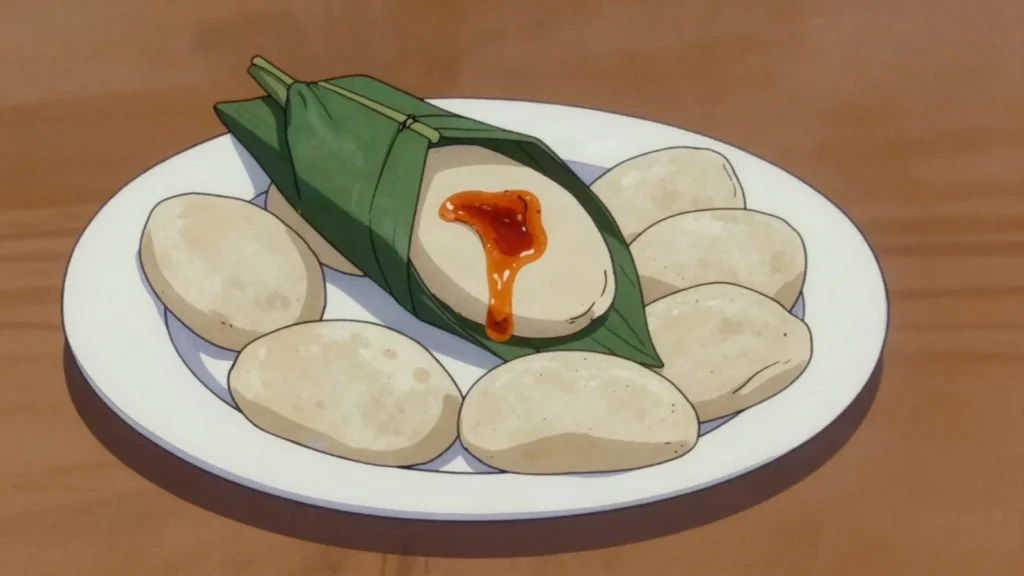
- Serve them still in their leaves. Spoon chilli oil generously over the cake. Cold water does the job just as well. Steam them from frozen for half an hour. The chilli oil keeps a month in a jar.
Technique
- Beating air into the batter is the step that decides whether the cake is light or dense. Beat it hard for several minutes until it visibly pales and increases in volume — it is the same principle West African cooks apply to akara batter.
- Removing the bean skins is tedious and it matters: skins left in make the cake grey and coarse. Rub the soaked beans between your palms in water, pour off the floating skins, and repeat. Ready-milled cowpea flour from an African grocer skips the whole step and is the practical route for most cooks.
- Blend the batter until genuinely smooth. Grittiness is a real fault and blending longer is the only fix.
- Banana leaves must be thawed and passed briefly over a flame. Heating turns them glossy and flexible; unheated leaves crack when folded. Cut along the grain, and never leave a leaf over a flame unattended.
- Take the chilli oil pan off the heat before the chilli powder goes in. Chilli scorches instantly in very hot oil and turns bitter beyond use.
- The chilli oil is not a garnish. The cakes are deliberately plain and the oil carries all the heat and flavour of the dish.
- Steam scalds worse than boiling water. Tilt the lid away from your face and use a dry cloth rather than a damp one.
- Toubani is sold by women at Bamako markets and bus stations, and that is not incidental. Street food selling is a main income for many women across West Africa: little capital to start, compatible with childcare, and poorly paid and physically hard. The food is cheap because the labour is.
Substitutions
- Cowpea or bean flour from an African grocer replaces soaked ground beans and removes the skinning work entirely.
- Chickpea flour replaces cowpea flour at a pinch, though the flavour is noticeably different and it is not the same dish.
- Foil squares or small heatproof bowls replace banana leaves; the leaf flavour is lost, which is a real loss.
- Red palm oil replaces groundnut oil in the chilli oil and gives a deeper colour and flavour.
- A stock cube replaces salt and is what most Malian cooks actually use.
- The chilli can be reduced sharply for a milder version, though street versions are genuinely hot.
Variations
- Nigerian moin moin is the closest relative, steamed from the same cowpea batter, often with fish, egg or meat inside.
- Akara is the fried version of the same batter, shaped into balls and deep-fried.
- Some Malian sellers add a piece of dried fish or a boiled egg to the centre of each parcel.
- A version steamed in small tins rather than leaves is made where leaves are scarce.
- Related steamed bean cakes are made across Ghana, Benin, Togo and Senegal under their own names.
- Some cooks add a little red palm oil to the batter itself, which colours the cake orange.
History
Wrapped in leaves and steamed, then sold by women at Bamako markets and bus stations as a cheap filling snack.
Frequently asked questions
What is Toubani?
Toubani is a street food from Mali: steamed cakes of ground cowpea or bean flour, eaten with chilli oil. Wrapped in leaves and steamed, then sold by women at Bamako markets and bus stations as a cheap filling snack.
How long does Toubani take to make?
Toubani takes 20 minutes plus overnight soaking of preparation and 45 minutes of cooking. The recipe makes makes about 10 cakes. It is rated medium to make.
What can I substitute in Toubani?
Yes, within limits. Cowpea or bean flour from an African grocer replaces soaked ground beans and removes the skinning work entirely. Chickpea flour replaces cowpea flour at a pinch, though the flavour is noticeably different and it is not the same dish. Foil squares or small heatproof bowls replace banana leaves; the leaf flavour is lost, which is a real loss. Red palm oil replaces groundnut oil in the chilli oil and gives a deeper colour and flavour. A stock cube replaces salt and is what most Malian cooks actually use. The chilli can be reduced sharply for a milder version, though street versions are genuinely hot.
What is the most important thing to get right in Toubani?
Beat it until it feels lighter to stir. Cut them into squares of about twenty-five centimetres. Cut along the grain rather than across it. Never leave a leaf over a flame unattended. Use a large pot with a rack inside. Fill it with water to just below the rack.