
Ingredients
The berries
- 60 gdried omija
- schisandra berries
- rinsed
The water
- 1.5 litrescold water
- filtered if you can
To sweeten
- honey, to taste
- or sugar
- added after straining
To serve
- over ice
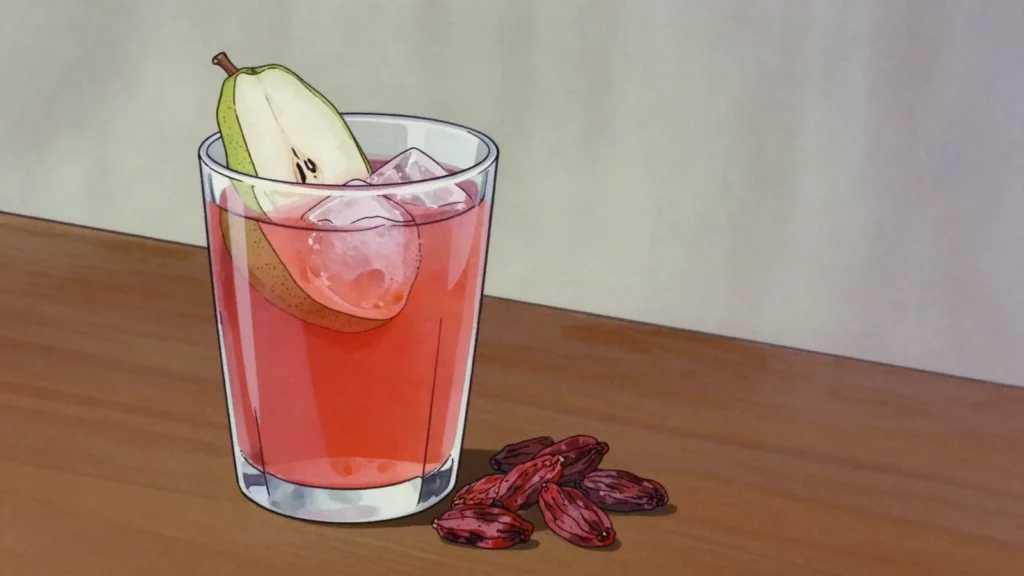
- with a slice of pear
- or pine nuts floated on top
Directions
- Heat turns it brown and rather dull. Cold water extracts them intact. Heat also draws out more bitterness. Cold steeping leaves most of them behind.
- Rinse the dried berries quickly. Rinse them in cold water briefly. Do not soak them at this stage. Adjust it after you have tried it once. Setting it up is straightforward enough. Put the berries in a large jar. Pour the cold water over them.
- Use genuinely cold fresh water. Never use warm or hot water at all. Cover the jar and refrigerate it. Leave it for about twelve hours. Eight hours gives a light infusion.
- Brown means it was heated somewhere. Strain the liquid through a fine sieve. Discard all of the used berries. Do not press the berries at all.
- Let it drain under its own weight. That keeps the finished tea clean. Stir honey or sugar into the strained tea.
- Add the sweetening at the very end. It takes a good deal of sweetening. Add it gradually and taste as you go. Stop where the sourness is still clear.
- Warm a little tea to dissolve it first. Give it a good couple of hours. Pour it into glasses over ice. Serve it in glass rather than a cup. Float a thin slice of pear on top. Stir it again before pouring it. Keep it somewhere dark and cool.
Technique
- The berries are steeped in cold water and never heated, which keeps the colour a clear bright pink: the colour comes from anthocyanin pigments that break down with heat, and cold water extracts them intact. Heat also draws more bitterness out of the seeds. The trade is time — cold extraction needs overnight rather than minutes, and it cannot be hurried. A brown infusion was heated somewhere.
- Schisandra is used as a medicinal herb in concentrated preparations and is documented to affect liver enzymes that process many medicines, which can change how a drug is cleared and raise or lower its blood levels. That concern attaches to concentrated extracts rather than a dilute cold tea, but anyone on regular prescribed medication — particularly heart, seizure or transplant drugs — is worth a word with a pharmacist if they drink it often. The atlas states this plainly rather than either exaggerating it or leaving it out.
- Do not press the berries when straining, since that squeezes bitterness out of the seeds; let it drain under its own weight. Sweeten after straining rather than before, since sugar in the steep slows the extraction.
Substitutions
- Honey dissolves slowly in cold liquid, so warm a little of the tea to dissolve it and stir that back into the rest.
- A thin slice of pear or a few floated pine nuts are traditional Korean garnishes; pine nuts are a tree nut, so say so, since they are easy to miss on a drink.
Variations
- Omija means five-flavour berry — sour, sweet, bitter, salty and pungent — though sourness is much the strongest and the claim is traditional rather than measured.
- Twelve hours gives a full infusion where eight gives a light one; beyond a day it turns bitter.
- It is sharply sour and takes a good deal of sweetening, but stop where the sourness is still clear, since sweet and sour together is the whole drink.
History
Omija means five-flavour berry; it grows wild on the northern mountains and is steeped without heat to keep its colour.
Frequently asked questions
What is Omija Tea?
Omija Tea is a drink from North Korea: cold infusion of magnolia berries; sour, sweet and faintly bitter at once. Omija means five-flavour berry; it grows wild on the northern mountains and is steeped without heat to keep its colour.
How long does Omija Tea take to make?
Omija Tea takes 10 minutes plus overnight of preparation and no cooking at all. The recipe makes serves 6. It is rated easy to make.
What can I substitute in Omija Tea?
Yes, within limits. Honey dissolves slowly in cold liquid, so warm a little of the tea to dissolve it and stir that back into the rest. A thin slice of pear or a few floated pine nuts are traditional Korean garnishes; pine nuts are a tree nut, so say so, since they are easy to miss on a drink.
What is the most important thing to get right in Omija Tea?
Rinse the dried berries quickly. Rinse them in cold water briefly. Do not soak them at this stage. Adjust it after you have tried it once. Setting it up is straightforward enough. Put the berries in a large jar. Pour the cold water over them.