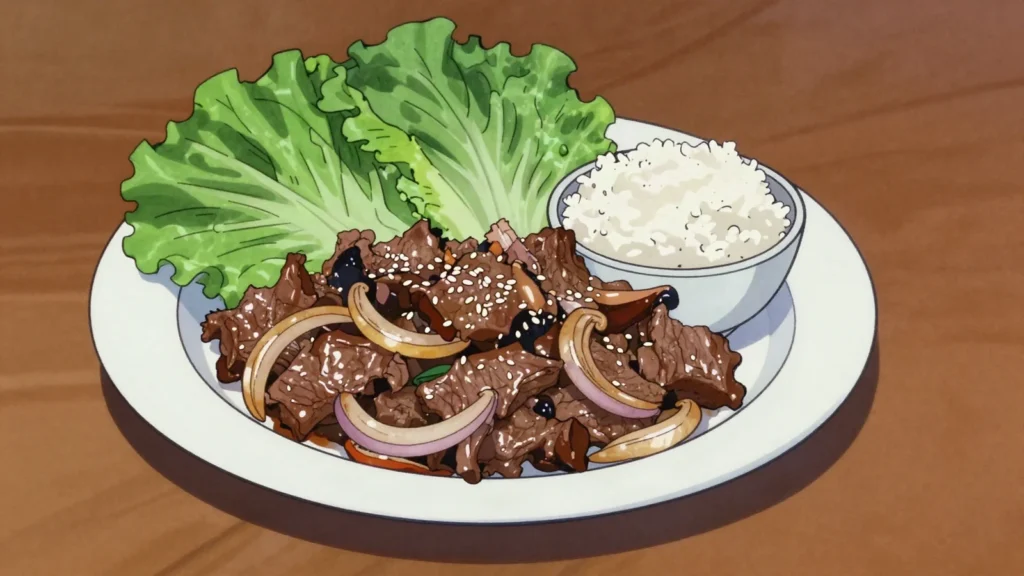

Ingredients
Beef
- 700 gbeef sirloin, rib-eye or chuck flap, part-frozen for 30 min then sliced 2–3 mm thick across the grain
Marinade
- 6 tbspsoy sauce
- ½Korean pear (about 150 g), peeled and grated, juice and all
- ½onion (about 80 g), grated
- 3 tbspsugar or rice syrup
- 2 tbsptoasted sesame oil
- 6garlic cloves, minced
- 10 gginger, grated
- 1 tspcoarsely ground black pepper
- 2 tbspmirin or Korean cooking rice wine
To cook and serve
- 1onion, sliced
- 4spring onions, cut into 4 cm lengths
- 150 gshiitake or button mushrooms, sliced
- 1 tbspneutral oil
- 1 tbsptoasted sesame seeds
- 16lettuce leaves and 16 perilla leaves, for wrapping
- 4 tbspssamjang
- steamed short-grain rice
Directions
- Part-freeze the beef for 30 minutes so it firms up, then slice it as thinly as you can across the grain. Thin slicing is what makes bulgogi tender; thick slices toughen the moment they hit heat.
- Whisk the marinade ingredients together. The grated Korean pear is not for sweetness alone: its enzymes actively tenderise the beef.
- Turn the sliced beef through the marinade with your hands, massaging for a minute so every slice is coated, then rest 30 minutes at room temperature or up to 4 hours in the fridge.
- Do not marinate overnight. The pear enzymes will keep working and turn the surface of the meat mushy.
- Heat a domed bulgogi pan, a heavy cast-iron frying pan or a griddle over high heat until it is smoking, and brush with the neutral oil.
- Lift the beef out of the marinade, shaking off the excess, and lay it in a single layer with plenty of space. Cook 60–90 seconds a side, until the edges caramelise dark and the sugars in the marinade lacquer the meat.
- Work in batches. Crowding the pan drops the temperature and the beef will boil grey in its own juices instead of searing.
- Add the sliced onion, spring onion and mushrooms to the pan for the last 2 minutes, scatter with sesame seeds and serve straight from the pan with rice, lettuce and perilla leaves and ssamjang for wrapping.
Technique
- Bulgogi means ‘fire meat’ and descends from maekjeok, skewered seasoned beef grilled over an open fire, with a lineage traced back to Goguryeo.
- Korean pear (bae) is crisp, round and very juicy. Nashi is the closest substitute; a European dessert pear is softer and sweeter and gives a different result.
- The domed brass bulgogi pan with a moat is designed to let the juices run off so the meat grills rather than stews. Restaurants often serve a soupier version cooked in a shallow pan with the broth kept.
Substitutions
- No Korean pear: use half a nashi pear, or 3 tbsp of grated apple plus 1 tbsp of pineapple juice, though pineapple works fast and should not sit longer than 30 minutes.
- Chuck flap or brisket flap is what many Korean butchers use for home bulgogi and is cheaper than sirloin.
- Dwaeji bulgogi uses the same method on thin pork with gochujang added to the marinade.
Variations
- Gwangyang bulgogi, grilled over charcoal on a copper plate and seasoned simply, without a wet marinade.
- Seoul-style bulgogi, cooked in a pan with added broth, mushrooms and glass noodles.
- Dak bulgogi, the chicken version, marinated with gochujang.
History
Its name combines the Korean bul, fire, and gogi, meat, and some form of marinated, fire-grilled meat is documented in Korean cooking going back to at least the Goguryeo kingdom, over a thousand years ago, under an earlier name, though that ancient dish differed significantly from the soy-sauce, sugar and pear marinade used today. The now-standard sweet-savory marinade, and the thin-sliced beef grilled quickly over an open flame or hot pan, developed and standardized more recently, through the 1900s, becoming one of Korea’s best-known dishes internationally. Pear or apple in the marinade serves a real function beyond flavour: the fruit’s natural enzymes tenderize the beef, a technique refined over generations of home cooking rather than introduced all at once.
Frequently asked questions
What is Bulgogi?
Bulgogi is a main from South Korea: thin-sliced beef marinated in sweet soy, grilled or pan-cooked. Its name combines the Korean bul, fire, and gogi, meat, and some form of marinated, fire-grilled meat is documented in Korean cooking going back to at least the Goguryeo kingdom, over a thousand years ago, under an earlier name, though that ancient dish differed significantly from the soy-sauce, sugar and pear marinade used today. The now-standard sweet-savory marinade, and the thin-sliced beef grilled quickly over an open flame or hot pan, developed and standardized more recently, through the 1900s, becoming one of Korea’s best-known dishes internationally. Pear or apple in the marinade serves a real function beyond flavour: the fruit’s natural enzymes tenderize the beef, a technique refined over generations of home cooking rather than introduced all at once.
How long does Bulgogi take to make?
Bulgogi takes 20 min of preparation and 30 min marinating plus 10 min cooking of cooking. The recipe makes 4 servings. It is rated easy to make.
What can I substitute in Bulgogi?
Yes, within limits. No Korean pear: use half a nashi pear, or 3 tbsp of grated apple plus 1 tbsp of pineapple juice, though pineapple works fast and should not sit longer than 30 minutes. Chuck flap or brisket flap is what many Korean butchers use for home bulgogi and is cheaper than sirloin. Dwaeji bulgogi uses the same method on thin pork with gochujang added to the marinade.
What is the most important thing to get right in Bulgogi?
Do not marinate overnight. The pear enzymes will keep working and turn the surface of the meat mushy.