
Ingredients
Dough
- 400 gfine rice flour, for rice cakes
- about 250 ml boiling water
- 1 tspsalt
Natural colours
- 1 tspmugwort powder, for green
- 1 tbspbeetroot or omija juice, for pink
- 1 tspgardenia or pumpkin powder, for yellow
Sesame filling
- 80 gtoasted sesame seeds, crushed
- 3 tbsphoney or brown sugar
- a pinch of salt
Bean filling
- 150 gmung beans or red beans, cooked and mashed
- 3 tbspsugar
- a pinch of cinnamon
Chestnut filling
- 150 gcooked chestnuts, chopped with honey
To steam
- a large handful of fresh pine needles, washed
- sesame oil, to finish
To serve
- at Chuseok
Directions
- Use water that is genuinely at a rolling boil. Add the boiling water gradually, mixing with a spoon at first because it is too hot to touch. Then knead it by hand as soon as you can bear it, for a good 10 minutes.
- Knead it thoroughly and while it is still warm. Well-kneaded songpyeon dough is smooth and slightly shiny and does not crack when bent. Divide it and colour each portion with mugwort, beetroot or pumpkin. Keep the dough covered at all times with a damp cloth. It dries out within minutes of being exposed, and dry dough will not seal.
- Crush the toasted sesame seeds coarsely and mix with honey and salt. Crush the sesame rather than leaving it whole, which releases the oil and makes it hold together. Keep every filling fairly dry and stiff. A wet filling leaks through the thin dough during steaming and the cake collapses.
- Press a hollow into it with your thumb, turning it to make an even cup. Make the walls as thin and even as you can, since thick songpyeon are stodgy. Put a small amount of filling in and pinch the opening closed. Do not overfill.
- Pinch the sealed edge into a neat ridge, and press small indentations along it if you want. The shaping is the part people compete over, and the pretty-daughter saying is about exactly this.
- Use fresh needles from an edible pine, rinsed thoroughly in several changes of water. The needles are there for aroma and to stop the cakes sticking, and they are not eaten. Pick them off before serving. If in doubt, steam them on a lightly oiled cloth instead and accept the loss of scent.
- Line the steamer with a layer of pine needles, set the songpyeon on top without touching, and cover with more needles. Steam them for 20 to 25 minutes. They are done when they have turned translucent and glossy. Drain them and toss them in a little sesame oil. The sesame oil keeps them separate and gives them their shine. Pick off any clinging needles and serve them at room temperature.
Technique
- Fresh wet rice flour from a Korean shop gives much better results than dry packaged flour.
- Songpyeon from different regions vary in size, from tiny in the south to large in the north.
- The pine needles are removed and not eaten.
Substitutions
- A clean cloth or baking paper in place of pine needles.
- Ready-made sweetened bean paste for the filling.
Variations
- With chestnut and honey filling.
- With sweetened mung bean.
- Coloured with mugwort, which is the most traditional.
History
Made for Chuseok harvest thanksgiving since the Goryeo period; families shape them together and the pine needles perfume the steam.
Frequently asked questions
What is Songpyeon?
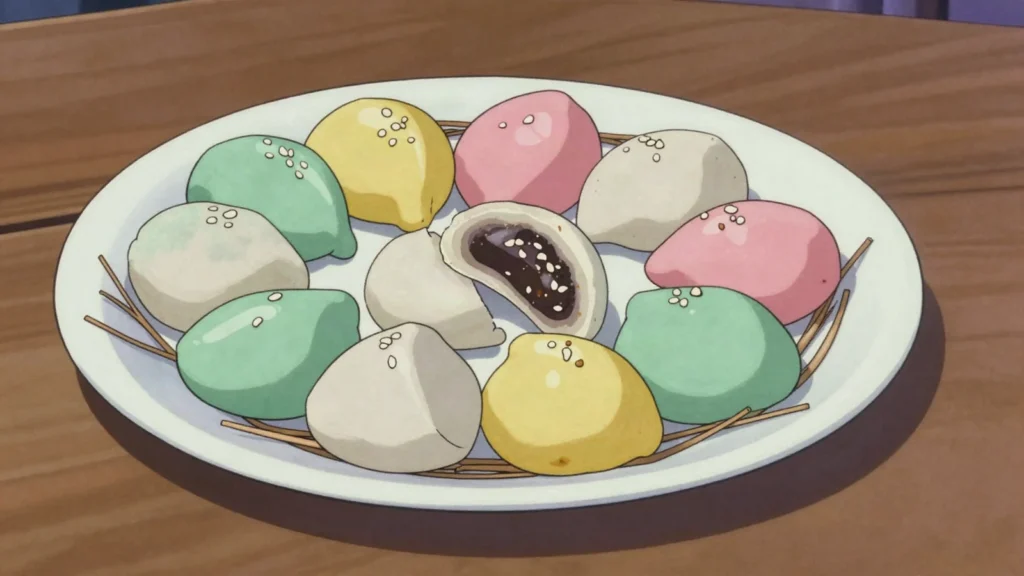
Songpyeon is a dessert from South Korea: half-moon rice cakes stuffed with sesame or beans, steamed over pine needles. Made for Chuseok harvest thanksgiving since the Goryeo period; families shape them together and the pine needles perfume the steam.
How long does Songpyeon take to make?
Songpyeon takes 1 hr of preparation and 25 min of cooking. The recipe makes about 30. It is rated hard to make.
What can I substitute in Songpyeon?
Yes, within limits. A clean cloth or baking paper in place of pine needles. Ready-made sweetened bean paste for the filling.
What is the most important thing to get right in Songpyeon?
Crush the toasted sesame seeds coarsely and mix with honey and salt. Crush the sesame rather than leaving it whole, which releases the oil and makes it hold together. Keep every filling fairly dry and stiff. A wet filling leaks through the thin dough during steaming and the cake collapses.