
Ingredients
The pot
- 1 tinsilkworm pupae (about 400 g), or 300 g frozen
- 600 mlwater
- 2 tbspsoy sauce
- 1 tbspmirin or rice wine
- 1 tspsugar
- 2 clovesgarlic, crushed
- 1spring onion
- ½ tspsalt
- ¼ tspblack pepper
Optional
- 1dried chilli
- 1 tspgochugaru
Directions
- Drain the tinned pupae and rinse them thoroughly under cold running water for a full minute. Tinned beondegi sits in a strong liquor and rinsing is what keeps the finished dish savoury rather than overwhelming.
- Bring the water to a boil with the soy, mirin, sugar, garlic, spring onion, salt and pepper.
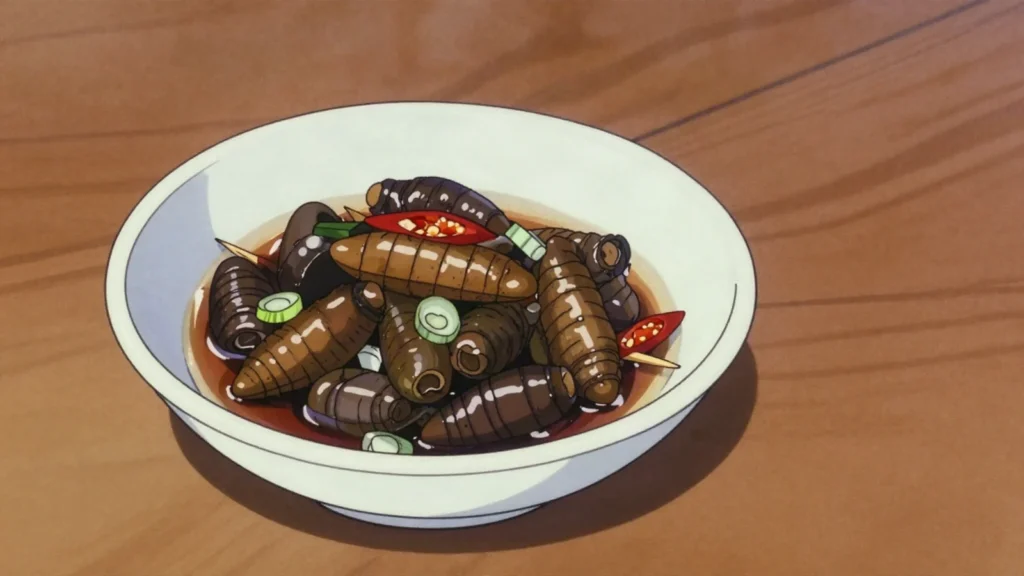
- Add the pupae and simmer, uncovered, for 20 minutes. They should absorb the seasoning and the liquid should reduce to a glossy few spoonfuls.
- Add the chilli or gochugaru in the last 5 minutes if you want heat, which is common at street stalls.
- Shake the pan rather than stirring hard — the pupae soften as they cook and break up easily.
- Serve hot in small paper cups with a toothpick, the way they are sold from carts, with the remaining broth spooned over.
- The texture is the point of contention rather than the flavour: a thin skin that pops, then a soft, nutty, faintly earthy interior.
Technique
- Rinse well. This is the single step that decides whether beondegi tastes savoury or aggressive.
- Do not overcook. Past about 25 minutes they collapse into mush.
- Insects are an allergen for people sensitive to shellfish and dust mites, since they share tropomyosin proteins. Anyone with a shellfish allergy should avoid them.
Substitutions
- Frozen pupae need no rinsing and 5 minutes less cooking.
- There is no substitute; this is a dish about the specific ingredient.
Variations
- A drier stir-fried version tossed with gochujang.
- Sold in tins ready to heat, which is how most Koreans eat them at home.
History
A by-product of Korea’s silk industry, the pupae became a cheap protein snack during postwar shortages and remain a nostalgic street food.
Frequently asked questions
What is Beondegi?
Beondegi is a street food from South Korea: steamed silkworm pupae sold in paper cups, nutty and startlingly earthy. A by-product of Korea’s silk industry, the pupae became a cheap protein snack during postwar shortages and remain a nostalgic street food.
How long does Beondegi take to make?
Beondegi takes 10 min of preparation and 25 min of cooking. The recipe makes 4 small cups. It is rated easy to make.
What can I substitute in Beondegi?
Yes, within limits. Frozen pupae need no rinsing and 5 minutes less cooking. There is no substitute; this is a dish about the specific ingredient.
What is the most important thing to get right in Beondegi?
Drain the tinned pupae and rinse them thoroughly under cold running water for a full minute. Tinned beondegi sits in a strong liquor and rinsing is what keeps the finished dish savoury rather than overwhelming.