
Ingredients
Crab
- 500 gwhole freshwater paddy crabs
- 1 litrewater
Broth
- 2 litrespork stock
- 6tomatoes, cut into wedges
- 3shallots, sliced
- 2 tbspannatto oil
- 3 tbspfish sauce
- 1 tbspmắm tôm, fermented shrimp paste
- 1 tspsugar
To serve
- 800 gthin round rice noodles
- 200 gfried tofu, cubed
- spring onions, sliced
- perilla leaves
- Vietnamese balm
- shredded water spinach
- lime wedges
- sliced chilli
Directions
- Wash the crabs well, pull off the top shells, and scrape the yellow tomalley out of each one into a small bowl and set it aside. Discard the feathery gills.
- Pound the crabs, shells and all, in a heavy mortar until thoroughly broken up. Shells and all is not an exaggeration: most of the flavour is in the shell and the grit gets strained out later.
- Add the litre of water, stir well, and strain the whole lot through a fine sieve lined with muslin, squeezing the solids hard. Rinse the solids with a little more water, strain again, and then discard them.
- Bring the strained crab liquid slowly up to a simmer without stirring it at all. The protein will rise and set into a raft of pale curds across the surface.
- Do not stir at this stage. Stirring breaks the raft into shreds that can never be gathered back together, and the intact curd is the whole reason the dish is called riêu.
- Lift the raft off carefully with a slotted spoon and set it aside, keeping the liquid underneath.
- Fry the shallots in the annatto oil, add the reserved tomalley, then the tomato wedges, and cook for 3 minutes without letting the tomatoes collapse into a sauce.
- Add the pork stock and the crab liquid, season with the fish sauce, sugar and the mắm tôm decanted off its sediment, and simmer for 10 minutes.
- Slide the crab raft back in along with the fried tofu and heat it through gently, never letting it come to a rolling boil.
- Cook the noodles separately, rinse them well, and divide them between bowls.
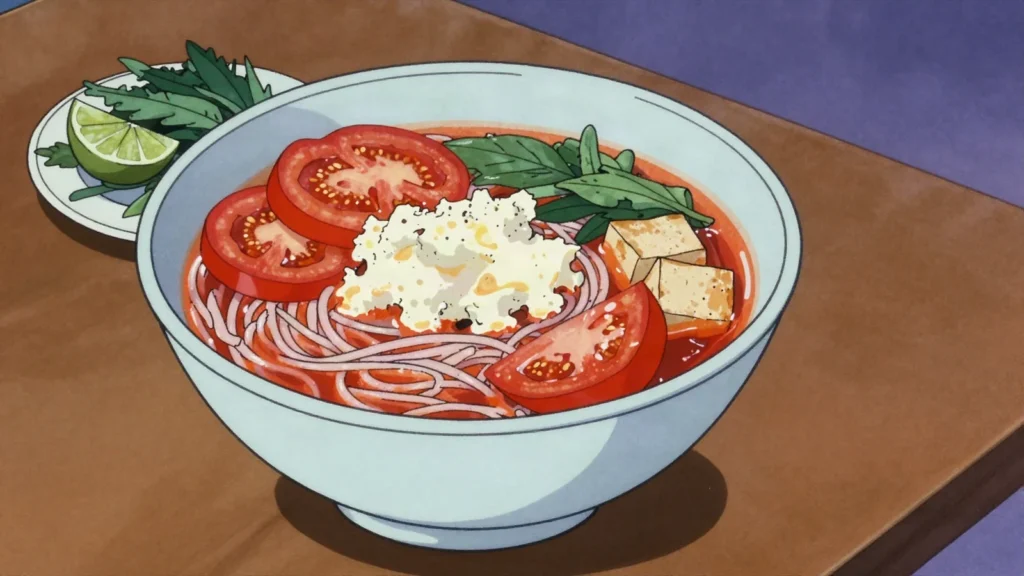
- Ladle the broth over, set a piece of the crab curd on each bowl, and serve with the herbs, lime and extra shrimp paste at the table.
Technique
- Pound whole, strain thoroughly, then never stir. That sequence is the entire technique and everything else is assembly.
- The broth should be sour from tomato rather than from vinegar or tamarind, and only lightly so.
- Mắm tôm is pungent and divides people. Served on the side, everyone can settle it for themselves.
Substitutions
- Tinned minced crab in spices from a Vietnamese grocer, which is what most cooks now use, with a beaten egg stirred in to help the curds set.
- Fresh crab meat plus a beaten egg, which gives a softer curd but a cleaner flavour.
Variations
- Bún riêu ốc, with snails added alongside the tofu.
- With sliced beef, which is common in the south.
- With pork ribs simmered in the broth.
History
Freshwater crab pounded shell and all, strained and set into floating curds in a tomato broth with tofu and fermented shrimp paste.
Frequently asked questions
What is Bun Rieu?
Bun Rieu is a soup & stew from Vietnam: crab-and-tomato noodle soup with silky riêu curds. Freshwater crab pounded shell and all, strained and set into floating curds in a tomato broth with tofu and fermented shrimp paste.
How long does Bun Rieu take to make?
Bun Rieu takes 40 min of preparation and 45 min of cooking. The recipe makes 6 servings. It is rated hard to make.
What can I substitute in Bun Rieu?
Yes, within limits. Tinned minced crab in spices from a Vietnamese grocer, which is what most cooks now use, with a beaten egg stirred in to help the curds set. Fresh crab meat plus a beaten egg, which gives a softer curd but a cleaner flavour.
What is the most important thing to get right in Bun Rieu?
Add the litre of water, stir well, and strain the whole lot through a fine sieve lined with muslin, squeezing the solids hard. Rinse the solids with a little more water, strain again, and then discard them.