
Ingredients
Rof and fish
- 1 kgfirm fish steaks on the bone (bonga, grouper or snapper)
- 1small bunch flat-leaf parsley
- 4garlic cloves
- 1hot chilli
- 1stock cube
- 1 tspblack pepper
- salt
Base
- 250 mlgroundnut oil or red palm oil
- 3onions, chopped
- 6 tbsptomato puree
- 3tomatoes, grated
- 1stock cube
- 1 tspground black pepper
Vegetables
- ½small cabbage, in wedges
- 2carrots, in chunks
- 1aubergine, quartered
- 300 gcassava, peeled and cut in chunks
- 4okra (optional)
- 1whole Scotch bonnet chilli
Rice
- 800 gbroken rice, rinsed until the water runs clear
- 1.5 litresof the cooking broth
- salt
Directions
- Make the rof: pound the parsley, garlic, chilli, stock cube, pepper and a little salt to a green paste, then push it into slits cut deep into each fish steak.
- Heat the oil in a wide heavy pot and fry the stuffed fish 2–3 minutes a side until sealed, then lift out carefully so the pieces stay whole.
- Fry the onions in the same oil for 10 minutes until soft and golden, then add the tomato puree and fry it hard for a full 8–10 minutes, stirring, until it darkens from bright red to deep brick and the oil separates out around it.
- Add the grated tomatoes, stock cube and black pepper and cook 5 minutes more, then pour in water to make about 2 litres and bring to the boil.
- Add the vegetables in order of hardness: cassava and carrot for 10 minutes, then cabbage, aubergine and okra for 10 minutes, with the whole chilli floating on top. Lift each out as it becomes tender and keep it warm; nothing should be allowed to collapse.
- Return the fish to the broth for its last 8 minutes to finish cooking, then lift that out too.
- Measure the broth: you want roughly twice the volume of the rice, so top up or reduce as needed. Taste and correct the salt now, because the rice can only ever be as good as the broth it drinks.
- Add the rice, stir once, bring back to the boil, then cover tightly and cook on the lowest heat for 25–30 minutes without lifting the lid.
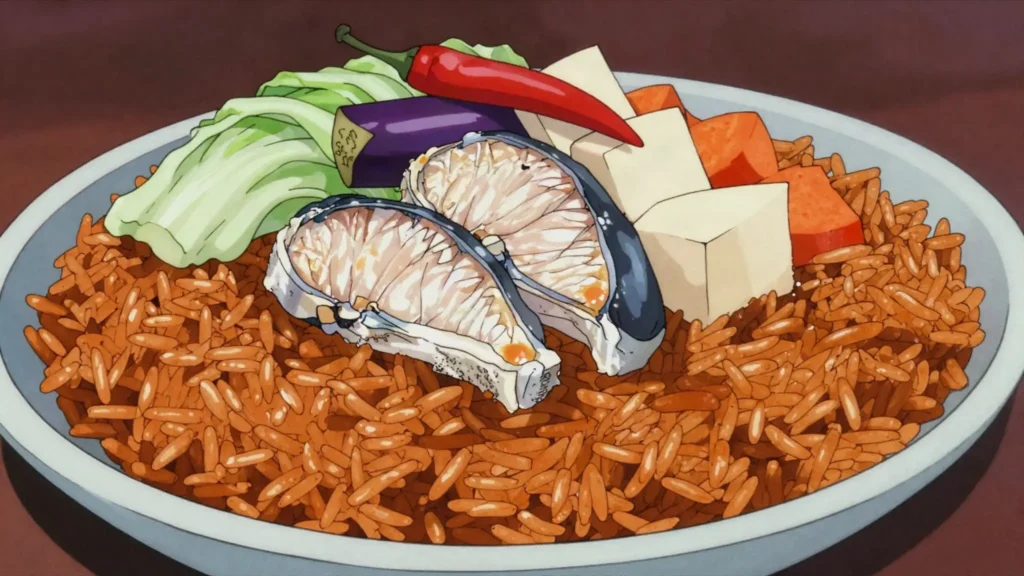
- Fork the rice through gently, leaving the crust on the base intact, then turn it out onto a large platter, arrange the fish and vegetables over the top and set the whole chilli in the middle for people to break open themselves.
Technique
- Benachin means one pot in Wolof and it is the ancestor of jollof rice across West Africa. Everything cooks in the same broth in sequence, and nothing is cooked separately on the side.
- Frying the tomato puree properly is the technical heart of the dish; if it still smells sharp and metallic, it has not had long enough.
- Broken rice is traditional and preferred, because it drinks the broth faster and gives the softer grain Gambians expect.
- The caramelised crust at the base of the pot is prized and fought over, so scrape it up and serve it rather than scrubbing it away.
Substitutions
- Fresh bonga is hard to find abroad; any firm white fish steak on the bone will do, and a piece of dried or smoked fish added to the broth restores some of the lost depth.
Variations
- Benachin bou weex, the white version cooked without tomato at all.
- Made with beef, goat or chicken instead of fish, according to what the household has that day.
History
A one-pot rice dish, cooked with tomato, vegetables and meat or fish, considered a Gambian and wider Senegambian national dish, closely related to and sharing a common Wolof origin with Senegalese thieboudienne and the wider West African jollof rice family, reflecting the shared Wolof cultural and culinary heritage spanning what are now Gambia and Senegal, historically one region before colonial-era borders divided it between French and British administration. Its name, meaning literally one pot in Wolof, directly describes the dish’s defining single-pot cooking method, in which rice, vegetables and protein all cook together in the same flavourful tomato-based liquid rather than being prepared separately. Benachin remains one of the most widely eaten and celebrated dishes across Gambia, closely tied to Gambian national identity.
Frequently asked questions
What is Benachin?
Benachin is a main from Gambia: one-pot jollof-style rice cooked with fish or meat and vegetables. A one-pot rice dish, cooked with tomato, vegetables and meat or fish, considered a Gambian and wider Senegambian national dish, closely related to and sharing a common Wolof origin with Senegalese thieboudienne and the wider West African jollof rice family, reflecting the shared Wolof cultural and culinary heritage spanning what are now Gambia and Senegal, historically one region before colonial-era borders divided it between French and British administration. Its name, meaning literally one pot in Wolof, directly describes the dish’s defining single-pot cooking method, in which rice, vegetables and protein all cook together in the same flavourful tomato-based liquid rather than being prepared separately. Benachin remains one of the most widely eaten and celebrated dishes across Gambia, closely tied to Gambian national identity.
How long does Benachin take to make?
Benachin takes 30 min of preparation and 1 hr 30 min of cooking. The recipe makes 6 servings. It is rated medium to make.
What can I substitute in Benachin?
Yes, within limits. Fresh bonga is hard to find abroad; any firm white fish steak on the bone will do, and a piece of dried or smoked fish added to the broth restores some of the lost depth.
What is the most important thing to get right in Benachin?
Add the vegetables in order of hardness: cassava and carrot for 10 minutes, then cabbage, aubergine and okra for 10 minutes, with the whole chilli floating on top. Lift each out as it becomes tender and keep it warm; nothing should be allowed to collapse.