
Ingredients
Frijoles antioqueños
- 400 gdried cargamanto or pinto beans, soaked overnight
- 1pork hock or 200 g pork ribs
- 1green plantain, grated
- 1carrot, grated
- 2 tbsphogao (see below)
- 1.5 litreswater, salt
Hogao
- 3 tbspoil
- 6spring onions, finely chopped
- 4tomatoes, grated
- 2garlic cloves, crushed
- ½ tspground cumin, salt
Carne en polvo
- 500 gbeef flank or skirt
- 1onion, 2 garlic cloves, 1 bay leaf
- 2 tbspoil, salt and pepper
Chicharrón
- 600 gpork belly with skin, cut into thick fingers, skin scored
- 1 tbspsalt
- 200 mlwater
To assemble
- 400 glong-grain white rice, cooked
- 4chorizos antioqueños
- 2ripe plantains, sliced on the diagonal and fried (tajadas)
- 4eggs
- 2avocados, halved
- 4small arepas
- Lime wedges and ají picante
Directions
- Make the hogao first: soften the spring onion and garlic in oil for 5 minutes, add the grated tomato and cumin and cook 15 minutes to a thick, jammy sauce. It seasons the beans and the platter.
- Drain the soaked beans, cover with fresh water with the pork hock and simmer, half-covered, for 1 hour 30 minutes until nearly tender, topping up with hot water so they stay covered.
- Add the grated green plantain and carrot and 2 tbsp hogao and simmer 30–40 minutes more until the broth is thick, dark and clinging. The grated plantain is the traditional thickener; do not mash the beans.
- Simmer the beef with onion, garlic and bay for 1 hour 15 minutes until it shreds, then cool, pull it into fibres and dry-fry in oil over medium heat, breaking it down, for 10–12 minutes until it is fine, crumbly and toasted. That is carne en polvo.
- For the chicharrón, put the pork belly fingers in a cold heavy pan with the water and salt, bring to a simmer and cook covered 30 minutes until the fat begins to render and the water has gone.
- Uncover, raise the heat and fry in their own fat for 15–20 minutes, turning, until the meat is deep brown and the skin blisters, puffs and cracks audibly. Drain upright on paper.
- Grill or fry the chorizos 10 minutes until browned and cooked through, fry the ripe plantain slices until caramelised at the edges, and fry the eggs so the yolks stay soft.
- Warm the arepas on a griddle and reheat the beans to a spoon-coating consistency.
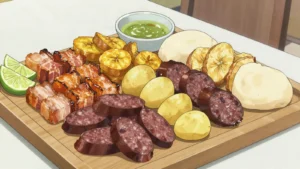
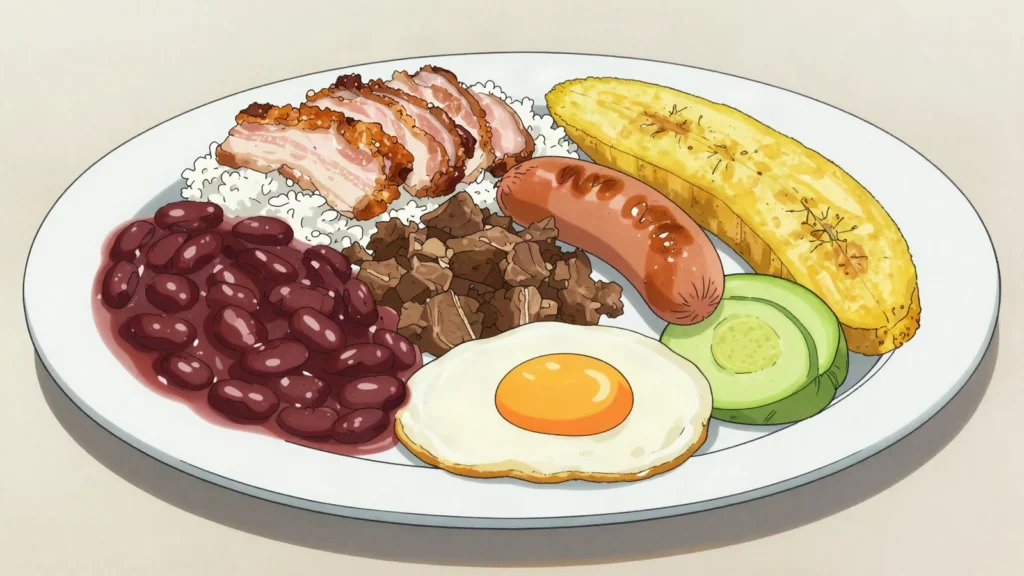
- Build each platter: rice down one side, a bowl or ladle of beans, then carne en polvo, chicharrón, chorizo, tajadas, a fried egg on top, avocado, arepa and lime at the edge. Serve with ají and a cold beer; nobody finishes it.
Technique
- The bandeja paisa as a single composed platter is a mid-20th-century restaurant invention from Antioquia, built out of the older mountain worker’s meal (arriero food). Its size is the point.
- Chicharrón is started in water, not hot oil: the gentle first stage renders the fat and cooks the meat, so the final fry crisps the skin without burning it.
- Cargamanto beans, speckled red and cream, are the Antioquian bean. Pinto or borlotti are acceptable stand-ins; black beans are not.
Substitutions
- Carne molida (seasoned minced beef with hogao) is served instead of carne en polvo in many restaurants and is far quicker.
- Chorizo antioqueño is coarse, fresh and seasoned with spring onion and cumin. Use a fresh Mexican-style or a coarse fresh Spanish chorizo rather than a cured one.
Variations
- Many bandejas also carry morcilla (rice blood sausage) and a small bowl of clear broth.
- The Bogotá version tends to swap chicharrón for a slab of grilled steak.
History
A large mixed platter combining rice, beans, minced beef, chicharrón, fried egg, plantain, avocado and arepa, associated with the Paisa region of Colombia, centered on Medellín and the surrounding coffee-growing area, and generally understood to have developed from the substantial, calorie-dense meals traditionally needed to sustain agricultural laborers working physically demanding jobs in the region’s coffee and farming economy through the 1800s and 1900s. Its now-standardized, restaurant-menu form as a single named dish combining all these specific components together on one plate is a comparatively more recent development, formalized mainly through the 1900s, even though the individual components, beans, rice, plantain, arepa, each have considerably older independent histories in Colombian and Paisa home cooking.
Frequently asked questions
What is Bandeja paisa?
Bandeja paisa is a main from Colombia: platter of beans, rice, chicharrón, minced beef, chorizo, fried egg, avocado, arepa. A large mixed platter combining rice, beans, minced beef, chicharrón, fried egg, plantain, avocado and arepa, associated with the Paisa region of Colombia, centered on Medellín and the surrounding coffee-growing area, and generally understood to have developed from the substantial, calorie-dense meals traditionally needed to sustain agricultural laborers working physically demanding jobs in the region’s coffee and farming economy through the 1800s and 1900s. Its now-standardized, restaurant-menu form as a single named dish combining all these specific components together on one plate is a comparatively more recent development, formalized mainly through the 1900s, even though the individual components, beans, rice, plantain, arepa, each have considerably older independent histories in Colombian and Paisa home cooking.
How long does Bandeja paisa take to make?
Bandeja paisa takes 45 min of preparation and 2 hr 30 min plus overnight soaking of cooking. The recipe makes 4 large platters. It is rated medium to make.
What can I substitute in Bandeja paisa?
Yes, within limits. Carne molida (seasoned minced beef with hogao) is served instead of carne en polvo in many restaurants and is far quicker. Chorizo antioqueño is coarse, fresh and seasoned with spring onion and cumin. Use a fresh Mexican-style or a coarse fresh Spanish chorizo rather than a cured one.
What is the most important thing to get right in Bandeja paisa?
Add the grated green plantain and carrot and 2 tbsp hogao and simmer 30–40 minutes more until the broth is thick, dark and clinging. The grated plantain is the traditional thickener; do not mash the beans.