
Ingredients
The rice
- 500 gmedium grain rice
- soaked overnight
- then blended coarsely
- or 400 g rice and 100 g dried yellow peas
- soaked together
The masa seasoning
- 3 tablespoonsoil
- or lard
- 1 tablespoonachiote
- annatto, for colour
- 1 teaspoonground cumin
- 1 teaspoonsalt
- about 500 ml stock
The meat
- 500 gpork ribs
- or pork belly, in pieces
- 1chicken, jointed into 6
- or 6 chicken thighs
- 4 clovesgarlic, crushed
- 1 teaspooncumin
- 1 teaspoonsalt
- black pepper
- 1onion, chopped
- 3spring onions, chopped
The filling
- 3eggs, hard-boiled and halved
- 2carrots, sliced
- 2potatoes, sliced
- 150 gcooked peas
- or dried yellow peas, soaked
For wrapping
- plantain leaves
- softened over a flame
- kitchen string
Directions
- Soak it overnight in plenty of water. Drain it thoroughly. Blend it coarsely with a little stock. Grind it coarsely, not to a smooth paste. A smooth purée gives a dense gluey tamal. Heat the oil with the achiote. Warm it gently for two minutes. Strain out the seeds. Do not let achiote burn. Keep the heat low. Mix the ground rice with the coloured oil. Add the cumin and salt.
- Add stock until it is a thick paste. It should be like a thick porridge. Season it strongly. Taste it and push it further. Taste a small amount to judge the salt and spit it out. Marinate the pork and chicken overnight.
- Rub them with garlic, cumin, salt and pepper. Add the chopped onions. Marinate in the refrigerator, never on the counter. Do not wash raw chicken under the tap. Use a separate board and wash everything after. It cooks entirely during the three-hour steaming. Cut out the thick central rib of each leaf. Keep the strips for tying if you like. Lay two or three leaves in a cross.
- Spread a thick layer of rice paste in the centre. Lay pieces of pork and chicken on it. Add sliced potato and carrot. Add peas. Add half a boiled egg. Cover with more rice paste. Do not make them small. Fold the leaves over the filling. Fold in the sides. Fold the ends under. Make a sealed parcel. Tie it firmly with string. Tie it firmly but not tightly. A tamal tied too tight bursts.
- Check for gaps before tying. Double-wrap if the leaves are torn. Set them in a very large pot. Stand them upright or lay them flat. Add water to below the level of the tamales. Line the base with extra leaves or a rack.
- Steam them for three hours. Keep the water at a steady boil. Check the water level every forty minutes. Top it up with boiling water. Three hours is a long time for a pot to boil. Cut into the thickest piece of chicken. The juices should run clear. Steam escapes from a hot parcel. Let it stand five minutes first.
- Let them rest fifteen minutes before serving. Serve them in the leaf. Let people unwrap their own. Hot chocolate is the classic partner. Steam them to reheat, twenty minutes refrigerated. Steam them forty minutes from frozen.
Technique
- Grind the soaked rice coarsely, not to a smooth paste. A purée gives a dense gluey tamal; a coarse grind with some grains partly whole gives the texture this dish should have.
- Season the rice paste strongly and taste before wrapping. Rice absorbs a great deal of salt and a bland masa gives a bland tamal — the raw paste is not something to eat in quantity, so taste a little to judge and spit it out, or season by measure.
- Tie the parcels firmly but not tightly. The rice swells considerably as it steams: too tight and the tamal bursts, too loose and water gets in.
- Check the steaming water every forty minutes and top it up with boiling water, never cold. Three hours is a long time for a pot to boil and one that boils dry scorches everything and is a genuine fire risk.
- Line the base of the pot with extra leaves or a rack. The bottom gets hottest and the tamales sitting there will scorch without it.
- The meat goes in raw and cooks during the three hours, so keep the pieces small enough that they will. Check by cutting into the thickest chicken — juices clear, no pink at the bone — and steam longer if in doubt. Part-cooking the meat first removes the question entirely.
- Let the parcels stand five minutes and open them away from your face. The trapped steam scalds badly.
- Rest them fifteen minutes before serving. The rice firms up in that time.
- Soften plantain leaves over a flame or in boiling water for ten seconds, and cut out the thick central rib, which will not fold. Frozen leaves from a Latin or Asian grocer work perfectly well.
- Do not let the achiote burn when colouring the oil. It turns bitter and green-brown — keep the heat low and strain the seeds out after two minutes.
- The Tolima tamal is built on rice rather than maize masa, which is what defines it. Colombian tamales are wrapped in plantain leaves rather than the maize husks common in Mexico, and that wrapper contributes real aroma.
- This is made in quantity, not for one meal. Tamales are a communal undertaking — families make dozens at once with several people wrapping — and they keep four days refrigerated and three months frozen, which is the point.
- Do not wash raw chicken, and marinate in the refrigerator. Washing splashes campylobacter around the kitchen and removes nothing from the meat.
Substitutions
- Dried yellow peas soaked alongside the rice are used in some versions.
- Achiote paste or powder replaces whole seeds; turmeric gives a yellower colour and a different taste.
- Chicken alone, or pork alone, replaces the mixture.
- Foil lined with baking parchment replaces plantain leaves, without the aroma.
- Lard replaces oil and is traditional.
- Part-cooking the meat first shortens the steaming and removes any doubt about doneness.
Variations
- Tamal santafereño from Bogotá uses maize masa and a different filling.
- Tamal valluno from the Valle del Cauca is another regional Colombian kind.
- Hallaca in Venezuela is the Christmas tamal, wrapped in plantain leaves.
- Mexican tamales use maize masa and often maize husks.
- Pasteles in Puerto Rico use a green banana and root dough.
- A vegetarian version with more vegetables and no meat is made in some households.
History
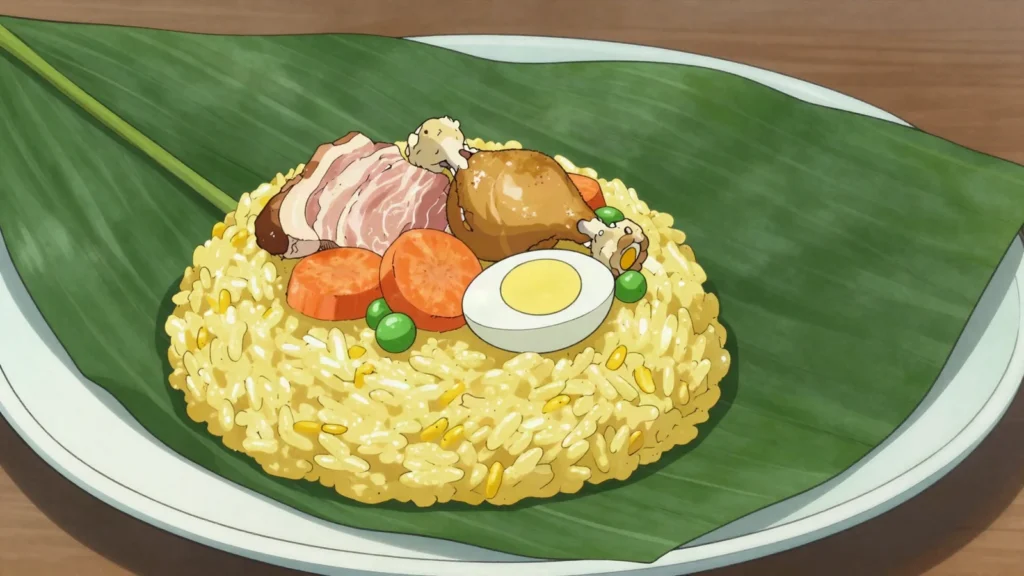
A tamale from Colombia’s Tolima region, wrapped in plantain leaf rather than corn husk, filled with a masa base along with pork, chicken, rice, peas and hard-boiled egg, reflecting a distinctly Colombian variation on the wider Latin American tamale tradition that traces back to Indigenous Mesoamerican and South American corn-based cooking practiced long before European contact. Its use of plantain leaf as a wrapper, rather than the corn husk more commonly associated with Mexican tamales, reflects locally available materials specific to Colombia’s Tolima region and imparts a distinct flavour to the finished tamale during steaming. Tamal tolimense remains a beloved regional specialty, traditionally eaten for breakfast, particularly on Sundays and during family celebrations.
Frequently asked questions
What is Tamal tolimense?
Tamal tolimense is a main from Colombia: rice, pork, chicken and vegetables steamed in plantain leaves; weekend breakfast. A tamale from Colombia’s Tolima region, wrapped in plantain leaf rather than corn husk, filled with a masa base along with pork, chicken, rice, peas and hard-boiled egg, reflecting a distinctly Colombian variation on the wider Latin American tamale tradition that traces back to Indigenous Mesoamerican and South American corn-based cooking practiced long before European contact. Its use of plantain leaf as a wrapper, rather than the corn husk more commonly associated with Mexican tamales, reflects locally available materials specific to Colombia’s Tolima region and imparts a distinct flavour to the finished tamale during steaming. Tamal tolimense remains a beloved regional specialty, traditionally eaten for breakfast, particularly on Sundays and during family celebrations.
How long does Tamal tolimense take to make?
Tamal tolimense takes 1 hour plus overnight soaking and marinating of preparation and 3 hours of cooking. The recipe makes makes 6 large tamales. It is rated hard to make.
What can I substitute in Tamal tolimense?
Yes, within limits. Dried yellow peas soaked alongside the rice are used in some versions. Achiote paste or powder replaces whole seeds; turmeric gives a yellower colour and a different taste. Chicken alone, or pork alone, replaces the mixture. Foil lined with baking parchment replaces plantain leaves, without the aroma. Lard replaces oil and is traditional. Part-cooking the meat first shortens the steaming and removes any doubt about doneness.
What is the most important thing to get right in Tamal tolimense?
Soak it overnight in plenty of water. Drain it thoroughly. Blend it coarsely with a little stock. Grind it coarsely, not to a smooth paste. A smooth purée gives a dense gluey tamal. Heat the oil with the achiote. Warm it gently for two minutes. Strain out the seeds. Do not let achiote burn. Keep the heat low. Mix the ground rice with the coloured oil. Add the cumin and salt.