
Ingredients
Pastry
- 250 gplain flour
- 125 gcold butter
- ½ tspsalt
- about 60 ml cold water
Guss, the custard
- 200 mlsingle cream or milk
- 2eggs
- 1 tbspflour or ground almonds
- a pinch of salt
- grated nutmeg, for savoury
- 1 tbspsugar, for sweet
Fruit topping
- 700 gplums, apples, apricots or rhubarb, sliced
- 2 tbspsugar
- 2 tbspground almonds or breadcrumbs
Or savoury
- 3onions, sliced and softened
- or 200 g grated Gruyère and leeks
- or spinach
Equipment
- a wide shallow tart tin, 28 to 30 cm
To serve
- warm or at room temperature, as a main course or a dessert
Directions
- Rub the cold butter into the flour and salt until it looks like coarse breadcrumbs. Bind with as little cold water as will bring it together. Chill the pastry for 30 minutes. Roll it thin and line the tin, pressing it up the sides.
- Roll it genuinely thin. A Wähe is a shallow tart and a thick base makes it heavy and bready. Prick the base all over with a fork. Now the step that prevents a soggy bottom. Scatter ground almonds or fine breadcrumbs over the base before the filling goes in. That layer absorbs the juice released by fruit or vegetables and it is what keeps the pastry crisp underneath.
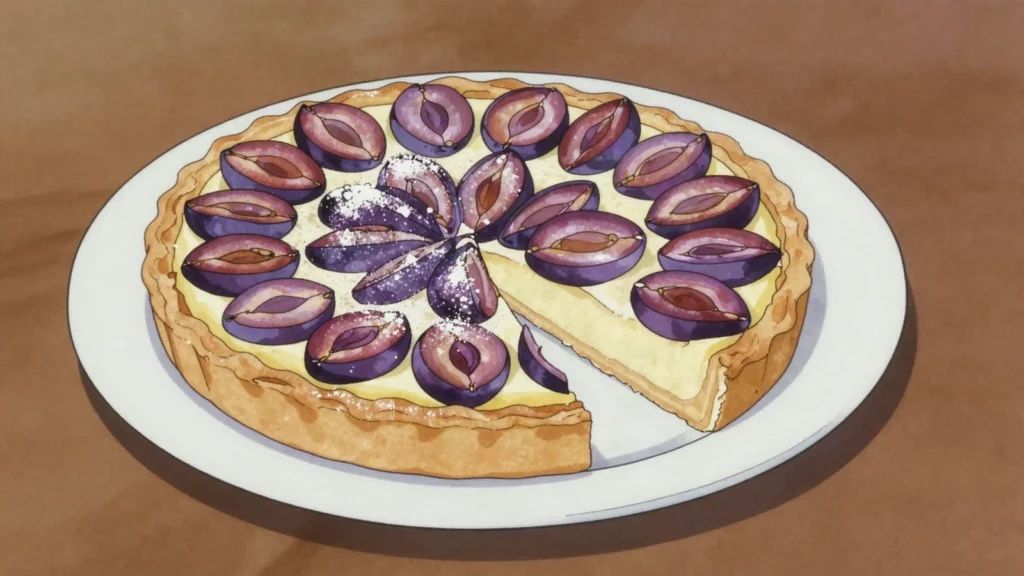
- Pack it tightly, since fruit shrinks considerably and a sparse layer leaves gaps of bare custard. Setting halved plums cut side up rather than down keeps the juice in the fruit instead of running straight into the pastry.
- Sprinkle the fruit with sugar. For a savoury one, cook the onions or leeks down first until soft and let them cool. Cook them down properly and let them cool, since raw onion releases water and warm filling starts setting the custard early.
- Whisk the cream, eggs, flour and seasoning together. Season it with nutmeg for savoury or a little sugar for sweet. Pour it slowly and let it settle into the gaps between the fruit. Do not overfill.
- Bake it on the lowest shelf, or on a preheated baking sheet. Bottom heat is what cooks the base through, and a Wähe baked in the middle of the oven often has a pale soft bottom.
- Lift an edge with a palette knife and check the base rather than judging by the top. Cool it for at least 15 minutes before cutting. The custard needs that time to set properly, and cutting it hot gives a slumped slice. Serve it warm or at room temperature, cut into wedges. It keeps two days and reheats well in a moderate oven.
Technique
- The guss is what distinguishes a Wähe from an open tart.
- It is a main course or a dessert depending on the filling.
- Zwiebelwähe is associated with Bern’s November onion market.
Substitutions
- Ready-made shortcrust pastry, which Swiss shops sell rolled and ready.
- Milk in place of cream, which is lighter.
Variations
- Zwiebelwähe, with onions.
- Käsewähe, with cheese.
- Zwetschgenwähe, with damson plums, which is the classic autumn one.
History
A Swiss household tart baked on the day the oven was hot, in fruit, onion or cheese versions.
Frequently asked questions
What is Wähe?
Wähe is a bread & pastry from Switzerland: thin open tart with fruit or vegetables set in savoury custard. A Swiss household tart baked on the day the oven was hot, in fruit, onion or cheese versions.
How long does Wähe take to make?
Wähe takes 30 min plus 30 min chilling of preparation and 40 min of cooking. The recipe makes 8 servings. It is rated easy to make.
What can I substitute in Wähe?
Yes, within limits. Ready-made shortcrust pastry, which Swiss shops sell rolled and ready. Milk in place of cream, which is lighter.
What is the most important thing to get right in Wähe?
Pack it tightly, since fruit shrinks considerably and a sparse layer leaves gaps of bare custard. Setting halved plums cut side up rather than down keeps the juice in the fruit instead of running straight into the pastry.