
Ingredients
The pastry
- 250 gplain flour
- about 120 ml warm water
- 1 tablespoonolive oil
- a pinch of salt
The filling
- 400 gfresh curd cheese
- requeijão, or drained ricotta
- 250 gsugar
- 4egg yolks
- 2 tablespoonsplain flour
- 2 teaspoonsground cinnamon
- a pinch of salt
To shape and bake
- flour, to dust
- small tart tins
- or a muffin tin
- a very hot oven
To serve
- cool
- dusted with cinnamon
- with coffee
Directions
- Drain the cheese thoroughly first. Understanding the hot oven is worth explaining. Put the flour and salt in a bowl. Add the oil and the warm water. Bring it together into a dough. It should be soft and pliable. Add water just a splash at a time. Knead it for about ten minutes. That gluten is what lets it stretch thin.
- Cover the dough and let it rest. Give it at least one full hour. Beat the drained cheese until smooth. Work out any lumps thoroughly. Push it through a sieve if needed. Beat in all the sugar gradually. Add the egg yolks one at a time. Sift in the flour and cinnamon.
- Add the pinch of salt to them. It stops it splitting as it bakes. Adjust it with a little more cheese. Divide the dough into small pieces. Work with a small piece at a time. Keep all of the rest of it covered. Rolling it thin is the whole skill.
- Flour the whole surface generously. Roll each piece out as thin as you can. Roll it until nearly transparent. You should see the surface through it.
- Take your proper time over it. Work gently and quite slowly here. Cut rounds a little larger than the tins. Press every one into a small tin. Press it into the base and up the sides. Work it in gently with your fingers. The thin dough tears easily here.
- Leave a little proud all round. Trim it roughly rather than neatly. Spoon the filling into each shell. Fill them nearly right to the top. Leave just a few millimetres there. Heat the oven as hot as it goes. Bake them for about fifteen minutes. This needs a genuinely hot oven. Let them cool in the tins briefly. Give them at least twenty minutes. Dust them with ground cinnamon.
- Dust it lightly rather than heavily. Serving them is done properly cool. Set all of them out on a plate. Serve strong coffee alongside. They keep three days in a sealed tin.
Technique
- The pastry is rolled almost transparent and that thinness is the whole difficulty of the recipe. It is flour, water, oil and salt with very little fat, which is why it bakes to a crisp brittle shell rather than a shortcrust — so knead it a full ten minutes to develop the gluten that lets it stretch, and rest it at least an hour so it relaxes and stops springing back. An unrested dough cannot be rolled thin at all.
- Bakers in Sintra stretch the dough by hand over their knuckles, which is skilled practised work; rolling it very thin works well enough and is the practical route, and the atlas records both.
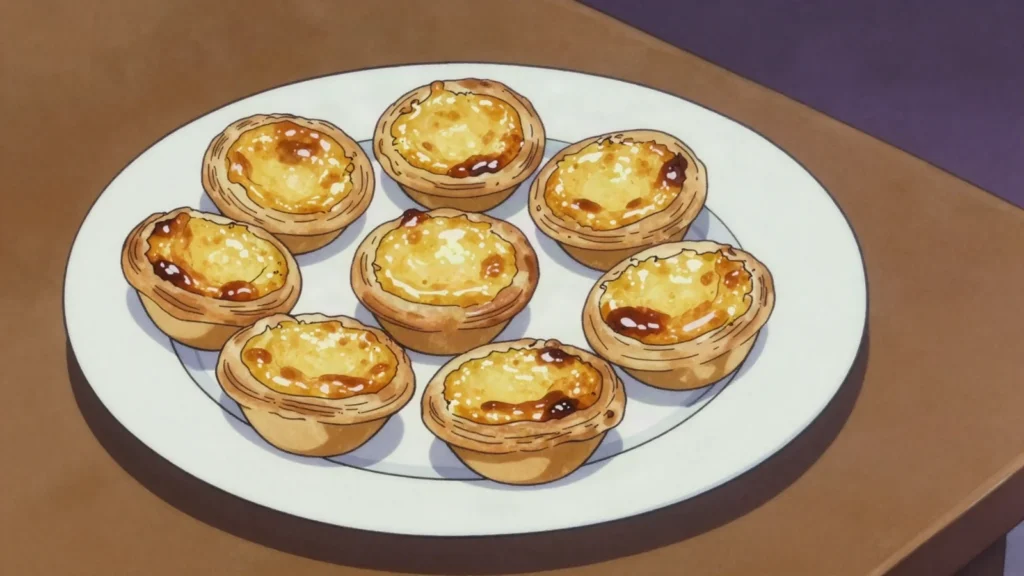
- Bake in a genuinely hot oven, two hundred and forty degrees if possible, which sets the thin shell fast and blisters the filling. Dark blistered patches on the filling are wanted and characteristic — an evenly pale filling is underbaked.
Substitutions
- Well-drained ricotta stands in for requeijão, a Portuguese fresh curd cheese that is mild and slightly grainy; either must be drained thoroughly, since wet cheese makes a runny filling and a soggy shell.
- Egg yolks alone rather than whole eggs give the richer set and the colour that are traditional here.
Variations
- They are recorded in Sintra from the Middle Ages, when they served to pay land rents partly in goods, and Casa da Sapa has sold them since 1756 — documented and dated facts that record how long established the pastry is.
- Work with one small piece of dough at a time and keep the rest covered, since rolled dough dries fast; small tears can be patched with scraps but large ones mean starting that piece again.
- Let the pastry come a little above the rim of the tin, since it shrinks slightly as it bakes, and trim it roughly rather than neatly.
History
Recorded in Sintra since the Middle Ages, when they served to pay land rents; Casa da Sapa has sold them since 1756.
Frequently asked questions
What is Queijadas de Sintra?
Queijadas de Sintra is a bread & pastry from Portugal: tiny crisp-shelled tarts of fresh cheese, sugar and cinnamon. Recorded in Sintra since the Middle Ages, when they served to pay land rents; Casa da Sapa has sold them since 1756.
How long does Queijadas de Sintra take to make?
Queijadas de Sintra takes 1 hour plus resting of preparation and 20 minutes of cooking. The recipe makes about 24 tarts. It is rated hard to make.
What can I substitute in Queijadas de Sintra?
Yes, within limits. Well-drained ricotta stands in for requeijão, a Portuguese fresh curd cheese that is mild and slightly grainy; either must be drained thoroughly, since wet cheese makes a runny filling and a soggy shell. Egg yolks alone rather than whole eggs give the richer set and the colour that are traditional here.
What is the most important thing to get right in Queijadas de Sintra?
Add the pinch of salt to them. It stops it splitting as it bakes. Adjust it with a little more cheese. Divide the dough into small pieces. Work with a small piece at a time. Keep all of the rest of it covered. Rolling it thin is the whole skill.