
Ingredients
The cheese
- 4 litreswhole cow’s milk, as fresh as possible
- a handful of Calotropis procera (sodom apple) leaves and stems, crushed, to yield about 60 ml of milky sap extract
- or ½ tsp vegetarian microbial rennet dissolved in 3 tbsp cool water
- 1 tspsalt
Colouring (optional, traditional)
- a handful of dried sorghum leaf sheaths, for the red-skinned wagashi gassire
Tomato sauce
- 4 tbspgroundnut or palm oil
- 2onions, sliced
- 4tomatoes, chopped
- 2 tbsptomato paste
- 2red chillies, chopped
- 3garlic cloves, crushed
- 15 gginger, grated
- 1 tspsalt
- ½ tspground white pepper
- 200 mlwater
To fry and serve
- 300 mlgroundnut oil, for shallow frying
- steamed rice or boiled yam
- chopped coriander
Directions
- Crush the Calotropis leaves and stems and steep them in a little warm water, then strain — the plant’s white latex is the traditional Fulani coagulant and the reason this cheese exists without animal rennet.
- Warm the milk in a heavy pan to 40°C (105°F), no hotter, stirring gently. Take it off the heat.
- Stir in the plant extract (or the dissolved microbial rennet) with a few slow turns and leave completely undisturbed for 30–40 minutes until the milk has set to a soft, wobbling curd that pulls cleanly from the side of the pan.
- Return the pan to a very low heat and bring it slowly to about 80°C (175°F) over 15 minutes, stirring gently as the curd contracts and the whey turns clear yellow-green. Never boil it hard.
- Ladle the curds into a perforated calabash, a colander lined with cloth, or small moulds, and press gently by hand to squeeze out the whey, shaping flattened rounds about 3 cm thick.
- Salt the surfaces lightly and let the cheeses firm and cool for at least an hour. Properly made wagashi is squeaky, springy and does not melt when heated — this is what makes frying possible.
- For the traditional red skin, simmer the finished cheeses for 10 minutes in water boiled with dried sorghum leaves until the outside stains deep russet, then drain and dry.
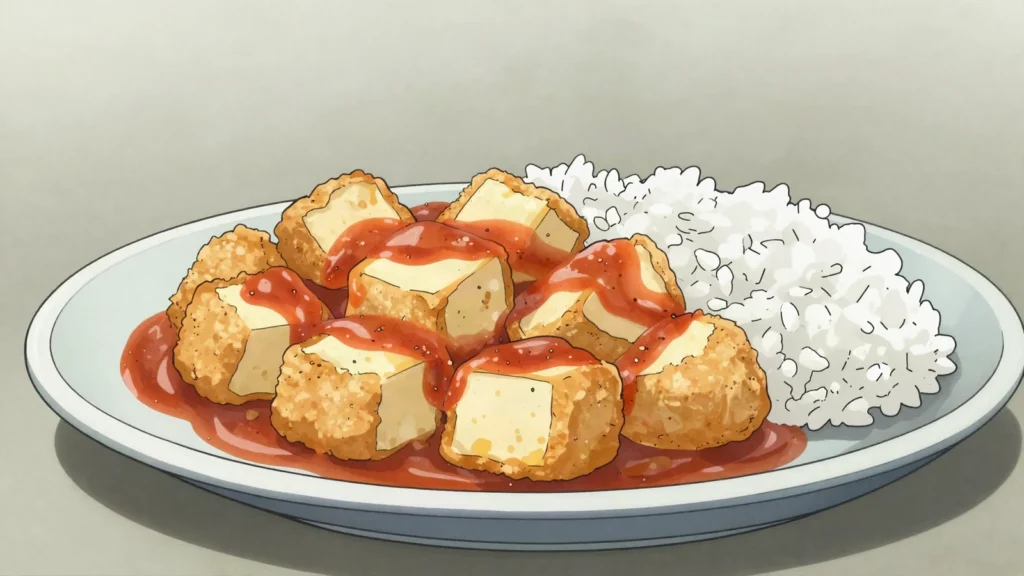
- Cut the cheese into thick slices or cubes and fry in hot groundnut oil for 3–4 minutes, turning, until a golden crust forms on every face. Drain on a rack.
- For the sauce, fry the onions in oil 8 minutes, add garlic, ginger, chillies and tomato paste and fry 3 minutes, then the tomatoes, salt, pepper and water, and simmer 15 minutes until thick and the oil separates.
- Slide the fried cheese into the sauce, simmer 5 minutes just to let it drink up the flavour without collapsing, and serve with rice or boiled yam, scattered with coriander.
Technique
- Wagashi (also called wara) is made by Fulani women across Benin, Togo, Nigeria and Niger, and is one of very few traditional West African cheeses.
- Use fresh, un-homogenised milk if you can. Ultra-heat-treated milk will not form a proper curd, whatever coagulant you use.
- Food safety: this is a fresh unripened cheese with no acid or salt preservation to speak of. Keep it refrigerated, use it within two or three days, and use pasteurised milk if you are not certain of the source.
- The Calotropis latex is the authentic coagulant and is used in tiny quantities; the raw plant is toxic in quantity and irritating to skin and eyes, which is why microbial rennet is the sensible home route.
Substitutions
- No Calotropis and no rennet: acidify with 60 ml of lemon juice or white vinegar at 80°C (175°F). The result is closer to paneer — it will still fry, but it is crumblier and less springy.
- Paneer or halloumi, cut into cubes and fried, stand in convincingly for wagashi in the tomato sauce.
Variations
- Wagashi gassire, the red-skinned version coloured with sorghum leaves, which also keeps a little longer.
- Grilled on skewers over charcoal and dusted with chilli-peanut powder, sold as street food in Parakou and Cotonou.
History
Made by Fulani herders of the Borgou; the fresh curd is often boiled with sorghum stalks that dye it red and extend its short shelf life.
Frequently asked questions
What is Wagashi?
Wagashi is a main from Benin: fulani cow’s-milk cheese fried and simmered in spicy tomato sauce. Made by Fulani herders of the Borgou; the fresh curd is often boiled with sorghum stalks that dye it red and extend its short shelf life.
How long does Wagashi take to make?
Wagashi takes 40 min of preparation and 1 hr of cooking. The recipe makes 4 servings (about 500 g cheese). It is rated hard to make.
What can I substitute in Wagashi?
Yes, within limits. No Calotropis and no rennet: acidify with 60 ml of lemon juice or white vinegar at 80°C (175°F). The result is closer to paneer — it will still fry, but it is crumblier and less springy. Paneer or halloumi, cut into cubes and fried, stand in convincingly for wagashi in the tomato sauce.
What is the most important thing to get right in Wagashi?
Return the pan to a very low heat and bring it slowly to about 80°C (175°F) over 15 minutes, stirring gently as the curd contracts and the whey turns clear yellow-green. Never boil it hard.