
Ingredients
The plantains
- 8ripe plantains
- or ripe cooking bananas
- yellow with black patches
- peeled and cut into chunks
- see the note on ripeness
The coconut
- 2mature coconuts
- grated and pressed
- for about 600 ml cream
- or 2 tins coconut cream
- full fat, not light
The sweetening
- 100 gsugar
- or to taste
- or 100 ml coconut toddy syrup
- a good pinch of salt
Sometimes added
- a strip of lime peel
- a little grated nutmeg
- a knob of butter
- grated fresh coconut, to scatter
To serve
- warm, in bowls
- or at room temperature
- with a spoon
Directions
- Squeeze it gently to check the flesh. It should give but not be mushy. Put them in a paper bag to hurry them. Cut the ends off each plantain. Score the skin lengthways two or three times. Cut through the skin only, not the flesh. Use your thumb or a blunt knife. Cut the flesh into thick chunks. Crack a mature coconut over a bowl. Never chop at a coconut on a board.
- Grate the flesh out with a scraper. Put the grated coconut in a clean cloth. Add a little warm water to it. The thick first pressing is the cream. Add more water and squeeze again. Keep the two separate if you can. The thin milk cooks the plantains.
- Shake the tin hard before opening it. Use full fat, never light coconut milk. Light versions give a thin watery result. Put the thin coconut milk in a wide pan. Add a splash of water if you need more liquid.
- Add the pinch of salt, which matters here. Salt sharpens the sweetness considerably. Add the lime peel if you are using it. Bring the pan to a gentle simmer. They should be just covered by the liquid. Keep it at a bare simmer throughout. Simmer the plantains for twenty minutes. They should become completely soft.
- Use a wooden spoon or a potato masher. Mash them against the side of the pan. Do not mash them completely smooth. Leave some pieces recognisable. A completely smooth purée is not the dish.
- Add it gradually and taste as you go. They may need very little added sugar. Stir until the sugar dissolves fully. Now add the thick coconut cream. Add it in the last few minutes only. Long cooking splits the thick cream. Stir it through gently over a low heat.
- Let it warm without boiling at all. The mixture should be thick and creamy. Add more cream if it is too stiff. Simmer it briefly if it is too loose. Add a knob of butter if you like. Grate a little nutmeg over if you want. Taste it one final time before serving. It should be clearly sweet but not sickly. Scatter grated fresh coconut over the top. Leftovers keep two days refrigerated.
Technique
- Use ripe plantains, not green ones — yellow with black patches, and the more black the better. Green plantains are starchy and taste of potato, and no amount of sugar makes up for it. Buy them days ahead and ripen them at room temperature, or hurry them in a paper bag.
- Never let coconut milk boil hard. It splits into grainy oil, which still tastes fine but looks curdled. Keep it at a bare simmer, and add the thick cream only in the last few minutes.
- Use full-fat coconut cream, not light. The dish is essentially fruit and coconut, so the coconut quality shows clearly.
- Do not mash it completely smooth. Some recognisable pieces are wanted; a uniform purée is not the dish.
- Judge the sugar by taste rather than by measure. Ripe plantains are already sweet and may need very little.
- The pinch of salt is not optional. It sharpens the sweetness, and without it the dish tastes flat.
- Test the plantains properly before mashing. Underdone plantain stays firm and starchy, and mashing does not fix it.
- Opening a coconut is the real hazard. Never hold one in your hand to cut it — set it on a stable surface and tap around the middle with the back of a heavy knife.
- Fijian cooking bananas are picked at different stages and used quite differently — green as a vegetable with fish, ripe for sweets like this. A single crop feeds a household several ways.
Substitutions
- Ripe cooking bananas replace plantains directly.
- Tinned full-fat coconut cream replaces freshly pressed; hold back the thick top of the tin for the finish.
- Coconut toddy syrup replaces sugar and gives a darker caramel note.
- Sweet potato or pumpkin can be cooked the same way, giving a related but distinct dish.
- A knob of butter or a little nutmeg are both good additions, neither traditional.
- Grated fresh coconut scattered over is a common finish and adds texture.
Variations
- Vakalolo, a Fijian sweet of grated cassava and coconut, belongs to the same family of village sweets.
- A version with the plantains left in whole pieces rather than mashed is served as a simpler dish.
- Related coconut and banana sweets are made across Samoa, Tonga and the wider Pacific.
- Some cooks add a little cassava or arrowroot starch to thicken it further.
- A version cooked in an earth oven wrapped in leaves is made for larger feasts.
- Green plantains cooked in coconut milk make the savoury counterpart, eaten with fish.
History
A Fijian village sweet made from cooking bananas, often prepared for church gatherings and family feasts.
Frequently asked questions
What is Vudi Vakasoso?
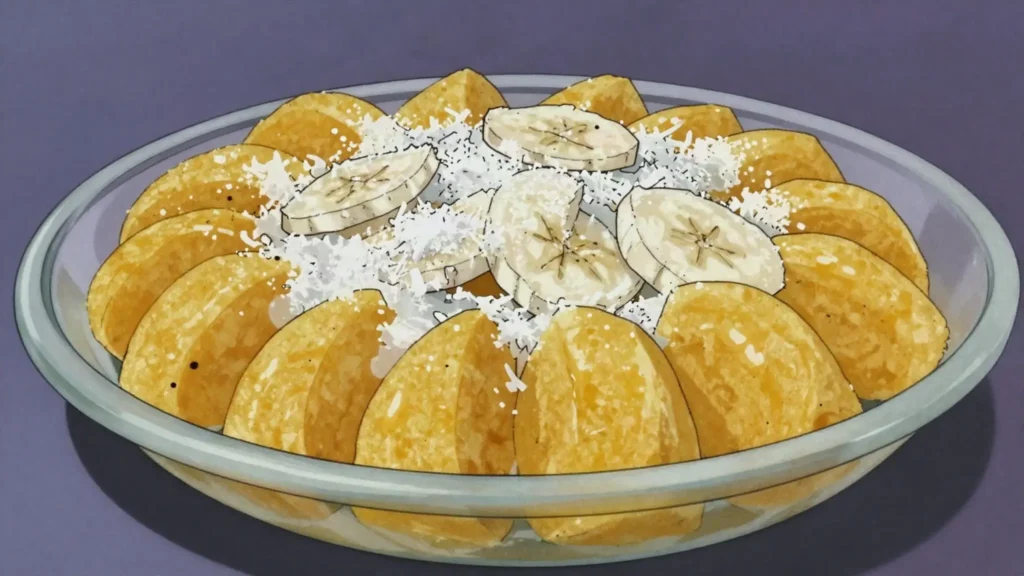
Vudi Vakasoso is a dessert from Fiji: plantains simmered and mashed with coconut cream and sugar. A Fijian village sweet made from cooking bananas, often prepared for church gatherings and family feasts.
How long does Vudi Vakasoso take to make?
Vudi Vakasoso takes 20 minutes of preparation and 35 minutes of cooking. The recipe makes serves 6. It is rated easy to make.
What can I substitute in Vudi Vakasoso?
Yes, within limits. Ripe cooking bananas replace plantains directly. Tinned full-fat coconut cream replaces freshly pressed; hold back the thick top of the tin for the finish. Coconut toddy syrup replaces sugar and gives a darker caramel note. Sweet potato or pumpkin can be cooked the same way, giving a related but distinct dish. A knob of butter or a little nutmeg are both good additions, neither traditional. Grated fresh coconut scattered over is a common finish and adds texture.
What is the most important thing to get right in Vudi Vakasoso?
Squeeze it gently to check the flesh. It should give but not be mushy. Put them in a paper bag to hurry them. Cut the ends off each plantain. Score the skin lengthways two or three times. Cut through the skin only, not the flesh. Use your thumb or a blunt knife. Cut the flesh into thick chunks. Crack a mature coconut over a bowl. Never chop at a coconut on a board.