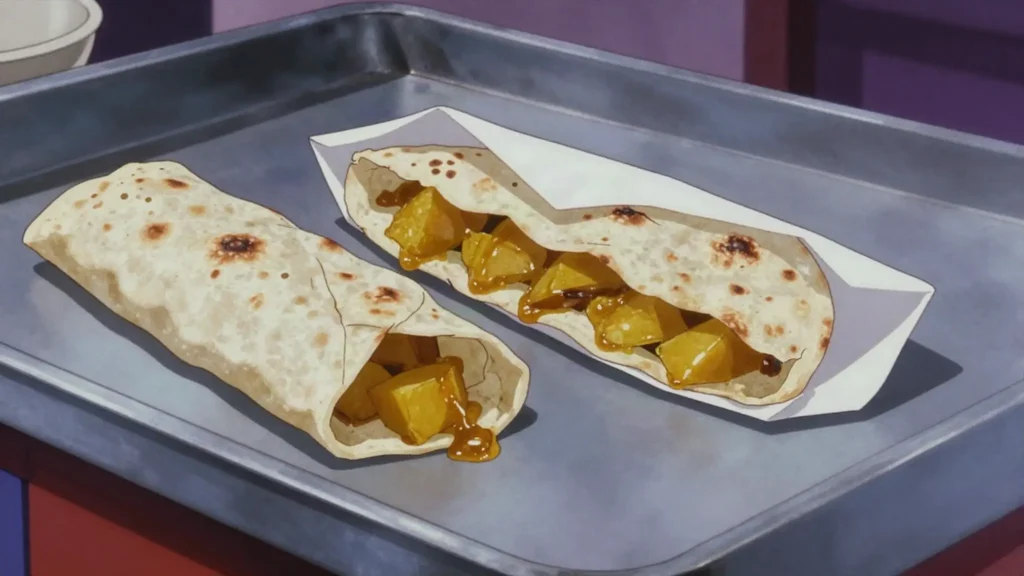

Ingredients
The roti
- 500 gplain flour
- about 300 ml warm water
- 1 teaspoonsalt
- 3 tablespoonsoil or ghee
- extra oil, to layer
The curry
- 800 gpotatoes and vegetables
- or chicken, or lamb
- cut into chunks
- 2onions, chopped
- 6garlic cloves, crushed
- 3cm ginger, grated
- 3 tablespoonscurry powder
- 1 teaspoonturmeric
- 1 teaspooncumin seed
- 400 gtomatoes, chopped
- 3 tablespoonsoil
- salt
Sometimes added
- 1hot chilli
- curry leaves
- a handful of coriander
- 200 mlcoconut milk
To wrap
- greaseproof paper
- or foil
- for carrying
Directions
- Oil is spread on the rolled dough. Those layers give the soft texture. Cook it right down before wrapping. Put the flour and salt in a bowl. Add all the warm water gradually. Warm water gives a softer dough. Add it in just a splash at a time. Judging the dough takes a feel. Knead it for about eight minutes. It should become smooth and elastic.
- Oil your hands if it sticks badly. Do not add any more flour to it. Cover it over and let it rest. Give it at least thirty full minutes. Heat the oil in a heavy deep pot. Add the whole cumin seed to it. Give them about thirty seconds. Add the chopped onion to the pot. Cook it for about twelve minutes. It should soften and turn golden.
- Add the garlic and grated ginger. Give them about one full minute. Add the curry powder and turmeric. Fry them briefly in the hot oil. Heat releases their aromatic oils. Give them about thirty seconds only. Add a splash of water if they catch. Add the chopped tomatoes to the pot.
- Cook them down for five minutes. Add the potatoes or else the meat. Stir them through the spiced base. Coat everything in the spices first. Give it a couple of full minutes.
- Add a little water and cover it. Add far less than for a wet curry. It must cook right down quite dry. Add more water only if it catches. Cooking it takes about twenty-five minutes. Simmer it until everything is tender. Potatoes take about twenty-five minutes.
- Check it rather than guessing. Take the lid off near the end. Cook the curry until quite dry. A wet curry soaks the roti through. Cook all the liquid right off. Divide the dough into equal balls. Make them about the size of a lime. Keep every one of them the same size. Roll each ball into a thin circle.
- Roll it about two millimetres thick. Thin enough to be properly pliable. Keep it even across the circle. Brush oil over the whole surface. Cover it right out to the edges. Use a generous brushful of it. Scatter a little flour over the oil. Flour over the oil helps separate layers. It stops them fusing back together.
- Roll the circle up into a rope. Roll it up from one long edge. Roll it fairly tightly as you go. Press it down gently to flatten. Let the coil rest for ten minutes. Roll the coil out into a circle. Roll it gently rather than hard.
- Roll it to about three millimetres. Heat a heavy flat pan or tawa. Use a steady medium-high heat here. It should be hot but not smoking. Lay one rolled roti on the hot pan. Give it about a minute a side. Brown spots appear underneath. Brush a little oil as it cooks. That keeps it soft and pliable.
- Brush both sides as you turn it. Do not use very much of the oil. Crush the cooked roti between your hands. Squeeze it gently from the sides. It becomes soft and flaky at once. Let it cool a few seconds first. Do not burn your hands on it at all.
- Stack them under a clean cloth. The steam keeps them soft and pliable. Cover them the moment they come off. Lay a warm roti flat on paper. Spoon curry down the centre of it. Do not overfill the roti at all.
- Leave clear edges to fold over. Fold the sides in over the curry. Fold the bottom edge up first. Wrap the whole thing in paper. It also keeps it warm considerably. Peel the paper back as you eat. The curry keeps three days refrigerated. Warm them briefly before wrapping.
Technique
- The curry must be cooked quite dry, clinging rather than pouring: a wet curry soaks through the roti and leaks out of the parcel. Take the lid off near the end and cook the liquid right off.
- The roti must stay soft and pliable or it cracks when wrapped. Three things keep it so: a wetter dough, a full thirty minutes of resting, and stacking the cooked rotis under a cloth the moment they come off the pan — uncovered ones go stiff within minutes.
- Brushing oil and a light dusting of flour over the rolled circle before coiling it is what creates the layers: the oil separates them and the flour stops them fusing back together. Roll the coil out gently rather than hard, since hard rolling squeezes those layers back into one.
Substitutions
- Potato curry is the common filling with chicken, lamb and vegetable curries all genuinely made; chicken must reach seventy-five degrees at the thickest part with no pink at all.
- Crushing the cooked roti gently between the hands separates the coiled layers so it becomes soft and flaky at once — a genuine and satisfying step, but it is very hot, so let it cool a few seconds or use a cloth.
Variations
- Err on the wetter side with the dough, since a soft dough gives a soft roti and a firm one gives a tough roti; oil your hands rather than adding more flour if it sticks, which would toughen it.
- Coat the potatoes or meat in the fried spices before any liquid goes in, which gives far more flavour than adding them to a wet sauce.
- Indian labourers were brought to Fiji under British indenture from 1879 to 1916 to work the sugar cane, often in genuinely harsh conditions and often unable to return home. Their descendants are Indo-Fijians, and this wrapped lunch was functional design: cane field workers ate where they worked, with no plates or tables.
History
The everyday lunch of Indo-Fijian workers, wrapped so curry can be carried to cane fields and building sites without a plate.
Frequently asked questions
What is Roti Parcel?
Roti Parcel is a street food from Fiji: soft roti wrapped around curry, the everyday Fijian lunch. The everyday lunch of Indo-Fijian workers, wrapped so curry can be carried to cane fields and building sites without a plate.
How long does Roti Parcel take to make?
Roti Parcel takes 40 minutes plus resting of preparation and 40 minutes of cooking. The recipe makes serves 4. It is rated medium to make.
What can I substitute in Roti Parcel?
Yes, within limits. Potato curry is the common filling with chicken, lamb and vegetable curries all genuinely made; chicken must reach seventy-five degrees at the thickest part with no pink at all. Crushing the cooked roti gently between the hands separates the coiled layers so it becomes soft and flaky at once — a genuine and satisfying step, but it is very hot, so let it cool a few seconds or use a cloth.
What is the most important thing to get right in Roti Parcel?
Oil your hands if it sticks badly. Do not add any more flour to it. Cover it over and let it rest. Give it at least thirty full minutes. Heat the oil in a heavy deep pot. Add the whole cumin seed to it. Give them about thirty seconds. Add the chopped onion to the pot. Cook it for about twelve minutes. It should soften and turn golden.