
Ingredients
Syrup
- 800 ggranulated sugar
- 300 mlwater
- 1 tsplemon juice
Starch mixture
- 120 gcornflour
- 1 tspcream of tartar
- 400 mlwater
To flavour
- 2 tbsprosewater
- or 1 tbsp lemon juice and zest
- or 2 tbsp pomegranate juice
- a drop of food colouring, optional
To add
- 150 gpistachios or walnuts, optional
To coat
- 100 gicing sugar mixed with 50 g cornflour
Equipment
- a sugar thermometer
- a heavy-based pan
- a 20 cm square tin, oiled and lined
Directions
- Make certain it is completely dissolved before it boils. Brush the sides of the pan down with a wet pastry brush. Now stop stirring and boil it to 115°C, the soft ball stage. Swirl the pan if you must. Add the lemon juice, which inverts some of the sugar and helps prevent crystallising.
- Use a thermometer. Take it off the heat and set it aside. Whisk the cornflour and cream of tartar into the cold water until completely smooth. Mix it cold and whisk out every lump, since cornflour in hot water seizes instantly.
- Cook it over a medium heat, whisking constantly, until it thickens into a thick, glossy, gluey paste. It will go from milky to translucent and become very stiff, and it should look like wallpaper paste.
- Add the hot syrup to the starch paste in a slow stream, whisking hard the whole time. Pour it slowly and whisk without stopping. Added too fast it goes lumpy and it never recovers. Simmer it over the lowest possible heat for at least 1 hour 30 minutes, and up to 2 hours. The mixture must cook until the starch is completely transformed, and there is no shortcut.
- Stir it every few minutes, scraping the base and the corners. Use a long spoon and stand back, since a thick mixture like this spits like a volcano. Now the signs that it is ready. Stir in the rosewater off the heat, since its aroma boils away. Too much and the whole batch tastes of soap, which is the second commonest complaint about homemade lokum.
- Pour it into the oiled and lined tin and level it quickly. Work fast, since it stiffens as it cools. Now let it set at room temperature, uncovered, for at least 8 hours and preferably 24.
- Cut it into cubes with an oiled knife, or with oiled scissors. Oil the blade and wipe it between cuts, since the mixture is intensely sticky. The cornflour in the coating is what stops the pieces sticking together. Serve it with Turkish coffee, which is the fixed pairing, since the bitterness cuts the sweetness.
Technique
- It is set with cornflour and contains no gelatine.
- Refrigerating it makes it weep, so it is kept at room temperature.
- Hacı Bekir has traded in Istanbul since 1777.
Substitutions
- Lemon or pomegranate in place of rosewater.
- There is no substitute for the long slow cooking.
Variations
- With pistachios, which is the most prized.
- Flavoured with mastic.
- Cezerye and other regional relatives made with carrot.
History
Known in Turkish as lokum, a chewy, powdered-sugar-dusted confection whose modern form is often credited to confectioner Hacı Bekir, who opened a sweet shop in Istanbul in 1777 and is widely said to have refined an older, simpler recipe into the smoother, cornstarch-thickened version now considered classic — though simpler gel-like sweets using honey or grape syrup existed in the region well before that date. The name Turkish delight itself is not Turkish at all; it was coined by British visitors to the Ottoman Empire in the 1800s, and Hacı Bekir’s shop, still operating in Istanbul under the same family name, is frequently credited with popularizing lokum among European travelers who then carried the English name back home with them.
Frequently asked questions
What is Turkish delight?
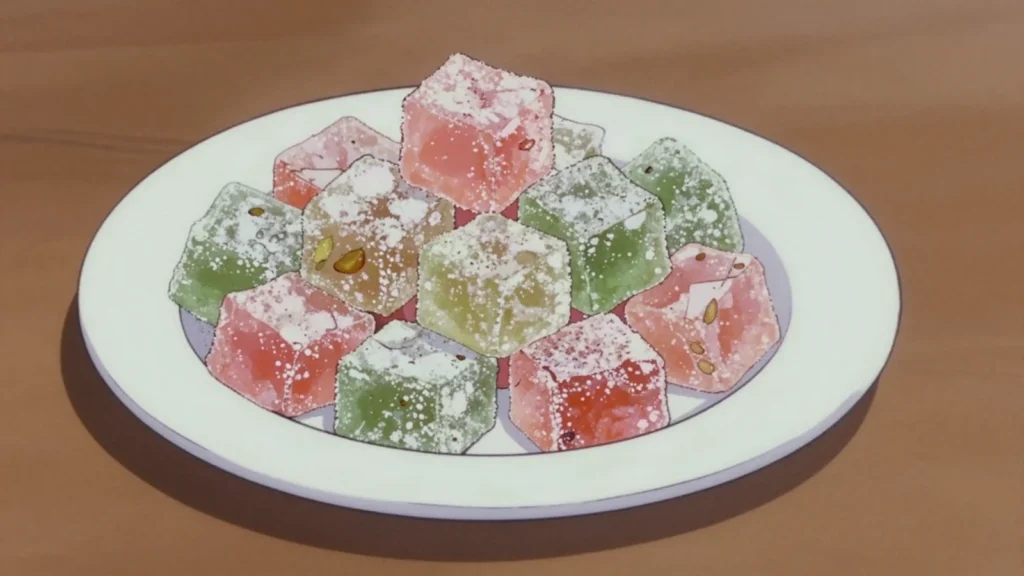
Turkish delight is a dessert from Turkey: chewy rosewater or pistachio cubes dusted with powdered sugar. Known in Turkish as lokum, a chewy, powdered-sugar-dusted confection whose modern form is often credited to confectioner Hacı Bekir, who opened a sweet shop in Istanbul in 1777 and is widely said to have refined an older, simpler recipe into the smoother, cornstarch-thickened version now considered classic — though simpler gel-like sweets using honey or grape syrup existed in the region well before that date. The name Turkish delight itself is not Turkish at all; it was coined by British visitors to the Ottoman Empire in the 1800s, and Hacı Bekir’s shop, still operating in Istanbul under the same family name, is frequently credited with popularizing lokum among European travelers who then carried the English name back home with them.
How long does Turkish delight take to make?
Turkish delight takes 30 min plus overnight setting of preparation and 2 hr of cooking. The recipe makes about 60 pieces. It is rated hard to make.
What can I substitute in Turkish delight?
Yes, within limits. Lemon or pomegranate in place of rosewater. There is no substitute for the long slow cooking.
What is the most important thing to get right in Turkish delight?
Make certain it is completely dissolved before it boils. Brush the sides of the pan down with a wet pastry brush. Now stop stirring and boil it to 115°C, the soft ball stage. Swirl the pan if you must. Add the lemon juice, which inverts some of the sugar and helps prevent crystallising.