
Ingredients
The sponge
- 12egg yolks
- at room temperature
- 4egg whites
- 200 gcaster sugar
- 150 gplain flour
- sifted twice
- 1 teaspoonbaking powder
- a pinch of salt
- 1 teaspoonvanilla
- grated zest of 1 lime
The syrup
- 400 gsugar
- or 400 g panela
- 500 mlwater
- 2 stickscinnamon
- 6whole cloves
- a strip of lime peel
- a pinch of salt
- 2 tablespoonsrum, optional
Sometimes added
- raisins, soaked
- or chopped prunes
- toasted sesame seeds
- to scatter
- ground cinnamon, to dust
Equipment
- a deep 24 cm square tin
- lined with baking paper
- an electric whisk
- a skewer, to test
- a jug for the syrup
Directions
- Freeze them in an ice cube tray. Use them for meringues or for omelettes. Separating eggs needs a little care. Heat the oven to one hundred and seventy degrees. Line a deep square tin with baking paper. Line the sides as well as the base. The cake will be soaked and it needs containing.
- Beat the yolks with most of the sugar. Keep back about fifty grams for the whites. Beat them with an electric whisk. Beat for a full five to eight minutes. The mixture should become very pale. Add the vanilla and the lime zest. Now beat the whites in a clean dry bowl.
- Beat them with a pinch of salt. Beat to soft peaks, then add the reserved sugar. Beat until glossy and holding firm peaks. Do not beat them dry and grainy. Sift the flour and baking powder over the yolks.
- Sift it twice, since lumps are a real problem. Fold it in with a large metal spoon. Fold gently in a cutting figure-eight motion. Stop as soon as no dry flour remains. Add a third of them first and mix it in. Fold gently to keep the air in. Pour the batter into the lined tin. Bake it for about forty minutes. It should be golden and firm on top.
- Put the sugar and water in a pan. Add the cinnamon, cloves and lime peel. Add the pinch of salt to the syrup. Heat gently until the sugar dissolves. Then simmer it for ten to fifteen minutes.
- Let it cool to warm rather than hot. There is a safety note about sugar syrup. Cool any splash under running water. Cool it for a full twenty minutes. Take the cake out and leave it in the tin. Prick it all over with a skewer. Prick deeply, right down to the base.
- Pour warm syrup over the hot cake. Warm syrup onto hot cake soaks in best. Pour it slowly in several additions. Let each addition sink in before the next. Do not tip all of the syrup on at once. Use about two thirds of the syrup at first. Let the cake stand for thirty minutes. Then add more syrup if it has absorbed it.
- Let it cool completely in the tin. Then chill it for at least two hours. Use a sharp knife wiped between cuts. Scatter toasted sesame seeds over the top. Dust it with a little ground cinnamon. Serve it cold or at room temperature. It keeps five days in the fridge.
Technique
- The dozen yolks are not an aesthetic choice. Other Lenten baking used mostly whites, and the surplus yolks had to go somewhere. It is the same logic behind the Iberian convent sweets — yemas, tocino de cielo, fios de ovos, ovos moles — where whites were used to clarify wine and starch habits and the yolks became a whole tradition.
- Do not throw away the eight leftover whites. Freeze them in an ice cube tray, one cube per white; they whip perfectly well after thawing.
- Beat the yolks and sugar for a full five to eight minutes, to the ribbon stage where the mixture falls in a thick trail that sits briefly on the surface. That is longer than people expect, and all the lift in this cake comes from it.
- Prick the baked cake deeply with a skewer, right down to the base, before pouring the syrup. Without those channels the syrup sits on the surface and the middle stays dry.
- Warm syrup onto hot cake is what soaks in best. Add it in stages and let each addition sink in — poured all at once it pools and overflows the tin.
- Keep the syrup thin. An over-reduced syrup will not penetrate the crumb at all.
- Boiling sugar syrup burns worse than boiling water because it is hotter and it sticks. Never taste it from the pan; cool a splash under running water for a full twenty minutes.
- The cake genuinely improves after a day in the fridge, as the syrup distributes evenly through the crumb.
Substitutions
- Panela replaces white sugar in the syrup and gives a darker, more molasses-like result.
- Orange zest and peel replace lime, giving a rounder and less sharp flavour.
- The rum can be left out entirely; many households make it without.
- Soaked raisins or chopped prunes folded into the batter are a common addition.
- Self-raising flour replaces plain flour plus baking powder directly.
- A round tin replaces a square one; the cake is then cut into wedges rather than squares.
Variations
- Torrejas are the other great Salvadoran syrup-soaked sweet, made with fried bread rather than sponge, and eaten at Christmas rather than Holy Week.
- A version with a thick layer of raisins and prunes through the middle is made in some households.
- Some cooks serve the cake dry with a jug of syrup at the table, so each person soaks their own.
- Guatemalan and Honduran yolk cakes are close relatives with slightly different spicing.
- Spanish tocino de cielo and Portuguese ovos moles are the Iberian ancestors of the yolk-sweet tradition.
- A version soaked in a milk syrup rather than a sugar syrup gives something closer to a tres leches cake.
History
A Salvadoran Holy Week sweet made when kitchens have surplus yolks from other Lenten baking.
Frequently asked questions
What is Torta de yema?
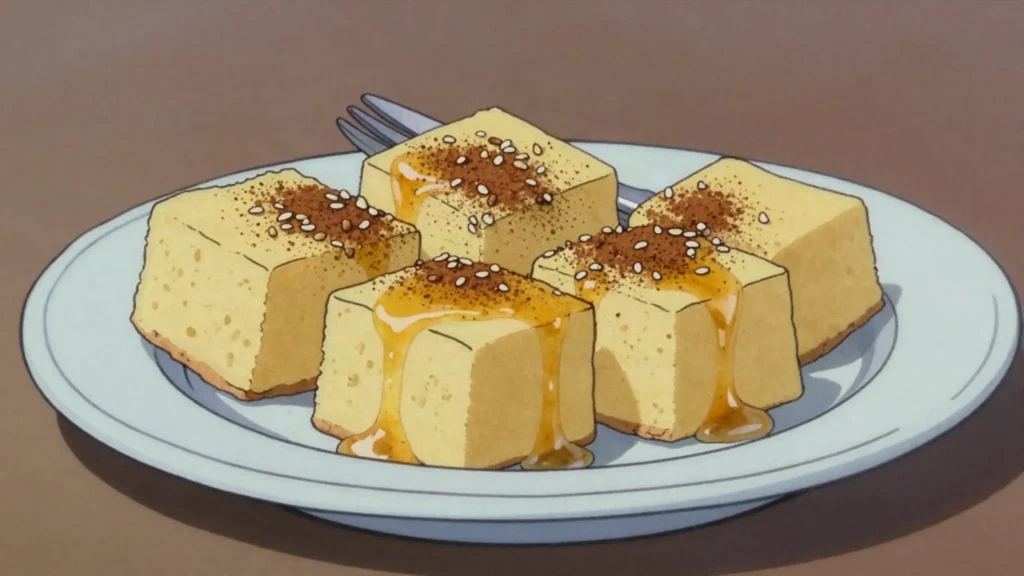
Torta de yema is a dessert from El Salvador: egg-yolk sponge soaked in sweet syrup, eaten in small squares. A Salvadoran Holy Week sweet made when kitchens have surplus yolks from other Lenten baking.
How long does Torta de yema take to make?
Torta de yema takes 30 minutes of preparation and 45 minutes of cooking. The recipe makes serves 12. It is rated medium to make.
What can I substitute in Torta de yema?
Yes, within limits. Panela replaces white sugar in the syrup and gives a darker, more molasses-like result. Orange zest and peel replace lime, giving a rounder and less sharp flavour. The rum can be left out entirely; many households make it without. Soaked raisins or chopped prunes folded into the batter are a common addition. Self-raising flour replaces plain flour plus baking powder directly. A round tin replaces a square one; the cake is then cut into wedges rather than squares.
What is the most important thing to get right in Torta de yema?
Beat them with a pinch of salt. Beat to soft peaks, then add the reserved sugar. Beat until glossy and holding firm peaks. Do not beat them dry and grainy. Sift the flour and baking powder over the yolks.