
Ingredients
Greens
- 800 gisland cabbage leaves
- aelan kabis
- or 800 g spinach or chard
- water, for washing
Coconut cream
- 1mature coconut, grated
- or 400 ml thick tinned coconut cream
- warm water, for squeezing
The pot
- 2onions, sliced
- 3garlic cloves, crushed
- 1tomato, chopped, optional
- 1chilli, chopped, optional
- salt and black pepper
To serve
- boiled taro or yam
- or boiled banana
- grilled or boiled fish
- rice
Directions
- Crack open a mature brown coconut. Drain the water out and keep it to drink. Grate the white flesh as finely as you can. Add a little warm water to the gratings.
- Squeeze it hard through a clean cloth. The first pressing is the thick cream. Pick the leaves from their stems. Discard any thick or woody stalks.
- Wash them in several changes of cold water. Lift them out rather than pouring the water off. Shake the leaves dry in a colander. Both are done in Vanuatu households.
- Put the sliced onions in a wide pan. Add about half the coconut cream. Add the crushed garlic to the pan. Warm it gently over a low heat. Let the onion soften for about eight minutes. Never let it come to a rolling boil.
- Add the chopped tomato and the chilli. Let them break down for about five minutes. Add all the leaves to the pan. They collapse down within a few minutes.
- Add the rest of the coconut cream. Season it with salt and black pepper. Cooking them takes little time. Cover the pan and lower the heat. Let them cook for about ten minutes. Stir them gently once or twice. They should be soft but still green.
- Take them off as soon as they are tender. The leaves should be soft and dark green. Taste it and adjust the salt to suit. Serving it is done piping hot. Spoon it into a warm serving dish. Serve boiled taro or yam alongside. It keeps two days refrigerated.
Technique
- Island cabbage is not a cabbage at all but Abelmoschus manihot, a member of the hibiscus and okra family, called aelan kabis in Bislama and aibika in Papua New Guinea; it is one of the most eaten greens in Melanesia.
- It is propagated from cuttings pushed into the soil rather than from seed, roots within weeks, and keeps producing for years, which is why it is the everyday garden green.
- Coconut cream must never boil hard, since that splits it into oil and solids and the sauce looks curdled and greasy; small bubbles should barely break the surface.
Substitutions
- Spinach or chard stand in, though they lack the slight mucilage.
- Thick tinned coconut cream works, using the solid part from the top of the tin.
Variations
- Some households add tomato and chilli and others keep it entirely plain.
- The leaves are left whole by some cooks and chopped by others.
- The same plant is cooked as aibika across Papua New Guinea.
History
The everyday green of Vanuatu gardens, grown from cuttings beside houses and cooked with almost every meal.
Frequently asked questions
What is Island Cabbage?
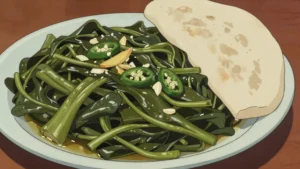
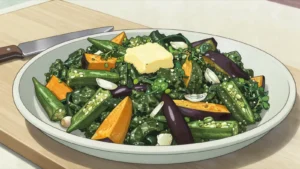
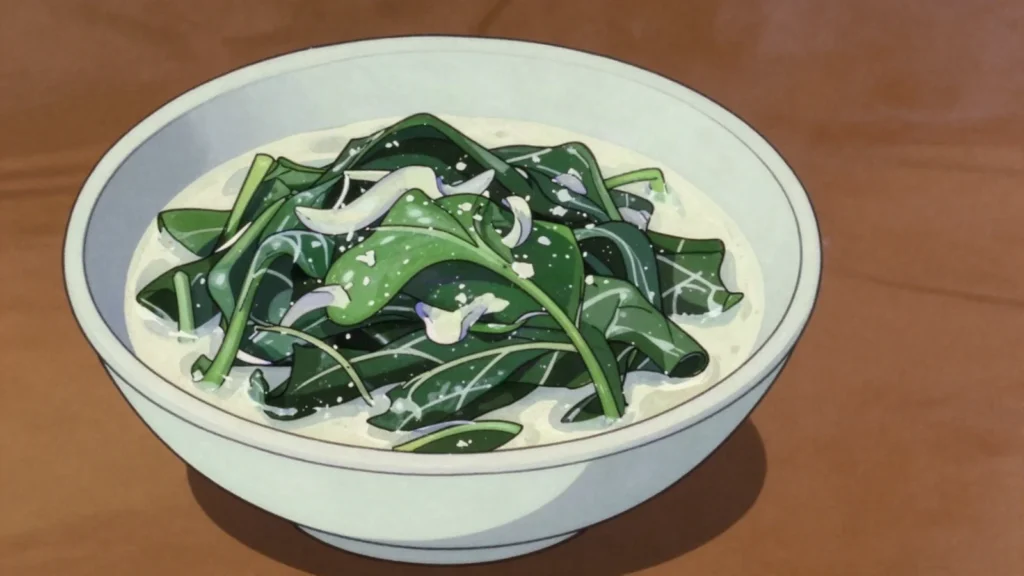
Island Cabbage is a salad & side from Vanuatu: broad tender hibiscus-family leaves boiled in coconut milk. The everyday green of Vanuatu gardens, grown from cuttings beside houses and cooked with almost every meal.
How long does Island Cabbage take to make?
Island Cabbage takes 20 minutes of preparation and 25 minutes of cooking. The recipe makes serves 6. It is rated easy to make.
What can I substitute in Island Cabbage?
Yes, within limits. Spinach or chard stand in, though they lack the slight mucilage. Thick tinned coconut cream works, using the solid part from the top of the tin.
What is the most important thing to get right in Island Cabbage?
Wash them in several changes of cold water. Lift them out rather than pouring the water off. Shake the leaves dry in a colander. Both are done in Vanuatu households.