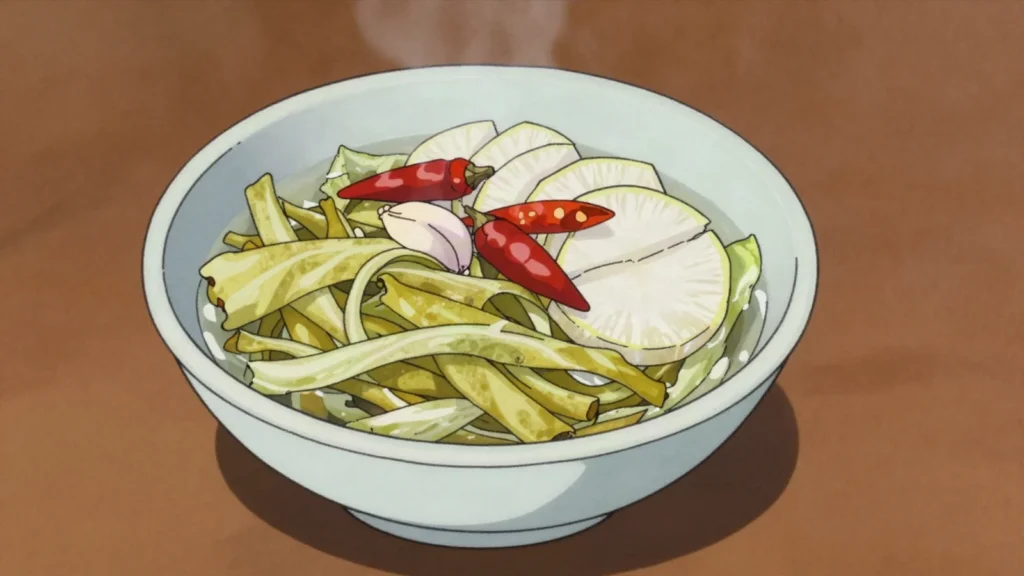

Ingredients
Vegetables
- 500 gmustard greens, cut in 5 cm lengths
- 300 gwhite radish, cut in batons
- 200 gwhite cabbage, in wide strips
Brine
- 1 litrerice-washing water — the cloudy water from rinsing rice
- 30 gcoarse non-iodised salt — 3%
- 1 tbspsugar
Aromatics
- 4 clovesgarlic, sliced
- 2dried red chillies
- 1 tspturmeric, optional, for colour
Directions
- Save the water from rinsing rice — the second or third rinse, once it runs cloudy white rather than grey. That starch suspension is the whole point of chinbat: it feeds the lactic bacteria and gets the ferment moving in days rather than weeks.
- Spread the cut vegetables on a tray and leave them in the sun or somewhere warm for two to three hours until wilted. This drives off surface water so the brine is not diluted.
- Dissolve the salt and sugar in the rice water.
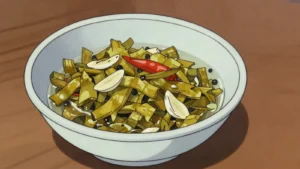
- Pack the wilted vegetables into a clean jar with the garlic, chilli and turmeric, pressing down firmly.
- Pour over the brine so everything sits at least 2 cm below the surface, and weight it down. Anything above the brine will spoil.
- Cover loosely and leave at room temperature for three to five days, tasting from day three. In Burmese heat it can be ready in three.
- It is ready when it smells sharply sour and the stems still snap. Move it to the fridge, where it keeps a month.
- Serve as a sharp side to curries and rice, or chop the sourest of it into soups.
Technique
- Three percent salt is low because this is a fast pickle eaten within weeks. Do not stretch it into a months-long preserve at this strength.
- Use genuinely cloudy rice water, not the first grey rinse.
- Everything under the brine. It is the only real failure mode.
Substitutions
- Plain water with a tablespoon of rice flour whisked in, if you have no rice water.
- Gai choy, kale or any firm brassica in place of mustard greens.
Variations
- The Lao som phak and Cambodian chrouk spey are the same preserve.
- A version with more turmeric and ginger, eaten with fried fish.
History
Burmese households ferment mustard greens, radish and cabbage this way to carry them through the dry season.
Frequently asked questions
What is Chinbat?
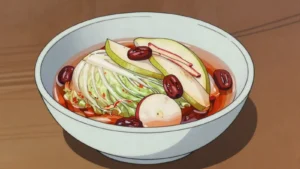
Chinbat is a fermented & pickled from Myanmar: vegetables soured in brine and rice wash, eaten as a sharp side dish. Burmese households ferment mustard greens, radish and cabbage this way to carry them through the dry season.
How long does Chinbat take to make?
Chinbat takes 30 min plus 3 to 5 days souring of preparation and no cooking at all. The recipe makes fills a 1-litre jar. It is rated easy to make.
What can I substitute in Chinbat?
Yes, within limits. Plain water with a tablespoon of rice flour whisked in, if you have no rice water. Gai choy, kale or any firm brassica in place of mustard greens.
What is the most important thing to get right in Chinbat?
Save the water from rinsing rice — the second or third rinse, once it runs cloudy white rather than grey. That starch suspension is the whole point of chinbat: it feeds the lactic bacteria and gets the ferment moving in days rather than weeks.