Ingredients
The corm
- 1giant swamp taro corm (te babai, Cyrtosperma merkusii), 2–3 kg, dug from the pit
- water for boiling, changed twice
- 1 tspsalt
Grated and baked (te babai with coconut cream)
- 1.5 kgpeeled babai, coarsely grated
- 500 mlthick coconut cream, pressed from 2 grated mature coconuts
- 150 mlkamaimai, the boiled-down coconut toddy syrup, or 100 g brown sugar
- 1 pinchsalt
- banana or breadfruit leaves, softened over the fire, for wrapping
The oven
- smooth beach stones and firewood, for the earth oven
- coconut fronds and sand, to cover
Directions
- Peel the corm thickly with a knife, taking off all the skin and any discoloured flesh.
- Cut the flesh into large pieces and boil in salted water for 2 to 3 hours, changing the water twice, until a knife slides through with no resistance. For the plain feast preparation, serve the boiled pieces hot with fresh coconut cream poured over, sliced thickly and shared from a communal mat.
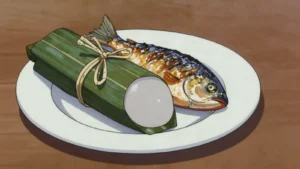
- Wrap portions in softened banana or breadfruit leaves, folding them into flat parcels and tying with strips of leaf. Build the earth oven: burn wood down over the stones for an hour until they are white-hot, rake the embers aside and level the stones.
- Lay the parcels on the stones, cover them with more leaves, then fronds and sand so no steam escapes, and bake for 1 hour 30 minutes to 2 hours. Unwrap at the mat: the babai should be dense, sweet, sticky and gluey, closer to a firm pudding than to a potato.
- Cut it into slabs and hand it round, oldest and highest-ranked first.
Technique
- Babai is prestige food, not everyday food. Corms are planted for a child’s birth or a coming marriage, tended for anything from three to fifteen years, and the largest are presented whole at the maneaba for feasts.
- The oxalate is a genuine hazard, and it is why every traditional preparation involves either very long boiling or long baking. Never taste it raw and never shorten the cooking.
- The pits are a remarkable piece of atoll agriculture: dug through coral sand to reach the lens of fresh groundwater, walled with leaves, and mulched constantly by hand.
- Names and preparations vary between islands in the Gilbert group, and published accounts disagree on the local names for the baked versions. The two constants everywhere are long cooking and coconut cream.
Substitutions
- No babai, which is the case almost everywhere: use large taro (Colocasia), peeled and boiled 45 minutes. It is lighter and less gluey but behaves the same way.
- No earth oven: bake the wrapped parcels at 160°C (325°F) for 2 hours, or steam them, adding a splash of water to the tray.
- Kamaimai can be replaced with date syrup or dark molasses.
Variations
- Plain boiled babai with coconut cream, the everyday feast form.
- Babai pounded to a paste with coconut cream and toddy syrup and served as a thick sweet pudding.
- Te bua toro, thin slices of babai cooked with coconut cream, a version documented across the Gilberts.
History
A variety of giant swamp taro, cultivated in specially dug pits filled with composted organic matter, developed across Kiribati and neighboring low-lying Pacific atoll nations as a way to grow a starchy staple crop despite the poor, sandy, salt-affected soil typical of coral atolls, which is otherwise poorly suited to most conventional agriculture. Cultivating babai requires substantial, sustained labor over years, since the giant taro corms take a long time to mature, and individual babai pits and plants are often treated as significant family assets, sometimes given as gifts for important occasions including weddings. Babai remains a culturally and nutritionally significant crop across Kiribati, valued both as an important food source and as a marker of status and achievement within the community.
Frequently asked questions
What is Babai?
Babai is a salad & side from Kiribati: giant swamp taro grown in pits, boiled or pounded for feasts. A variety of giant swamp taro, cultivated in specially dug pits filled with composted organic matter, developed across Kiribati and neighboring low-lying Pacific atoll nations as a way to grow a starchy staple crop despite the poor, sandy, salt-affected soil typical of coral atolls, which is otherwise poorly suited to most conventional agriculture. Cultivating babai requires substantial, sustained labor over years, since the giant taro corms take a long time to mature, and individual babai pits and plants are often treated as significant family assets, sometimes given as gifts for important occasions including weddings. Babai remains a culturally and nutritionally significant crop across Kiribati, valued both as an important food source and as a marker of status and achievement within the community.
How long does Babai take to make?
Babai takes 40 min of preparation and 3 hr of cooking. The recipe makes 8 servings. It is rated medium to make.
What can I substitute in Babai?
Yes, within limits. No babai, which is the case almost everywhere: use large taro (Colocasia), peeled and boiled 45 minutes. It is lighter and less gluey but behaves the same way. No earth oven: bake the wrapped parcels at 160°C (325°F) for 2 hours, or steam them, adding a splash of water to the tray. Kamaimai can be replaced with date syrup or dark molasses.
What is the most important thing to get right in Babai?
The oxalate is a genuine hazard, and it is why every traditional preparation involves either very long boiling or long baking. Never taste it raw and never shorten the cooking.