
Ingredients
To fry
- 12large raw prawns, shelled with tail on, deveined
- 4small squid bodies, scored and cut into strips
- 8shiitake mushrooms, stemmed
- 1small aubergine, cut into fans
- 8 sliceslotus root, 5 mm
- 8green beans or shishito peppers
- 8shiso leaves
- 150 gkabocha squash, sliced 5 mm
Batter (koromo)
- 100 glow-protein cake flour, sifted twice, plus extra for dusting
- 1egg yolk
- 200 mlice water, with ice cubes still in it
Oil and tentsuyu
- 1.5 litresfrying oil, ideally 80 percent rapeseed and 20 percent toasted sesame oil
- 300 mldashi
- 75 mlmirin
- 75 mlJapanese soy sauce
- 100 gdaikon, finely grated and drained
- 1 tspgrated ginger
- flaky salt, or matcha salt, to serve
Directions
- Prepare the prawns properly: pull the vein, snip the tail fin and squeeze out its water so it cannot spit, then make three shallow cuts across the belly and press the prawn flat so it fries straight.
- Simmer the dashi, mirin and soy for 2 minutes to make tentsuyu and keep it warm. Pile the grated daikon and ginger into small dishes.
- Heat the oil in a deep, heavy pot to 180°C (350°F). Sesame oil in the blend is the Tokyo signature and gives the nutty aroma.
- Beat the egg yolk into the ice water, then tip in the sifted flour all at once and stir with chopsticks about 10 strokes only. The batter must stay lumpy, streaked with dry flour and barely combined. Sit the bowl in a bowl of ice.
- Dust each piece lightly in flour and shake off the excess, then dip in the batter, letting it drain for a second.
- Fry vegetables first at 170–175°C (350–350°F), prawns and squid last at 180–185°C (350–375°F). Never fill the surface more than half full: crowding drops the oil temperature and gives a soggy coating.
- Flick a few drops of batter from your chopsticks onto each piece as it fries to make the hana, the flowering spikes of crisp batter that mark good tempura.
- Cook 1–2 minutes until the batter is set, pale straw and crackling loudly, not brown. Listen: the frying noise changes from a heavy sizzle to a light crackle when the moisture is gone.
- Lift onto a rack and skim the oil clean of crumbs between batches with a fine mesh.
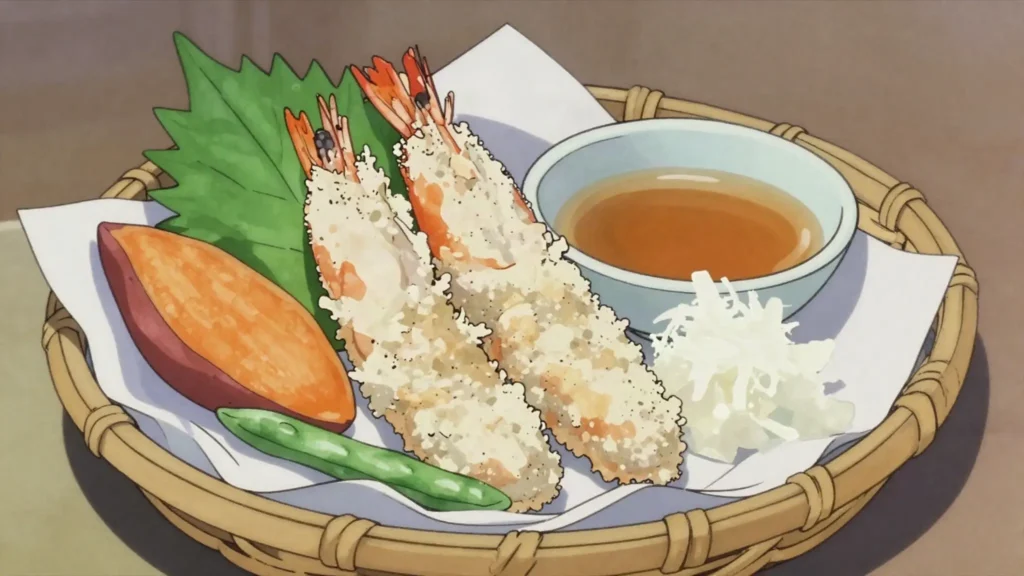
- Serve straight away on folded washi paper, with tentsuyu into which the diner stirs daikon and ginger, and salt alongside for the vegetables.
Technique
- Cold, under-mixed batter is the whole technique. Gluten development and warmth make a thick bready jacket; the target is a lacy shell that shatters.
- Low-protein cake flour is the traditional choice for the same reason. Japanese cooks often chill the flour and the bowl too.
- Never let the batter sit and rest. Mix it in small amounts and keep making fresh batches; it is dead within about 10 minutes.
- Tempura arrived with Portuguese missionaries in the 16th century, from their Ember Days (Quatuor Tempora) fish frying, and Japan turned it into a precision craft.
Substitutions
- No cake flour: use plain flour with 2 tbsp swapped for cornflour to dilute the gluten.
- No dashi for the tentsuyu: use 300 ml of water with 1 tsp of instant dashi granules, or a kombu and shiitake infusion.
- Vegetarian tempura of aubergine, shiso, kabocha, sweet potato and mushroom is a full dish in its own right, served in temple cooking.
Variations
- Kakiage, a fritter of julienned onion, carrot and small shellfish bound with a little batter.
- Tendon, tempura piled on rice and doused with a sweetened, thicker tare, and tempura soba.
- Kyoto-style tempura fried in pure rapeseed oil, paler and lighter than the sesame-scented Tokyo version.
History
Introduced to Japan by Portuguese Jesuit missionaries and traders in the 1500s, who battered and fried fish and vegetables as part of their own Lenten Catholic fasting tradition, when meat was forbidden but fish and vegetables were not. Japanese cooks in the port city of Nagasaki, where the Portuguese were based, adopted and adapted the technique over the following century, eventually developing the lighter, colder batter and higher frying temperature that separates modern tempura from its heavier European-battered ancestor. The word tempura itself likely comes from the Portuguese tempero, meaning seasoning, or from têmporas, a Catholic term for the fasting days the dish was originally cooked for, rather than from any Japanese root.
Frequently asked questions
What is Tempura?
Tempura is a main from Japan: seafood and vegetables in gossamer batter, fried and dipped in tentsuyu. Introduced to Japan by Portuguese Jesuit missionaries and traders in the 1500s, who battered and fried fish and vegetables as part of their own Lenten Catholic fasting tradition, when meat was forbidden but fish and vegetables were not. Japanese cooks in the port city of Nagasaki, where the Portuguese were based, adopted and adapted the technique over the following century, eventually developing the lighter, colder batter and higher frying temperature that separates modern tempura from its heavier European-battered ancestor. The word tempura itself likely comes from the Portuguese tempero, meaning seasoning, or from têmporas, a Catholic term for the fasting days the dish was originally cooked for, rather than from any Japanese root.
How long does Tempura take to make?
Tempura takes 30 min of preparation and 25 min of cooking. The recipe makes 4 servings. It is rated medium to make.
What can I substitute in Tempura?
Yes, within limits. No cake flour: use plain flour with 2 tbsp swapped for cornflour to dilute the gluten. No dashi for the tentsuyu: use 300 ml of water with 1 tsp of instant dashi granules, or a kombu and shiitake infusion. Vegetarian tempura of aubergine, shiso, kabocha, sweet potato and mushroom is a full dish in its own right, served in temple cooking.
What is the most important thing to get right in Tempura?
Beat the egg yolk into the ice water, then tip in the sifted flour all at once and stir with chopsticks about 10 strokes only. The batter must stay lumpy, streaked with dry flour and barely combined. Sit the bowl in a bowl of ice.