
Ingredients
The trotters
- 2 kgcow trotters
- makongoro, cut into pieces
- cleaned and scrubbed
- blanched first
- 3 litreswater
The broth
- 2onions, halved
- 1 headof garlic, halved
- 5cm ginger, sliced
- 1cinnamon stick
- 6cardamom pods
- 1 teaspoonblack peppercorns
- 2bay leaves
- salt
To finish
- juice of 3 limes
- or more, at the table
- 2green chillies, chopped
- chopped coriander
- chopped spring onion
To serve
- at dawn
- with chapati
- or mandazi
- or plain bread
- in deep bowls
Directions
- Check every crevice between the toes. Trotters must be cooked right through. Keep raw and cooked meat well apart. Use a board and knife kept for raw meat.
- Wash hands and equipment in very hot water. Do not let it touch anything eaten raw. Skim it as it cooks and again at the end. Scrub the trotters hard under cold water. Use a stiff brush on the whole surface. Work into every crevice and between the toes. Take real time over that cleaning.
- Boil the trotters briefly and discard that water. Cover them with cold water and bring to a boil. Boil them hard for about ten minutes. Rinse each piece individually after blanching. Rub it off under running water. Put the blanched trotters in the clean pot. Cover them by about five centimetres of water. Keep hot water ready to top the pot up. It reduces considerably over four hours.
- Add the onion, garlic, ginger and whole spices. Leave the onion and garlic in halves. Add the bay leaves at the same time. Simmer the trotters gently for four hours. The skin should be entirely soft and gelatinous.
- Keep it at a bare simmer rather than a boil. Skim the surface regularly through the cooking. Lift them off with a ladle every half hour. Check the water level every hour or so. Add hot water whenever it drops too low. Cold water slows the cooking considerably. Lift the trotters out and strain the broth.
- Strain out the whole spices and aromatics. Discard them once the liquid is strained. Return the broth to a clean pot. Let the trotters cool enough to handle. Pull the soft skin and tendon off the bones. Cut it into rough bite-sized pieces. Discard the bones once picked clean. Check carefully for small bone fragments. Skim the fat from the strained broth. A good deal rises once it stops boiling.
- Lift it off with a ladle or a shallow spoon. Leave some, since it carries flavour. Too much makes it unpleasantly greasy. Season the broth generously with salt. A large pot of broth needs plenty of salt. Add it gradually and keep tasting. Add plenty of black pepper as well.
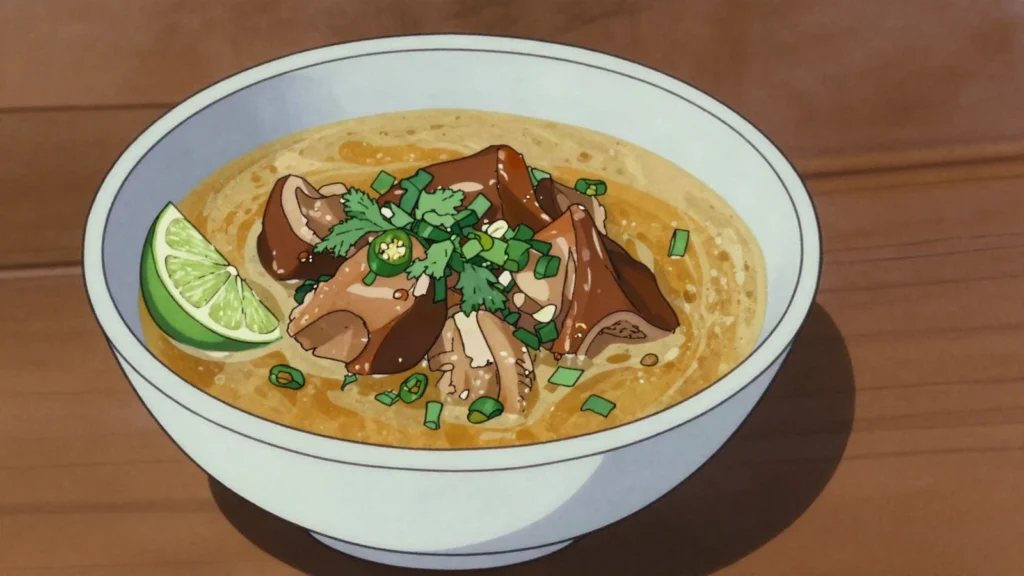
- Ladle the hot broth and meat into deep bowls. Give each bowl a good share of the soft skin. Serve it genuinely hot from the pot. Squeeze lime juice generously into each bowl. That keeps it sharp and fresh.
- Scatter chopped green chilli over each bowl. Put it on the table rather than in the pot. Scatter coriander and spring onion over. Add them at the last moment before serving. They wilt immediately in the hot broth. Serve chapati, mandazi or plain bread alongside. The soft skin is eaten with the fingers.
Technique
- Scrub the trotters hard with a stiff brush, working into every crevice between the toes, and scrape off any remaining hair with a sharp knife — butchers singe most of it off but stubble usually remains. Then blanch them ten minutes, discard that water, and rinse each piece individually to rub off the scum that sticks. That is not optional and gives a far cleaner broth.
- Check the picked meat carefully with your fingers for small bone fragments before it goes back into the broth — those are sharp and genuinely dangerous.
- The soup is widely said to restore strength and is eaten after illness and after drinking. The atlas records that traditional claim plainly without endorsing it as medical fact; a hot rich broth being comforting is uncontroversial enough on its own.
Substitutions
- Chapati, mandazi or plain bread all go with it and are genuinely eaten with this soup in Tanzania.
- Cardamom and cinnamon in a Swahili broth reflect centuries of Indian Ocean trade, which brought cloves, cardamom and cinnamon to the coast and made Zanzibar itself a major spice producer. That trade shaped the region’s cooking deeply and also involved a documented slave trade, which the atlas records plainly.
Variations
- Cow trotters are almost entirely skin and tendon with very little meat, and the collagen in them is the whole point: it melts into gelatine over four hours or more, giving the broth its sticky body and making the lips tacky. Undercooked trotter is tough and rubbery, and longer simmering only improves it — the stalls simmer overnight.
- Keep it at a bare simmer, since hard boiling makes the broth cloudy and emulsifies the fat into it. Skim the surface every half hour, or make it the day before and lift the set fat off in one piece — the chilled broth sets to a firm jelly from the gelatine, which is a sign of a good one and melts again on reheating.
- The lime goes in at the table rather than the pot and is essential rather than a garnish: it cuts the richness of the gelatinous broth, which is heavy and cloying without it, and boiled lime juice goes dull and bitter. Chilli goes on at the table too, since tolerance varies enormously.
History
Sold from dawn at market stalls as a restorative; long boiling of the trotters gives the soup its sticky body.
Frequently asked questions
What is Supu ya makongoro?
Supu ya makongoro is a soup & stew from Tanzania: gelatinous cow trotter broth with chili and lime, eaten at breakfast. Sold from dawn at market stalls as a restorative; long boiling of the trotters gives the soup its sticky body.
How long does Supu ya makongoro take to make?
Supu ya makongoro takes 30 minutes of preparation and 4 hours of cooking. The recipe makes serves 6. It is rated medium to make.
What can I substitute in Supu ya makongoro?
Yes, within limits. Chapati, mandazi or plain bread all go with it and are genuinely eaten with this soup in Tanzania. Cardamom and cinnamon in a Swahili broth reflect centuries of Indian Ocean trade, which brought cloves, cardamom and cinnamon to the coast and made Zanzibar itself a major spice producer. That trade shaped the region’s cooking deeply and also involved a documented slave trade, which the atlas records plainly.
What is the most important thing to get right in Supu ya makongoro?
Check every crevice between the toes. Trotters must be cooked right through. Keep raw and cooked meat well apart. Use a board and knife kept for raw meat.