
Ingredients
The leaves
- 600 gjute mallow leaves
- picked from the stems
- or 60 g dried mlenda powder
The pot
- 1onion, chopped
- 3 tablespoonsoil
- or groundnut paste
- 2tomatoes, chopped
- about 500 ml water
- salt
Sometimes added
- a little bicarbonate of soda
- or wood ash water
- 2 tablespoonsgroundnut paste
- a little dried fish
To serve
- ugali
- stiff maize porridge
- eaten with the right hand
Directions
- Use only a very small pinch of it. Too much gives it a soapy taste. Pick the leaves from the stems. Thick stems stay tough however long they cook. Discard the woody parts entirely. Wash the leaves in several changes of water. Fill a bowl and lift the leaves out. Repeat it until no grit settles. Stack the leaves and roll them up.
- Slice them across into fine ribbons. Cut them finer than seems necessary. Heat the oil in a wide heavy pot. Add the chopped onion in to it. Cook it for a good six minutes. Add the chopped tomatoes to the pot. Cook them down for about five minutes. The tomato should soften and break down.
- Add the chopped leaves to the pot. Add the water and some salt to it. Raw leaves take up a great deal of space. Add them in batches if the pot is full. Cooking them takes about twenty minutes.
- Bring it up to a gentle simmer. Let it cook for about twenty minutes. Stir it regularly all the way through. Stir it deliberately rather than gently. Add a very small pinch of bicarbonate. Stir groundnut paste into a little hot water.
- Make it into a smooth loose paste. Paste added dry sits in lumps. Let it cook for ten more minutes. Judging it takes a careful look. Cook it longer if it is too loose. Taste it and adjust the salt as needed.
- Salt is most of the seasoning. Stir the dried powder into cold water. Whisk it smooth before heating. Powder tipped into hot water lumps badly.
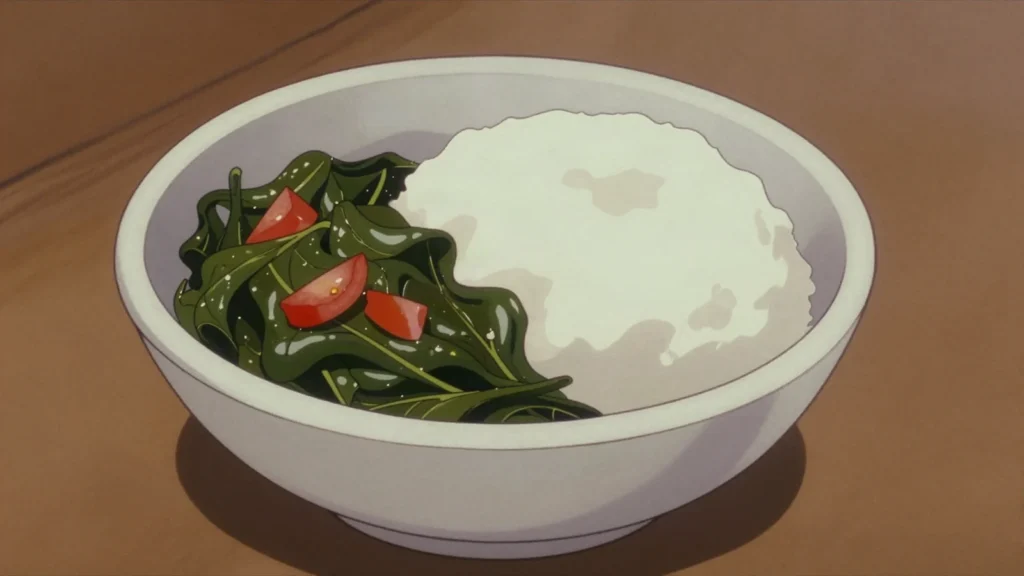
- Simmer it for about fifteen minutes. Stir it constantly as it thickens. Serving it is always done hot. Spoon it out into a warm bowl. Serve stiff ugali alongside it. It keeps two days refrigerated.
Technique
- The slipperiness is deliberately encouraged rather than avoided: ugali is a stiff dry porridge swallowed rather than chewed much, and a slippery relish helps it go down. Cut the leaves finely and stir the pot deliberately rather than gently, since stirring releases more mucilage — the more you stir the slipperier it gets.
- A very small pinch of bicarbonate, or wood ash water traditionally, breaks the leaf down faster and makes the mucilage more pronounced; but a pinch is genuinely all that is needed, since more tastes soapy and it destroys some of the leaf’s vitamins. Many cooks leave it out altogether.
- Jute mallow germinates fast after rain and can be picked within weeks, regrowing after picking and growing wild as well as planted; that reliability is why it matters in central Tanzania, where the rainfall is unreliable and crops can fail.
Substitutions
- Dried mlenda powder stands in out of season; whisk it into cold water first, since powder tipped into hot water lumps badly.
- Groundnut paste loosened in hot water first enriches it; say clearly if it has gone in, since peanut allergy can be severe.
Variations
- The atlas also carries mloukhia from Tunisia and ligusha from Eswatini, both the same plant; mlenda is cooked fresh and briefly where mloukhia is cooked from powder for hours, giving entirely different dishes.
- The leaves are often pounded in a mortar rather than chopped, which releases considerably more mucilage.
- It should draw out when lifted on a spoon, and that stringiness is what you are looking for.
History
A central Tanzanian relish among the Gogo and Sukuma, valued in dry country because the plant grows fast after rain.
Frequently asked questions
What is Mlenda?
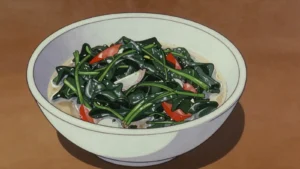
Mlenda is a salad & side from Tanzania: jute mallow leaves cooked to a slippery green relish for ugali. A central Tanzanian relish among the Gogo and Sukuma, valued in dry country because the plant grows fast after rain.
How long does Mlenda take to make?
Mlenda takes 20 minutes of preparation and 30 minutes of cooking. The recipe makes serves 6. It is rated easy to make.
What can I substitute in Mlenda?
Yes, within limits. Dried mlenda powder stands in out of season; whisk it into cold water first, since powder tipped into hot water lumps badly. Groundnut paste loosened in hot water first enriches it; say clearly if it has gone in, since peanut allergy can be severe.
What is the most important thing to get right in Mlenda?
Bring it up to a gentle simmer. Let it cook for about twenty minutes. Stir it regularly all the way through. Stir it deliberately rather than gently. Add a very small pinch of bicarbonate. Stir groundnut paste into a little hot water.