
Ingredients
- 400 gspaghetti or rigatoni, bronze-drawn
- 200 gguanciale, rind removed, cut into 1 cm lardons
- 6large egg yolks plus 1 whole egg, at room temperature
- 100 gPecorino Romano DOP, finely grated
- 2 tspblack peppercorns, coarsely cracked
- coarse salt for the pasta water
Directions
- Bring 4 litres of water to the boil and salt it lightly, about 7 g per litre. Guanciale and pecorino are both salty, so this water must be less salty than usual.
- Put the guanciale in a cold, dry frying pan and set it over medium-low heat. Let it render 8–10 minutes until the fat runs clear and the pieces are golden and crisp at the edges but still yielding inside. Take the pan off the heat.
- Toast the cracked pepper in a small dry pan for 30 seconds until it smells resinous.
- Whisk the yolks, whole egg, three quarters of the pecorino and most of the pepper into a thick paste in a bowl. Loosen it with 2 tbsp of the hot guanciale fat, whisking hard: this is the crema.
- Cook the pasta 1 minute short of the packet time so it is properly al dente, then lift it straight into the guanciale pan with tongs, carrying some water with it. Toss over no heat for 30 seconds.
- Slacken the egg mixture with a ladle of starchy pasta water, then pour it over the pasta off the heat and toss and stir continuously for about a minute.
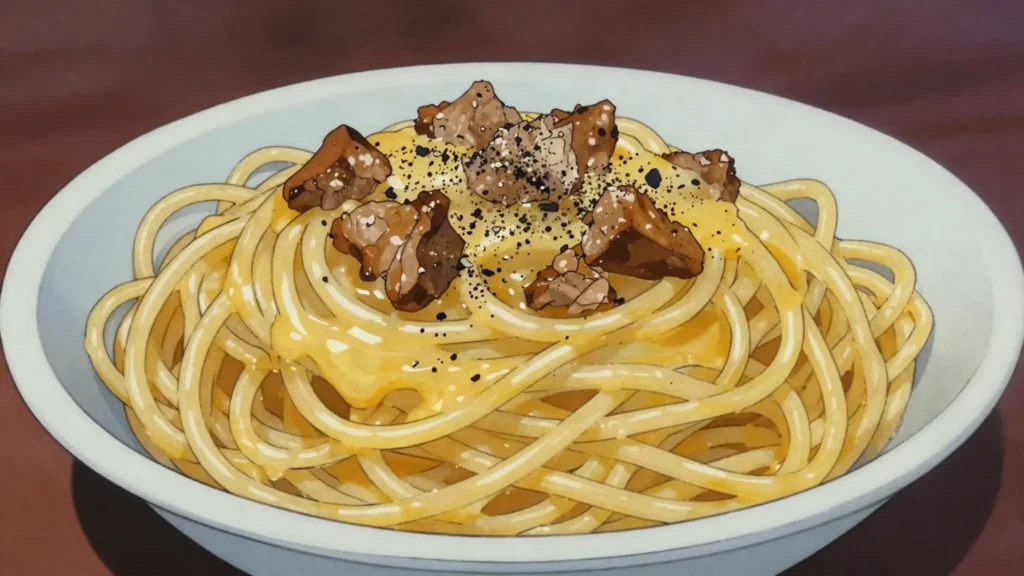
- If it is too tight, add pasta water a spoonful at a time. The sauce should coat every strand and slide slowly on the plate, glossy and just thickened, with no scrambled threads.
- Serve at once in warmed bowls with the remaining pecorino and pepper over the top.
Technique
- There is no cream, no milk, no butter, no garlic and no onion in a Roman carbonara. The creaminess is emulsified egg yolk, rendered pork fat, cheese and starchy water.
- Heat is the enemy at the end. If the pan is still hot the yolks set into sweet omelette. Romans finish it off the flame, or over a bowl of hot water at most.
- Guanciale, cured pig cheek, is not interchangeable in spirit with pancetta: it carries far more soft fat and a deeper, almost floral cure.
- The dish is a 20th century Roman invention, first printed in the 1950s; the wartime American bacon-and-egg-ration story is a popular but unproven theory.
Substitutions
- No guanciale: use pancetta tesa, and add 1 tbsp of olive oil to the cold pan to make up for the lower fat yield.
- Half pecorino and half Parmigiano gives a gentler sauce, which Romans will tolerate for foreigners.
- Nervous about raw egg? Whisk the crema in a bowl over barely steaming water to 63°C (145°F) before it meets the pasta.
Variations
- Made with rigatoni, the second most common shape in Rome and easier to toss.
- Carbonara with zucchine, a summer Roman version where thin courgette coins replace half the guanciale.
History
Pasta tossed with a sauce made from egg, hard cheese, cured pork jowl called guanciale and black pepper, developed in Rome, with its specific modern origin genuinely debated among food historians, with some tracing it to Roman charcoal workers, called carbonari, and others to American soldiers stationed in Italy during World War Two who introduced eggs and bacon that Roman cooks then adapted using local ingredients. Its defining technique, using the residual heat of the pasta itself to gently cook the egg into a smooth, creamy sauce without scrambling it, requires careful timing and is considered by Roman cooks essential to achieving an authentic carbonara, as opposed to versions elsewhere that incorrectly add cream. Carbonara remains one of Rome’s four defining pasta dishes and one of Italy’s most internationally recognized exports.
Frequently asked questions
What is Spaghetti alla carbonara?
Spaghetti alla carbonara is a main from Italy: guanciale, egg, pecorino and black pepper; never cream. Pasta tossed with a sauce made from egg, hard cheese, cured pork jowl called guanciale and black pepper, developed in Rome, with its specific modern origin genuinely debated among food historians, with some tracing it to Roman charcoal workers, called carbonari, and others to American soldiers stationed in Italy during World War Two who introduced eggs and bacon that Roman cooks then adapted using local ingredients. Its defining technique, using the residual heat of the pasta itself to gently cook the egg into a smooth, creamy sauce without scrambling it, requires careful timing and is considered by Roman cooks essential to achieving an authentic carbonara, as opposed to versions elsewhere that incorrectly add cream. Carbonara remains one of Rome’s four defining pasta dishes and one of Italy’s most internationally recognized exports.
How long does Spaghetti alla carbonara take to make?
Spaghetti alla carbonara takes 15 min of preparation and 15 min of cooking. The recipe makes 4 servings. It is rated medium to make.
What can I substitute in Spaghetti alla carbonara?
Yes, within limits. No guanciale: use pancetta tesa, and add 1 tbsp of olive oil to the cold pan to make up for the lower fat yield. Half pecorino and half Parmigiano gives a gentler sauce, which Romans will tolerate for foreigners. Nervous about raw egg? Whisk the crema in a bowl over barely steaming water to 63°C (145°F) before it meets the pasta.
What is the most important thing to get right in Spaghetti alla carbonara?
Bring 4 litres of water to the boil and salt it lightly, about 7 g per litre. Guanciale and pecorino are both salty, so this water must be less salty than usual.