
Ingredients
The sponge
- 6eggs, separated
- 180 gcaster sugar
- 180 gplain flour
- 1 teaspoonbaking powder
- grated zest of 1 lemon
- a pinch of salt
The syrup
- 400 gsugar
- 400 mlwater
- 1cinnamon stick
- strip of lemon peel
- 4cloves
- 200 mldark rum
- or more, to taste
The fruit
- 150 gprunes
- stoned
- 150 graisins
- soaked in a little rum
- for an hour
To finish
- coloured sugar sprinkles
- grageas
- or toasted almonds
- served in small squares
Directions
- Bake it the day before if you can. That keeps the alcohol and the rum flavour. Make a separate portion without rum if needed. It sticks to skin and keeps burning on contact. Keep children well away from the pan. Whisk the egg whites until they hold firm peaks. The bowl and whisk must be scrupulously clean.
- Whisk the sugar into the whites gradually. Add it a spoonful at a time while whisking. The whites become thick, glossy and stiff. Take a minute or two over that addition. Beat the yolks and fold them into the whites. Fold rather than stir or whisk at this stage. Use a large metal spoon and cut through the middle. Turn the bowl as you fold to combine evenly. Add the lemon zest along with the yolks.
- Sift the flour and baking powder over the mixture. Sift it in two or three additions rather than one. Fold each one in before adding the next. Stop as soon as no dry flour remains visible. Pour the batter into a lined rectangular tin. Use a large shallow tin rather than a deep one.
- Spread the batter level with a palette knife. Do not knock the air out as you spread it. Bake it at about one hundred and eighty degrees. Give it roughly twenty-five to thirty minutes. Turn the sponge out and cool it completely. Warm sponge collapses when syrup goes onto it. It must be entirely cold before soaking.
- Leave it uncovered overnight if you can. That dries it slightly and helps absorption. Put the sugar, water and spices in a saucepan. Warm it gently until the sugar fully dissolves. Stir it only until it is clear, then stop.
- Boil the syrup for about ten minutes. It should thicken slightly but stay quite thin. Strain them out before adding the rum. Let the strained syrup cool for a few minutes. Let the syrup cool below boiling before adding it. That keeps both the alcohol and the flavour.
- Stir the rum into the warm syrup. Taste it and adjust to your own preference. It should taste clearly and strongly of rum. Add the prunes and raisins to the warm syrup. Let them sit in it for at least half an hour.
- Keep the syrup for soaking the cake. Cut the cooled sponge into squares. Cut it into pieces about five centimetres square. Cut it before soaking rather than after. Soaked cake is far too fragile to cut cleanly. Use a serrated knife and a gentle sawing motion. Lay the squares in a deep serving dish.
- Arrange them in a single layer if you can. Two layers work if the dish is not large enough. Leave small gaps for the syrup to run through. Use a dish with sides high enough to hold the syrup. Spoon the rum syrup slowly over the squares.
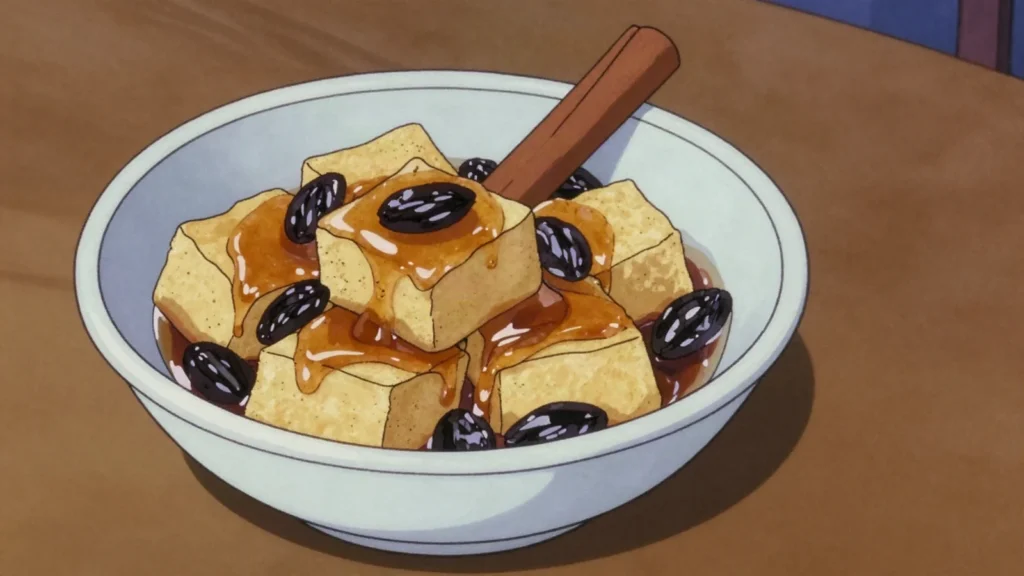
- Pour it slowly rather than all at once. Let each addition soak in before the next. Cover every square with syrup evenly. It looks like far too much syrup at first. Press a square gently to check it. Scatter the soaked prunes and raisins over the top. Press some of them down between the squares. Every portion should get its share of fruit. Cover the dish and refrigerate it overnight.
- Scatter coloured sprinkles over the whole dish. Sprinkles dissolve and bleed if left on wet cake. Scatter them generously across the surface. Toasted almonds work if you prefer them.
- Lift each square out with a spoon into a bowl. It is far too wet to lift with fingers. Use a large spoon and a small bowl for each. Spoon some of the pooled syrup over it as well. One square per person is usually enough.
Technique
- This contains a genuine quantity of rum that is never cooked off — two hundred millilitres goes in off the heat and soaks into the cake, so it is substantial rather than trace. It is not a dessert for children, and you should say clearly what is in it when serving.
- Boiling sugar syrup is far hotter than boiling water, sticks to skin and keeps burning — never touch or taste it hot, and keep children away from the pan.
- Refrigerate it overnight before serving: the syrup distributes evenly, the rum mellows considerably and the spices spread through everything. Eaten immediately it is uneven and harsh.
Substitutions
- Replacing the rum with orange juice and a little vanilla gives a genuinely pleasant soaked cake, but it is a different dessert rather than the same one — the atlas records that plainly rather than pretending otherwise. Make a separate portion that way if children are eating.
- Toasted almonds replace the coloured sprinkles, called grageas across Latin America, in some households. It descends from Spanish soaked cake desserts, and sopa borracha exists in Spain under the same name.
Variations
- Use a whisked fatless sponge rather than a rich buttery cake, which simply falls apart in syrup, and bake it in a large shallow tin so it soaks through evenly. It is better a day old than fresh — slightly stale sponge absorbs syrup far better, so bake it the day before and leave it uncovered.
- Boil the syrup only about ten minutes and keep it thin, since a heavy syrup sits on top instead of soaking in. Strain the whole spices out before the rum goes in, since they are unpleasant to bite into, and let it cool below boiling first so the alcohol stays.
- Cut the sponge into squares before soaking, since soaked cake is far too fragile to cut cleanly. The syrup looks like far too much but the sponge absorbs nearly all of it, and a pool at the bottom is expected — the name means drunken soup for a reason. Add the sprinkles only shortly before serving, since they dissolve and bleed on wet cake.
History
A Panamanian wedding and celebration sweet whose name means drunken soup, descended from Spanish soaked-cake desserts.
Frequently asked questions
What is Sopa borracha?
Sopa borracha is a dessert from Panama: sponge cake drenched in rum and sugar syrup with prunes and raisins. A Panamanian wedding and celebration sweet whose name means drunken soup, descended from Spanish soaked-cake desserts.
How long does Sopa borracha take to make?
Sopa borracha takes 40 minutes of preparation and 35 minutes of cooking. The recipe makes serves 12. It is rated medium to make.
What can I substitute in Sopa borracha?
Yes, within limits. Replacing the rum with orange juice and a little vanilla gives a genuinely pleasant soaked cake, but it is a different dessert rather than the same one — the atlas records that plainly rather than pretending otherwise. Make a separate portion that way if children are eating. Toasted almonds replace the coloured sprinkles, called grageas across Latin America, in some households. It descends from Spanish soaked cake desserts, and sopa borracha exists in Spain under the same name.
What is the most important thing to get right in Sopa borracha?
Bake it the day before if you can. That keeps the alcohol and the rum flavour. Make a separate portion without rum if needed. It sticks to skin and keeps burning on contact. Keep children well away from the pan. Whisk the egg whites until they hold firm peaks. The bowl and whisk must be scrupulously clean.