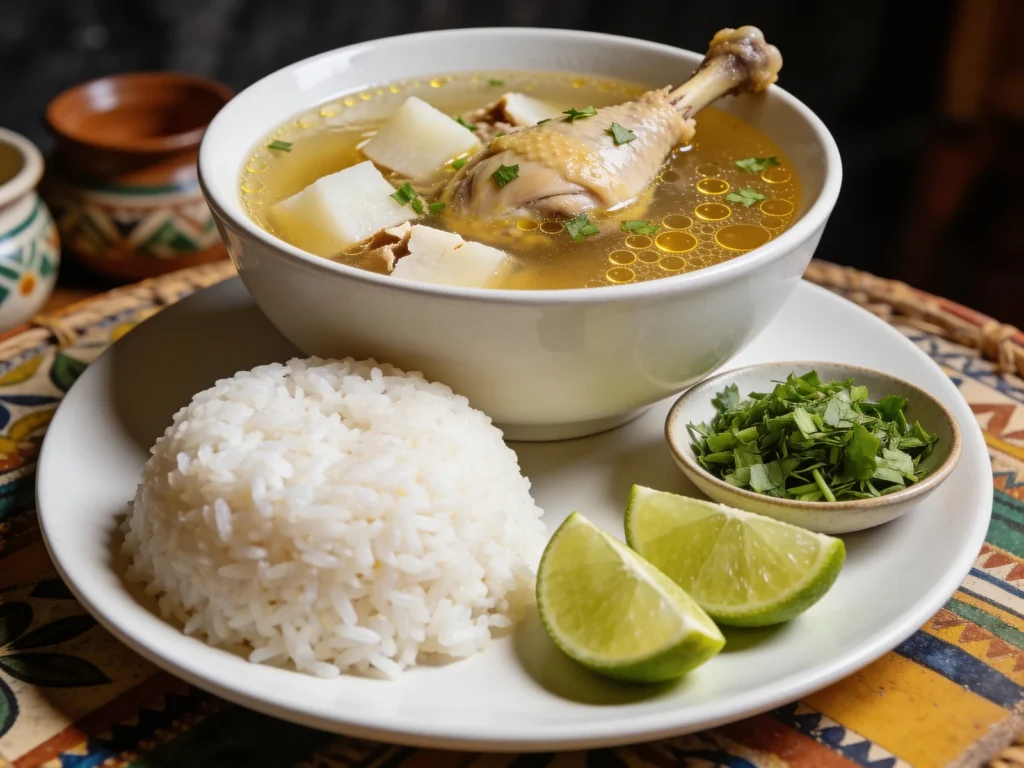

Ingredients
Broth
- 1free-range hen (gallina de patio), about 1.8 kg, jointed into 12 pieces with the bones
- 3 litreswater
- 1large onion, quartered
- 1whole head garlic, halved crossways
- 2 tbspsalt
- 1 tspblack peppercorns
Aromatics
- 1large bunch culantro (recao), about 40 g, tied with string – not coriander, and not optional
- 2 tspdried oregano
- 1 tspground cumin
- 1 tbspachiote (annatto) oil, for colour
Roots and vegetables
- 900 gñame (white yam), peeled and cut in 4 cm chunks
- 2corn cobs, cut in thick rounds (optional, Chiriqui style)
- 2green plantains, cut in thick rounds (optional)
To serve
- 400 gwhite rice, steamed
- 2limes, in wedges
- ají chombo hot sauce
- a bowl of extra chopped culantro
Directions
- Rinse the hen pieces and rub them with a little salt and lime, then rinse again – a Panamanian habit that cleans and firms the skin.
- Put the hen in a large pot with the 3 litres of cold water, bring slowly to the boil and skim the grey foam off the top for the first 10 minutes until the broth runs clear.
- Add the onion, garlic, peppercorns and salt, drop to a low simmer and cook, partly covered, for 60–90 minutes. A true yard hen is tough and needs the time; a supermarket chicken will be ready in 40 minutes.
- Tie the culantro into a bundle and add it with the oregano, cumin and achiote oil. Simmer 15 minutes; the broth should turn golden and smell strongly herbal.
- Add the ñame chunks and simmer 25–30 minutes until they are soft. As they cook, some pieces will break down and thicken the broth to a light, silky body – this is exactly what should happen and is why ñame is used rather than potato.
- Add the corn and plantain, if using, for the last 15 minutes.
- Fish out the culantro bundle, the onion quarters and the garlic. Taste hard for salt: sancocho should be robustly seasoned, since it is eaten with plain rice.
- Let the pot stand 10 minutes off the heat so the fat rises golden to the surface. Do not skim it; Panamanians consider the fat the best of it.
- Ladle into deep bowls with a piece of hen, plenty of ñame and lots of broth, and serve a mound of white rice on the side to be added spoonful by spoonful. Finish with lime, extra culantro and ají chombo at the table.
Technique
- Culantro (Eryngium foetidum, called recao or ngo gai) is not the same plant as coriander. It is stronger, more resinous and does not wilt away in a long simmer, and its flavour is the signature of Panamanian sancocho.
- Ñame is the correct root. Its starch dissolves partly into the broth, giving sancocho its characteristic slight thickness; cassava and potato behave differently and give a thinner, cloudier soup.
- This is the national hangover and comfort dish, and it is also considered restorative for new mothers and the ill – which is why it is made deliberately simple, with no tomato, no chilli in the pot and nothing to distract from broth and herb.
Substitutions
- No culantro? Use a very large bunch of coriander including its roots and stems, added in the last 10 minutes only – it is a compromise, not a match.
- No ñame? Use taro (malanga) or a mixture of taro and waxy potato, though the broth will be less silky.
Variations
- Sancocho chiricano, the Chiriqui version with corn, plantain and sometimes squash.
- Sancocho de rabito, made with cured pig tail in the interior provinces.
- Sancocho de tres carnes, a heartier festival version with several meats in one pot.
History
Panama’s national dish, a chicken soup flavoured distinctively with ñame, a starchy tuber, and culantro, a pungent herb related to but distinct from coriander, developed from a blend of Spanish colonial-era stew traditions and Indigenous and African culinary influences layered together across Panama’s history as a historically significant transit point for trade and migration between the Americas. Its specific use of culantro rather than the more commonly known coriander reflects a particular regional herb preference found across parts of Central America and the Caribbean, giving Panamanian sancocho a flavour distinct from similarly named sancocho dishes found in Colombia and the Dominican Republic, each of which developed its own distinct regional version of the broader Spanish-colonial sancocho stew tradition.
Frequently asked questions
What is Sancocho de gallina?
Sancocho de gallina is a soup & stew from Panama: free-range chicken soup with ñame and culantro; national dish. Panama’s national dish, a chicken soup flavoured distinctively with ñame, a starchy tuber, and culantro, a pungent herb related to but distinct from coriander, developed from a blend of Spanish colonial-era stew traditions and Indigenous and African culinary influences layered together across Panama’s history as a historically significant transit point for trade and migration between the Americas. Its specific use of culantro rather than the more commonly known coriander reflects a particular regional herb preference found across parts of Central America and the Caribbean, giving Panamanian sancocho a flavour distinct from similarly named sancocho dishes found in Colombia and the Dominican Republic, each of which developed its own distinct regional version of the broader Spanish-colonial sancocho stew tradition.
How long does Sancocho de gallina take to make?
Sancocho de gallina takes 25 min of preparation and 2 hr of cooking. The recipe makes 6 servings. It is rated easy to make.
What can I substitute in Sancocho de gallina?
Yes, within limits. No culantro? Use a very large bunch of coriander including its roots and stems, added in the last 10 minutes only – it is a compromise, not a match. No ñame? Use taro (malanga) or a mixture of taro and waxy potato, though the broth will be less silky.
What is the most important thing to get right in Sancocho de gallina?
Add the ñame chunks and simmer 25–30 minutes until they are soft. As they cook, some pieces will break down and thicken the broth to a light, silky body – this is exactly what should happen and is why ñame is used rather than potato.