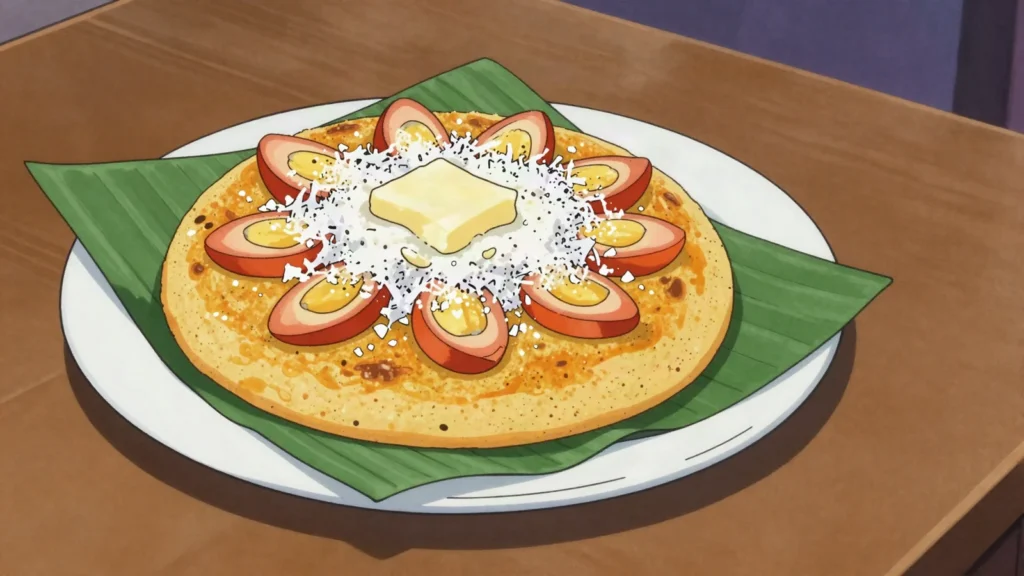

Ingredients
Batter
- 250 grice flour
- 100 gglutinous rice flour
- 150 gsugar
- 2 tspbaking powder
- ½ tspsalt
- 3eggs
- 400 mlcoconut milk
- 120 mlfresh milk
- 60 gbutter, melted
To assemble
- banana leaves, softened over a flame
- 2salted duck eggs, sliced
- 150 gkesong puti (fresh white cheese) or mild feta, sliced
To finish
- 40 gbutter, melted
- 60 gsugar
- 80 ggrated fresh coconut
Directions
- Whisk the dry ingredients, then beat in the eggs, coconut milk, fresh milk and melted butter to a smooth pourable batter. Rest 30 minutes so the rice flour hydrates — unrested batter bakes gritty.
- Line small round tins or clay pots with softened banana leaf, letting it stand above the rim. Toast the leaf briefly over a flame first: it makes it pliable and releases the scent that is half of bibingka.
- Heat the oven to 200°C (400°F), or use a bibingka pot with coals above and below in the traditional way.
- Pour the batter in to about two thirds full and bake 15 minutes, until just set on top but still pale.
- Now open the oven and lay the slices of salted egg and cheese over the surface. Adding them at the start sinks them to the bottom; adding them halfway leaves them sitting proud, which is how bibingka should look.
- Return to the oven for 10 minutes more, until risen, golden at the edges and a skewer comes out clean.
- Brush the hot tops generously with melted butter, sprinkle with sugar and heap with grated coconut.
- Serve hot in the banana leaf, with salabat (ginger tea) — traditionally eaten after Simbang Gabi, the dawn masses through Advent.
Technique
- The salted egg is not decoration. Its sharp salinity against the sweet coconut batter is the whole balance of the cake.
- Grated fresh coconut, not desiccated. Desiccated is dry and sweet and misses the point.
- Banana leaf both flavours and stops sticking. Baking paper works but the cake loses its scent.
Substitutions
- Mild feta, rinsed, in place of kesong puti.
- A muffin tin lined with paper if you have no leaves, accepting the loss of aroma.
Variations
- Bibingka galapong, the older version made with fermented rice batter.
- Royal bibingka from Vigan, richer and made entirely with glutinous rice flour.
History
A baked rice cake, traditionally cooked in a clay pot lined with banana leaf and topped with salted egg and cheese, closely associated with Filipino Christmas season specifically, traditionally sold by vendors outside churches following Simbang Gabi, a series of pre-dawn Christmas masses held over nine consecutive days leading up to Christmas. Its traditional cooking method, using top and bottom heat from charcoal placed both above and below the clay pot, gives bibingka a distinctive texture difficult to replicate in a conventional single-heat-source oven, and the banana leaf lining imparts a subtle fragrance to the finished cake. Bibingka remains one of the most iconic and specifically seasonal Filipino foods, tied closely to that particular pre-Christmas religious and cultural tradition.
Frequently asked questions
What is Bibingka?
Bibingka is a dessert from Philippines: clay-pot rice cake with salted egg, Christmas mornings. A baked rice cake, traditionally cooked in a clay pot lined with banana leaf and topped with salted egg and cheese, closely associated with Filipino Christmas season specifically, traditionally sold by vendors outside churches following Simbang Gabi, a series of pre-dawn Christmas masses held over nine consecutive days leading up to Christmas. Its traditional cooking method, using top and bottom heat from charcoal placed both above and below the clay pot, gives bibingka a distinctive texture difficult to replicate in a conventional single-heat-source oven, and the banana leaf lining imparts a subtle fragrance to the finished cake. Bibingka remains one of the most iconic and specifically seasonal Filipino foods, tied closely to that particular pre-Christmas religious and cultural tradition.
How long does Bibingka take to make?
Bibingka takes 25 min plus 30 min resting of preparation and 25 min of cooking. The recipe makes 6 small cakes. It is rated medium to make.
What can I substitute in Bibingka?
Yes, within limits. Mild feta, rinsed, in place of kesong puti. A muffin tin lined with paper if you have no leaves, accepting the loss of aroma.
What is the most important thing to get right in Bibingka?
The salted egg is not decoration. Its sharp salinity against the sweet coconut batter is the whole balance of the cake.