
Ingredients
The peanut base
- 250 gsmooth peanut butter
- unsweetened
- or 250 g roasted peanuts
- ground fine
- about 300 ml water
- or coconut milk
The aromatics
- 1onion, very finely chopped
- 3garlic cloves, crushed
- 2 tablespoonsketjap manis
- sweet soy sauce
- 1 tablespoonsambal oelek
- or to taste
- 2 tablespoonsoil
To finish
- juice of 1 lime
- 1 teaspoonbrown sugar
- or palm sugar
- salt
- a little more water
- to thin
To serve
- over fries
- or satay skewers
- with mayonnaise and raw onion
- for patatje oorlog
Directions
- Keep it entirely separate if anyone is allergic. Anyone allergic must ask specifically. Keep adding the liquid gradually. It becomes smooth and glossy again.
- Add the liquid a little at a time. Whisk it in thoroughly each time. Do not add it all at once at all. Check the label if that matters. Heat the oil in a wide deep pan. Add the finely chopped onion to it. Cook it for about ten full minutes. The onion should soften completely. Cook it properly before anything else. It should not brown much though.
- Chop the onion extremely finely. The finished sauce should be smooth. Chop it as fine as you possibly can. Add the crushed garlic to the pan. Give it about one full minute. Stir the sambal oelek into the pan.
- Fry it briefly in the hot oil. Give it about thirty seconds only. Take the pan off the heat entirely. Return it to a low heat afterward. Stir the peanut butter into the pan. It seizes and goes stiff at once. Keep stirring it right through. Add the water gradually while stirring. Add just a splash at a time only.
- Stir it smooth before the next. Different peanut butters need different amounts. Return the whole pan to a low heat. Simmer it for about ten minutes. Stir it constantly throughout.
- Use the lowest heat that you can. Thick sauce spits as it simmers. Use a deep pan rather than shallow. Keep your face well away from it. Stir the ketjap manis into it. Add it near the end of cooking. Taste it and adjust from there. Squeeze all the lime juice in.
- Add it in off the heat entirely. Heat dulls its sharpness considerably. Taste it and adjust the balance. It should be nutty, sweet, salty and hot. Add sugar if it tastes at all flat. Add lime if it tastes too heavy. Taste it before adding any more.
- Check the label before seasoning. Judging it takes a look at the spoon. Make it looser than you want it. Cold peanut sauce goes very thick. Serve it warm rather than hot. Warm is when the sauce pours best. Hot sauce is thin and runs off.
- Warm is genuinely the right point. Pour the sauce over hot chips. Add mayonnaise alongside it too. Scatter raw chopped onion over. Chop it finely rather than coarsely. It keeps five days refrigerated.
Technique
- This sauce is built entirely on peanuts, peanut allergy can be severe and even life-threatening, and nothing about it announces them — it simply looks like an ordinary brown sauce, poured over chips in shops as one option among several. Tell people before they eat it, keep it entirely separate if anyone present is allergic, and take cross-contamination seriously.
- Peanut butter seizes when liquid first goes in, going stiff, grainy and darker in a way that looks entirely wrong — that is normal, since water disrupts the fat and solids and it tightens before it loosens. Take the pan off the heat before the peanut butter goes in, since it catches and burns fast and seizes more on direct heat, then add liquid a splash at a time, stirring smooth before the next.
- Peanut sauce catches on the pan base and burns very quickly, so simmer it on the lowest heat you can, stirring constantly and scraping the bottom. Thick sauce also spits as it simmers, so use a deep pan and keep your face well away.
Substitutions
- Coconut milk replaces the water for a richer creamier sauce, closer to the Indonesian original; both are genuinely made. Ground roasted peanuts stand in for peanut butter — use an unsweetened one, and check the label since many are salted.
- Sambal oelek is a plain chilli paste of chillies, salt and vinegar with no shrimp paste, which makes it entirely vegetarian; other sambals do contain shrimp paste, sambal belacan particularly, so check the label if that matters.
Variations
- Make it looser than you want it, since it thickens considerably as it cools and goes almost solid in the refrigerator — thin it with hot water to serve. Warm rather than hot is when it pours best: hot sauce is thin and runs off, cold sauce is thick and claggy.
- Chop the onion extremely finely, since the sauce should be smooth and large pieces show up badly in it, and add the lime juice off the heat, since heat dulls its sharpness.
- The sauce came from the Dutch East Indies with satay during the colonial period and was adapted at home after Indonesian independence in 1949, when many people moved to the Netherlands. Poured over chips with mayonnaise and raw onion it makes patatje oorlog, war fries, named for how chaotic it looks on the plate.
History
Brought from the Dutch East Indies with satay and adapted at home; poured on fries it makes patatje oorlog, war fries, with mayonnaise and onion.
Frequently asked questions
What is Satésaus?
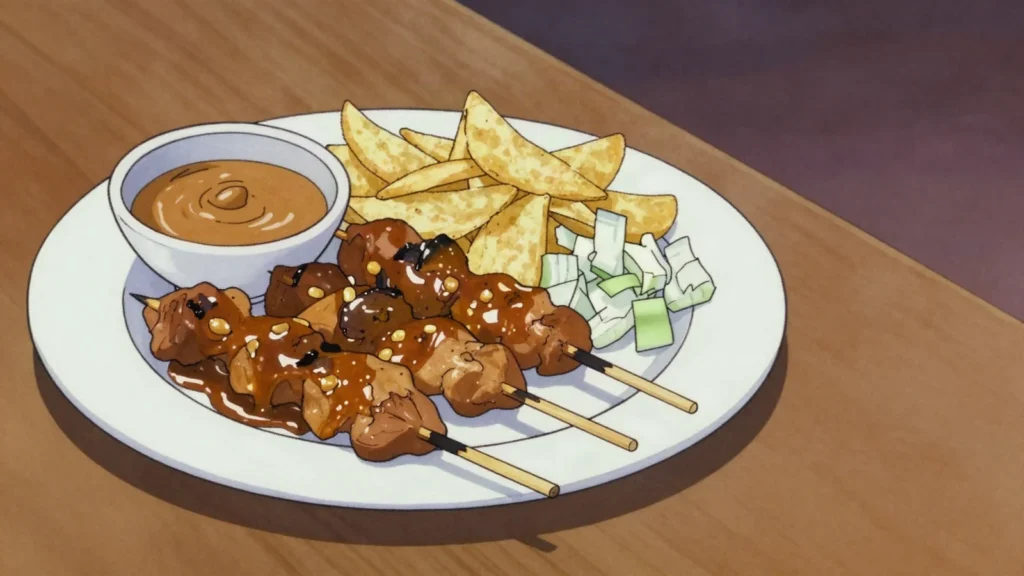
Satésaus is a sauce & condiment from Netherlands: thick peanut sauce poured over fries, satay skewers and grilled meat. Brought from the Dutch East Indies with satay and adapted at home; poured on fries it makes patatje oorlog, war fries, with mayonnaise and onion.
How long does Satésaus take to make?
Satésaus takes 15 minutes of preparation and 20 minutes of cooking. The recipe makes about 500 ml. It is rated easy to make.
What can I substitute in Satésaus?
Yes, within limits. Coconut milk replaces the water for a richer creamier sauce, closer to the Indonesian original; both are genuinely made. Ground roasted peanuts stand in for peanut butter — use an unsweetened one, and check the label since many are salted. Sambal oelek is a plain chilli paste of chillies, salt and vinegar with no shrimp paste, which makes it entirely vegetarian; other sambals do contain shrimp paste, sambal belacan particularly, so check the label if that matters.
What is the most important thing to get right in Satésaus?
Keep it entirely separate if anyone is allergic. Anyone allergic must ask specifically. Keep adding the liquid gradually. It becomes smooth and glossy again.