
Ingredients
Herb
- 80 gdried wild thyme, Origanum syriacum
- or dried thyme, oregano and marjoram mixed
The rest
- 70 gsesame seeds, toasted
- 40 gground sumac
- 1 tspsalt
Jordanian additions
- 1 tbspcaraway seed, ground
- 1 tspfennel seed, ground
- 2 tbsproasted ground chickpeas, optional
To serve
- olive oil and bread
- labneh
- manaqish
- sprinkled on everything
Directions
- Rub it between your palms to break it down and sift out the woody stems. Sift it properly, since stems are unpleasant to bite and they are the main fault in a homemade blend.
- Check it is pure sumac, since cheaper products are sometimes cut with salt or citric acid. Toast the seeds in a dry pan over a medium heat, stirring constantly, until golden and fragrant. Sesame burns in seconds, so keep the heat moderate and do not leave the pan.
- Take them off while they are pale gold, since they keep colouring in the hot pan. Let them cool completely before mixing, or the residual heat drives the aroma out of the herb. Toast them briefly in the dry pan as well, then grind them.
- Use them sparingly, since caraway is assertive and it should sit behind the thyme rather than in front of it. Now the roasted chickpeas, if you are using them. Adjust the sumac for sourness and the salt to carry it.
- Taste it and make it as you like it, since that is exactly what every household does. It keeps a few months and fades steadily, so make small batches rather than one large one.
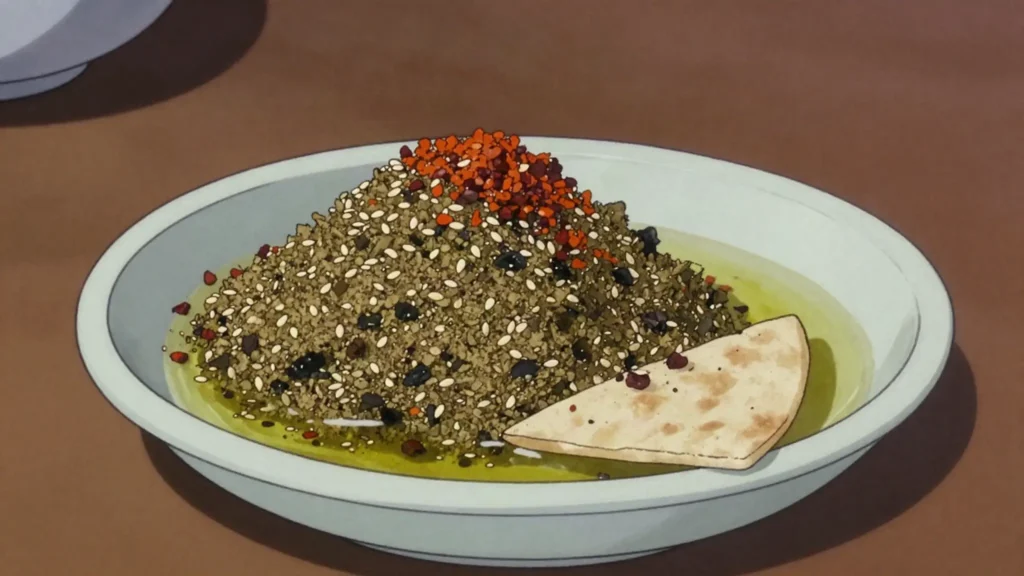
- Pour good olive oil into a shallow dish and put the zaatar beside it or spoon it in. Tear bread, dip it in the oil and then in the zaatar, and eat it. That is breakfast across Jordan, with tea, and it needs nothing else.
- Spread it on labneh with a thread of oil, which is the other standard breakfast. Mix it to a loose paste with olive oil and spread it on flatbread dough before baking, as manaqish. Scatter it over roast vegetables, chicken, eggs, hummus and salads. Rub it onto fresh white cheese and eat it with cucumber and tomato.
Technique
- Caraway and fennel are more common in Jordanian blends than Lebanese ones.
- Za’atar means both the wild herb and the blend made from it.
- A jar of homemade zaatar is a normal gift between households.
Substitutions
- Dried thyme, oregano and marjoram mixed, in place of Origanum syriacum.
- A good ready-made blend from a Middle Eastern shop.
Variations
- With caraway and fennel, the Jordanian style.
- With roasted ground chickpea.
- Heavier on sumac, as Palestinian blends often are.
History
Jordan’s hills supply wild thyme; the blend is a breakfast staple and a common gift between households.
Frequently asked questions
What is Zaatar?
Zaatar is a sauce & condiment from Jordan: dried wild thyme mixed with sumac and sesame, eaten with oil and bread. Jordan’s hills supply wild thyme; the blend is a breakfast staple and a common gift between households.
How long does Zaatar take to make?
Zaatar takes 20 min of preparation and 10 min of cooking. The recipe makes about 250 g. It is rated easy to make.
What can I substitute in Zaatar?
Yes, within limits. Dried thyme, oregano and marjoram mixed, in place of Origanum syriacum. A good ready-made blend from a Middle Eastern shop.
What is the most important thing to get right in Zaatar?
Check it is pure sumac, since cheaper products are sometimes cut with salt or citric acid. Toast the seeds in a dry pan over a medium heat, stirring constantly, until golden and fragrant. Sesame burns in seconds, so keep the heat moderate and do not leave the pan.