
Ingredients
The dough
- 600 gplain flour
- 250 mlwarm milk
- 10 gfresh yeast
- or 4 g dried
- 120 gsugar
- 120 gbutter, softened
- 3egg yolks
- 1whole egg
- grated zest of 1 lemon
- a pinch of salt
- 1 teaspoonvanilla
The filling
- 150 gwalnuts, chopped
- or 150 g raisins
- soaked in rum
- 2 tablespoonssugar
- 1 teaspoonground cinnamon
The mould
- a fluted ring mould
- butter, to grease
- breadcrumbs, to dust
- or fine semolina
To finish
- icing sugar, to dust
Directions
- Keep kneading and it comes back. Warm water works as a substitute. Every single flute must be greased. Butter every part of the inside. Tip out any that does not stick. Warm the milk gently in a jug. Crumble the fresh yeast into it. The milk should be barely warm.
- Stir until the yeast dissolves. Add a spoonful of the sugar to it. Add a spoonful of the flour as well. Let it stand for fifteen minutes. It should foam right up visibly. Discard it and start again if not.
- Put the flour and sugar in a bowl. Add the salt to one side of it. Salt kills yeast on direct contact. Keep them apart until the liquid goes in. Adding the wet is the next step here. Add the yeast mixture and the eggs. Add the lemon zest and vanilla. Knead it for about ten minutes. It should become smooth and elastic.
- Add the softened butter gradually. Add it in small pieces at a time. Knead each piece of it in fully. Only then should you add the next. Knead it for another ten minutes. It should become smooth and glossy. Put the dough in an oiled bowl.
- Cover it and leave it somewhere warm. Give it about ninety full minutes. Chop the walnuts fairly finely. Chop them small but not to dust. Some texture should remain in them. Toast the nuts first if you like. Spread them on a tray in a low oven. Give them about eight full minutes. Let them cool completely afterward. Soak the raisins in warm dark rum. Give them about thirty full minutes.
- Drain them well before using them. Wet raisins make the dough wet. Toss the fruit or nuts in flour. That stops them sinking to the bottom. Press it out on a floured surface. Do not knead it hard all over again. Press it into a rough rectangle. Scatter the nuts over the dough.
- Scatter them evenly across it. Add the sugar and cinnamon too. Work them through it by folding. Fold and press rather than kneading. Do it until they all look even. Grease and dust the mould thoroughly. Butter every flute individually. Turn it to coat every surface. Tip out any of the loose crumbs. Press the dough into the mould.
- Fill the mould about half full only. Leave real room for it to grow. Roll the dough into a long rope first. Cover the mould and leave it to rise. Give it about sixty full minutes. Bake it at one hundred and eighty degrees. Give it about forty-five minutes.
- Cover it with foil if it browns early. It must still bake right through. Let it cool in the mould briefly. Give it about ten full minutes. Turn it out within that time window. It should release itself cleanly.
- Work it into the flutes carefully. A warm mould releases more easily. Let it cool completely on the rack. The crumb sets firm as it cools. Dust it over with icing sugar. Sift it rather than scattering it. Cut it into slices with a serrated knife. Cut it with a gentle sawing motion. Serve strong coffee alongside it. It keeps four days in a sealed tin.
Technique
- This is an enriched dough carrying butter, eggs and sugar, all of which slow the yeast, so both rises take genuinely longer than plain bread — judge them by size rather than by a clock. Add the butter only after ten minutes of kneading, in small pieces each fully worked in: fat added early stops the gluten developing at all. The dough falls apart and looks entirely wrong for a while, which is normal, and more kneading brings it back.
- A fluted mould sticks badly, so butter every flute individually and then dust it with breadcrumbs or fine semolina, turning it to coat every surface and tipping out the loose crumbs. Flour alone can go pasty.
- Cool it in the mould for exactly about ten minutes: it shrinks slightly from the sides in that time and releases cleanly, but left to cool fully the sugar sets against the mould and it sticks fast.
Substitutions
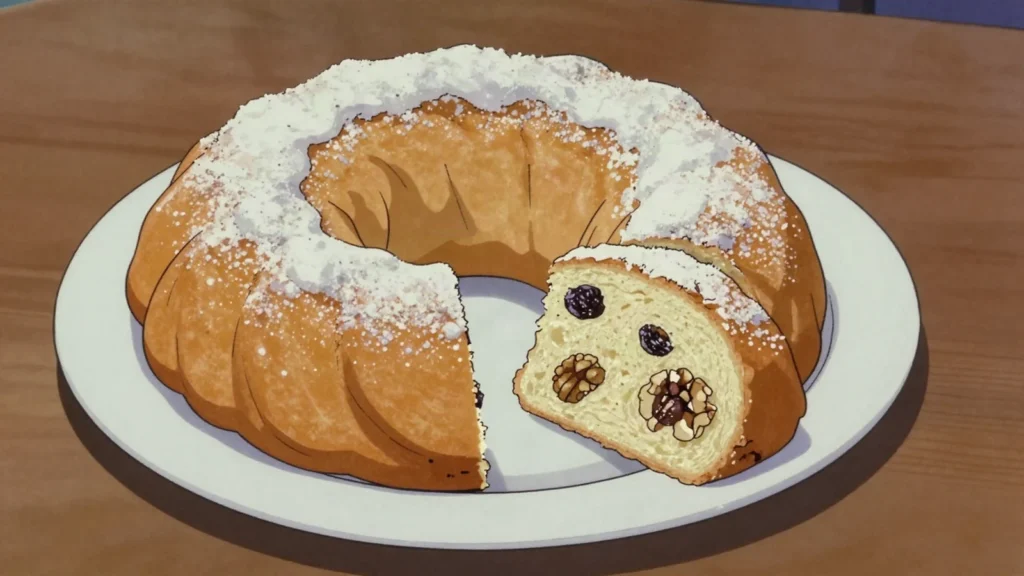
- Rum-soaked raisins replace the walnuts entirely in some versions, which makes it nut free; both are genuinely made. Walnuts go right through the cake and are not visible from outside, so say clearly what is in it since tree nut allergy can be severe.
- Toasting the walnuts eight minutes in a low oven first deepens their flavour considerably; let them cool before they go in. Warm water stands in for the rum, which plumps and flavours the raisins and bakes off almost entirely.
Variations
- Toss the nuts or drained raisins in a little flour before they go in, which stops them sinking to the bottom and helps them spread evenly, and work them through by folding and pressing rather than kneading — kneading breaks the nuts up entirely.
- Fill the mould only about half full, since the dough rises considerably and an overfilled mould overflows; rolling the dough into a rope and laying it round gives a more even ring.
- Check with a skewer into the centre, which must come out entirely clean, and tap the top for a hollow sound as a second check — a dull thud means it is still raw. Let it cool completely, at least an hour, before cutting, since the crumb sets as it cools and a warm slice comes out gummy.
History
The everyday Sunday cake of Slovenian farmhouses, a simpler cousin of festive potica.
Frequently asked questions
What is Sarkelj?
Sarkelj is a bread & pastry from Slovenia: ring-shaped yeast cake with nuts or raisins, baked in a fluted mould. The everyday Sunday cake of Slovenian farmhouses, a simpler cousin of festive potica.
How long does Sarkelj take to make?
Sarkelj takes 40 minutes plus rising of preparation and 45 minutes of cooking. The recipe makes serves 12. It is rated medium to make.
What can I substitute in Sarkelj?
Yes, within limits. Rum-soaked raisins replace the walnuts entirely in some versions, which makes it nut free; both are genuinely made. Walnuts go right through the cake and are not visible from outside, so say clearly what is in it since tree nut allergy can be severe. Toasting the walnuts eight minutes in a low oven first deepens their flavour considerably; let them cool before they go in. Warm water stands in for the rum, which plumps and flavours the raisins and bakes off almost entirely.
What is the most important thing to get right in Sarkelj?
Keep kneading and it comes back. Warm water works as a substitute. Every single flute must be greased. Butter every part of the inside. Tip out any that does not stick. Warm the milk gently in a jug. Crumble the fresh yeast into it. The milk should be barely warm.