Ingredients
The kroeung paste
- 4lemongrass stalks
- tender part only, chopped
- 6garlic cloves
- 4shallots
- 3cm galangal
- 3cm fresh turmeric
- or 2 teaspoons ground
- 4kaffir lime leaves
The roasted rice
- 4 tablespoonsraw jasmine rice
- toasted dark
- and ground fine
The vegetables
- whatever is growing
- green papaya, cubed
- pumpkin, cubed
- long beans, cut short
- aubergine, cubed
- jackfruit, unripe
- moringa leaves
- or spinach
The rest
- 500 gpork belly or fish
- 2 tablespoonsprahok
- fermented fish paste
- see the notes
- 2 tablespoonsfish sauce
- 3 tablespoonsoil
- about 2 litres water
Directions
- Start with less of it and taste it. Use rather more of it than prahok. Raw rice is toasted until dark. Shake the pan constantly throughout. Put the raw rice in a dry pan. Use a heavy pan for even heat. Spread it out in a single layer.
- Use a medium heat rather than high. It needs time as well as heat. Shake the pan constantly as it toasts. Stop at a genuinely deep brown. Take it off the moment it does. Tip it out of the hot pan at once. Grind the cooled rice to a powder.
- Let the rice cool completely first. Hot rice clogs up a spice grinder. Grind it as fine as you possibly can. Sieve it if it is at all uneven. Peel the lemongrass to its pale core. Discard all the woody outer layers. Chop the tender core very finely. Lemongrass fibre never softens at all.
- Pound the lemongrass with a pinch of salt. Pound it before anything else goes in. Work it until it breaks right down. That takes several full minutes. Add the galangal and the turmeric.
- Add the garlic and shallots after. Pound it all into a smooth paste. Remove the tough central stem first. Shred the leaf and pound it in. The central stem never breaks down. Cut that stem out and discard it. Cut everything into similar sized pieces. About two centimetres is right.
- Peel it and remove the white seeds. Unripe jackfruit is firm and starchy. Oil your hands before cutting it. Oiling them prevents it entirely. Heat the oil in a large heavy pot. Add all the kroeung paste to it. Fry it for about five minutes. Add the pork or fish to the pot. Coat it in the fried paste first. Let it brown a little in the paste. Give it a few full minutes there.
- Stir all the prahok into the pot. Mash it into the paste as it goes. Pour in the water and bring it to a boil. It should be genuinely liquid. Simmer the meat until it is tender. Pork belly takes about forty minutes. Add fish much later than pork. Pork must be cooked right through. Check it rather than guessing.
- Add the hardest vegetables first. They take about twenty minutes. Stir the ground roasted rice in. Mix it with a little cold water first. That makes a smooth even slurry. Stir the slurry in very gradually. Add it about ten minutes before the end. It needs time to swell and thicken. Add the fish sauce and taste it. Taste before adding any more salt. It often needs none at all added.
- Add hot water if it is too thick. Serving it is always done hot. Ladle it into bowls with plenty of vegetables. Make sure each bowl gets variety. Ladle from the bottom of the pot. Every bowl should have some of each.
Technique
- The soup is built on whatever vegetables are growing and there is no fixed list at all — it changes entirely with the season, and that flexibility is the whole idea. The vegetables here are common ones rather than a definitive list, so substitute freely. Add them by cooking time: hard ones like green papaya and pumpkin first for twenty minutes, then beans and aubergine for ten, and leaves at the very end for two, since longer turns them dark and slimy.
- Prahok and fish sauce are both made entirely from fish and neither is visible in what looks like a vegetable soup — say clearly what has gone in, since fish allergy can be severe. Prahok smells extremely strong raw and many find it unpleasant, but cooking mellows it considerably and the finished soup smells savoury rather than fishy.
- Toast the rice to a genuine deep brown, since pale toasted rice does little — but it goes from brown to burnt fast and burnt rice is acrid, so shake the pan constantly and take it off the moment it smells like toasted popcorn. Grind it fine once cool, since coarse grains stay gritty, and mix it with cold water into a slurry before it goes in, since dry powder clumps immediately.
Substitutions
- Fish sauce is the nearest substitute for prahok, thinner and less complex, so use rather more of it; some cooks boil the prahok in water and strain it first to remove the small bones, which is a genuinely useful step.
- Unripe jackfruit exudes a sticky latex that is not water soluble and clings badly to hands and knife — oil both before cutting it. Green papaya is used as a vegetable rather than a fruit and holds its shape in long cooking.
Variations
- Cut everything to about two centimetres so pieces cook at similar rates, since otherwise some collapse while others stay raw. The vegetables should be tender but still holding their shape, with the variety visible in the bowl — total mush means it cooked too long, and that variety is the whole point.
- Add the ground rice about ten minutes before the end, which gives it time to swell, thicken and lose its raw taste; the soup goes from thin to slightly creamy and turns browner, which is exactly right.
- It is considered a national soup and a very old one, though claims about its exact age vary in firmness — the atlas records it as long established without claiming a specific date.
History
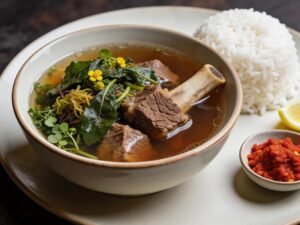
‘Stirring soup’ of many vegetables thickened with roasted ground rice and prahok, considered the national soup and built on whatever is growing.
Frequently asked questions
What is Samlor Korko?
Samlor Korko is a soup & stew from Cambodia: ancient ‘stirring soup’ of many vegetables, roasted rice and fish. ‘Stirring soup’ of many vegetables thickened with roasted ground rice and prahok, considered the national soup and built on whatever is growing.
How long does Samlor Korko take to make?
Samlor Korko takes 50 minutes of preparation and 1 hour of cooking. The recipe makes serves 8. It is rated hard to make.
What can I substitute in Samlor Korko?
Yes, within limits. Fish sauce is the nearest substitute for prahok, thinner and less complex, so use rather more of it; some cooks boil the prahok in water and strain it first to remove the small bones, which is a genuinely useful step. Unripe jackfruit exudes a sticky latex that is not water soluble and clings badly to hands and knife — oil both before cutting it. Green papaya is used as a vegetable rather than a fruit and holds its shape in long cooking.
What is the most important thing to get right in Samlor Korko?
Use a medium heat rather than high. It needs time as well as heat. Shake the pan constantly as it toasts. Stop at a genuinely deep brown. Take it off the moment it does. Tip it out of the hot pan at once. Grind the cooled rice to a powder.