
Ingredients
Broth
- 800 gzebu or beef shin and chuck, cut into 4 cm cubes
- 300 gbeef ribs or oxtail, for body
- 2onions, finely chopped
- 6garlic cloves, crushed
- 40 gfresh ginger, grated
- 3tomatoes, chopped
- 2 tbspoil
- 2 tspsalt
- 1 tspblack pepper
- 1.5 litreswater
Greens
- 200 gbrèdes mafana (Acmella oleracea, paracress), leaves and flower buds
- 200 gbrèdes anamamy or mustard greens, shredded
- 150 gwatercress or brèdes anantsonga, shredded
To serve
- 600 glong-grain rice, steamed
- Sakay: 6 red chillies pounded with garlic, ginger and oil
- 1lemon, in wedges
Directions
- Brown the beef and ribs in the oil in a heavy pot over high heat, in two batches so the pieces sear rather than steam, about 8 minutes a batch.
- Lower the heat, add the onion, garlic and ginger, and fry 8 minutes until soft and golden.
- Add the tomatoes and cook 5 minutes, pressing them down, until they collapse into a loose sauce.
- Pour in the water, add the salt and pepper, bring to a simmer and skim the foam. Cover and simmer gently for 75–90 minutes, until the beef is tender enough to break with a spoon and the broth is savoury and slightly gelatinous from the ribs.
- Wash and pick over the greens. Brèdes mafana should go in with its flower buds, which carry most of the tingle.
- Add the toughest greens, the mustard or anamamy, first and simmer 6–8 minutes.
- Add the brèdes mafana and the watercress and simmer just 4–5 minutes more, until they are wilted and tender but still distinctly green. Overcooked mafana loses its numbing quality.
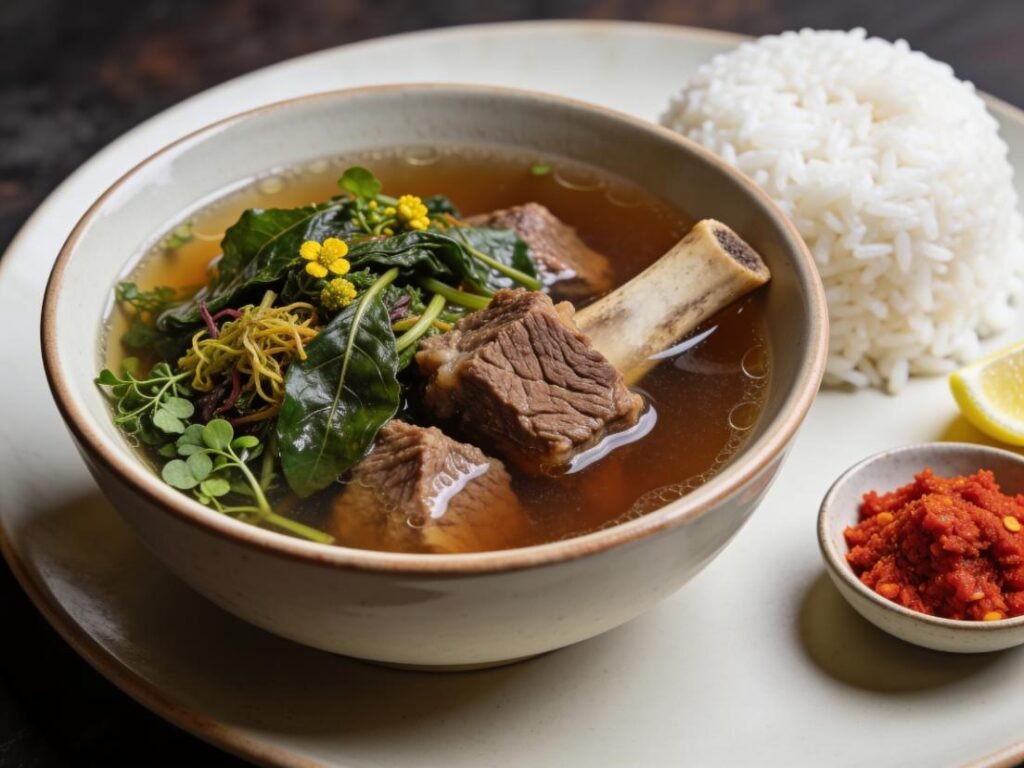
- Taste. The broth should be clear, meaty and gingery, with a faint prickling on the lips and tongue from the spilanthol in the mafana. Adjust the salt.
- Ladle the broth, meat and greens into bowls and serve with steamed rice, a spoon of fiery sakay on the side and lemon to squeeze. In Madagascar the broth is often drunk separately from a cup.
Technique
- Brèdes mafana is the whole identity of the dish. It contains spilanthol, the same compound as the electric daisy, and produces a gentle numbing tingle. Without it you have a beef and greens soup, not romazava.
- Zebu, the humped cattle of Madagascar, is leaner and more strongly flavoured than European beef. Use well-worked cuts like shin and add ribs or oxtail for the body zebu would supply naturally.
- Romazava means clear broth, and the broth should stay clear. Simmer, never boil, and skim in the first ten minutes.
- Sakay is served on the side, never stirred into the pot, so each eater sets their own heat.
Substitutions
- No brèdes mafana: watercress plus a few Sichuan peppercorns crushed into the broth in the last two minutes approximates the tingle honestly, though it is a workaround and Malagasy cooks would notice.
- Mustard greens, mizuna, spinach and Chinese cabbage all work for the other brèdes.
- Pork or chicken versions exist but beef is the national standard.
Variations
- Romazava sy henakisoa, made with pork alongside the beef.
- A Vakinankaratra version thickened with a handful of rice added to the broth.
- Romazava with added tomato and ginger for a redder, sharper broth, common in restaurants.
History
A beef and leafy green stew, generally considered Madagascar’s national dish, built on a base of anamalaho or other local leafy greens simmered with beef and ginger, reflecting Madagascar’s distinctive culinary position, blending African, Southeast Asian and Indian Ocean influences carried by the island’s mixed Austronesian and African ancestral settlement history reaching back well over a thousand years. Rice, eaten alongside romazava as with nearly every Malagasy meal, reflects that same Southeast Asian, specifically Indonesian-linked, ancestral connection, since rice cultivation techniques on Madagascar are generally traced to early Austronesian settlers rather than African or later European influence. The specific combination of leafy greens used varies by region and season, with several different local greens considered acceptable substitutes within an authentic romazava.
Frequently asked questions
What is Romazava?
Romazava is a soup & stew from Madagascar: zebu beef and tongue-tingling anamalao greens broth; national dish. A beef and leafy green stew, generally considered Madagascar’s national dish, built on a base of anamalaho or other local leafy greens simmered with beef and ginger, reflecting Madagascar’s distinctive culinary position, blending African, Southeast Asian and Indian Ocean influences carried by the island’s mixed Austronesian and African ancestral settlement history reaching back well over a thousand years. Rice, eaten alongside romazava as with nearly every Malagasy meal, reflects that same Southeast Asian, specifically Indonesian-linked, ancestral connection, since rice cultivation techniques on Madagascar are generally traced to early Austronesian settlers rather than African or later European influence. The specific combination of leafy greens used varies by region and season, with several different local greens considered acceptable substitutes within an authentic romazava.
How long does Romazava take to make?
Romazava takes 25 min of preparation and 1 hr 45 min of cooking. The recipe makes 6 servings. It is rated medium to make.
What can I substitute in Romazava?
Yes, within limits. No brèdes mafana: watercress plus a few Sichuan peppercorns crushed into the broth in the last two minutes approximates the tingle honestly, though it is a workaround and Malagasy cooks would notice. Mustard greens, mizuna, spinach and Chinese cabbage all work for the other brèdes. Pork or chicken versions exist but beef is the national standard.
What is the most important thing to get right in Romazava?
Brown the beef and ribs in the oil in a heavy pot over high heat, in two batches so the pieces sear rather than steam, about 8 minutes a batch.