
Ingredients
Fish
- 500 gfresh sambaza, or small silver fish
To coat
- 100 gplain flour
- 1 tspsalt
- 1 tspground black pepper
- 1 tspchilli powder, to taste
- 1/2 tspgarlic powder, if wanted
For frying
- 750 mlvegetable oil
To serve
- lemon or lime wedges
- sliced raw onion
- akabanga chilli oil
- fried plantain or chips
Note
- these are eaten whole, heads, bones and all
Directions
- Rinse them well in cold water. They are far too small for that and are eaten whole. Drain them thoroughly in a colander. Spread them out on a clean cloth. Pat them dry on both of their sides.
- Mix the flour with the salt, pepper, chilli and garlic powder. Put it in a wide bowl or a bag. Toss the fish in the seasoned flour.
- Coat them thoroughly but shake off the excess. A thick coating goes soggy rather than crisp. Coat them at the very last moment. Flour left sitting on wet fish turns to paste.
- Heat the oil in a deep pan to about 180C. Test with one fish: it should sizzle hard immediately. Fry them in small batches only. Do not crowd the pan, since the temperature crashes. Fry them for two to three minutes only. They should turn deep golden and crisp.
- Lift them out with a spider strainer. Draining and salting them is done immediately. Lift them onto a rack lined with paper. Do not pile them up while hot, since they go soft. Salt them lightly while still glistening if they need it.
- Let the oil come back up to temperature between batches. Fry them once for two minutes and let them cool. Fry them again for one minute at a higher temperature. Serving them is done hot and piled up.
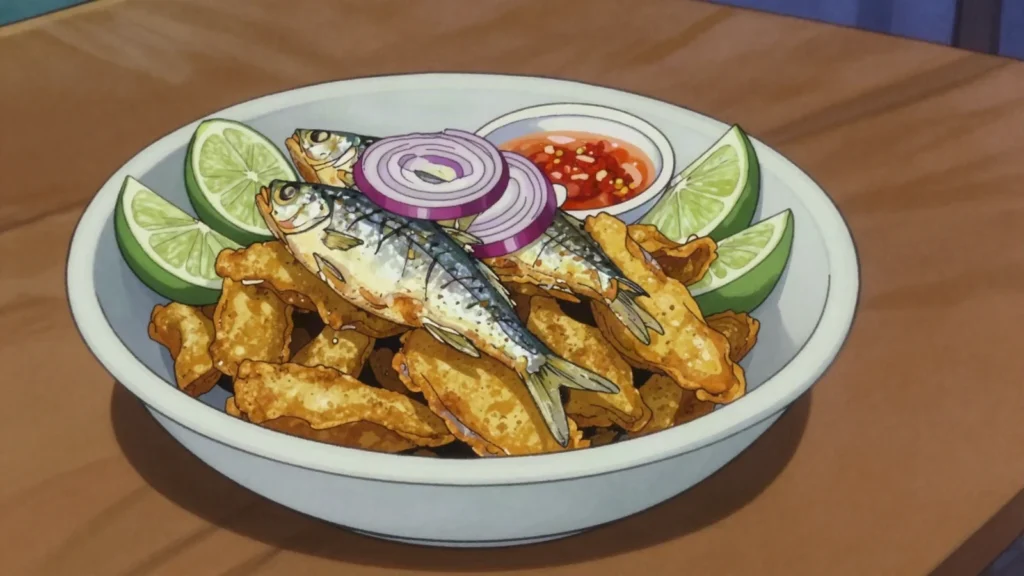
- Pile them into a bowl or onto a plate. Scatter sliced raw onion over them. Serve lemon or lime wedges for squeezing. They are eaten with a cold beer beside the lake.
Technique
- Dry the fish thoroughly before coating, since wet fish steams instead of crisping.
- Coat them at the last moment, as flour left on wet fish turns to paste.
- They are eaten whole, heads and bones included.
Substitutions
- Whitebait or any small silver fish in place of sambaza.
- Dried sambaza, soaked and stewed rather than fried.
Variations
- Stewed in tomato sauce rather than fried.
- Double-fried for extra crispness.
- With more chilli in the coating.
History
Lake Kivu’s small silver fish is the Tanganyika sardine, introduced into the lake in 1959; night fishermen sing to keep three-hulled boats in rhythm.
Frequently asked questions
What is Sambaza?
Sambaza is a snack from Rwanda: crispy fried Lake Kivu silver fish with chili. Lake Kivu’s small silver fish is the Tanganyika sardine, introduced into the lake in 1959; night fishermen sing to keep three-hulled boats in rhythm.
How long does Sambaza take to make?
Sambaza takes 20 min of preparation and 20 min of cooking. The recipe makes 4 servings. It is rated easy to make.
What can I substitute in Sambaza?
Yes, within limits. Whitebait or any small silver fish in place of sambaza. Dried sambaza, soaked and stewed rather than fried.
What is the most important thing to get right in Sambaza?
Coat them thoroughly but shake off the excess. A thick coating goes soggy rather than crisp. Coat them at the very last moment. Flour left sitting on wet fish turns to paste.