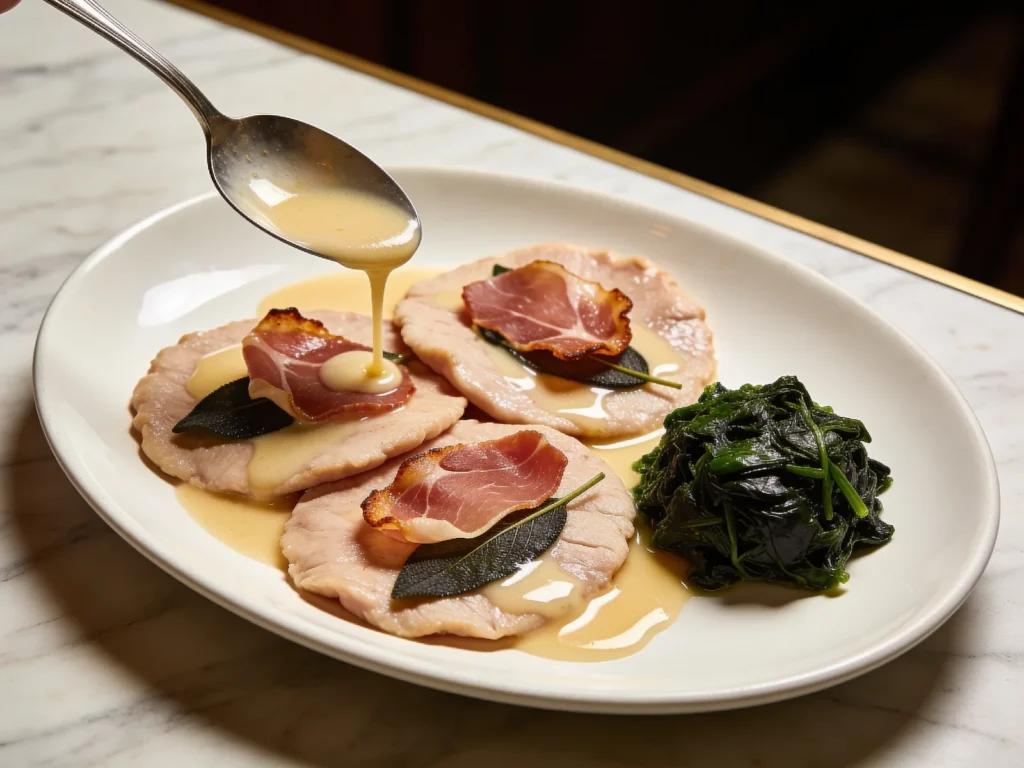

Ingredients
Veal
- 8thin veal escalopes (about 600 g total), from the topside or nut, beaten to 4 mm
- 8 slicesprosciutto di Parma or prosciutto crudo, trimmed to the size of the veal
- 16large fresh sage leaves
- Fine salt and freshly ground black pepper
- 3 tbspplain flour, for dusting
To cook
- 50 gunsalted butter
- 2 tbspextra virgin olive oil
- 120 mldry white wine, ideally a Frascati
- A further 20 g cold butter, for the sauce
To serve
- Sauteed spinach or puntarelle
- Lemon wedges, optional
Directions
- Lay each escalope flat, season lightly with pepper and only a whisper of salt; the prosciutto brings most of the salt.
- Place one or two sage leaves on each escalope, cover with a slice of prosciutto and secure with a wooden cocktail stick threaded through in a stitch, or leave unsecured Roman style if the ham sits flat.
- Dust only the veal side with flour, tapping off the excess. The floured face browns and thickens the pan sauce; a floured ham face goes pasty.
- Heat the butter and oil in a wide frying pan over medium-high heat until the butter foams and the foam just begins to subside.
- Lay the escalopes in prosciutto side down and cook 1 minute until the ham crisps and shrinks slightly against the veal.
- Turn and cook the veal side 1.5–2 minutes until lightly golden. Veal this thin is cooked through in under 4 minutes total; longer and it goes grey and tight.
- Lift the escalopes to a warm plate, pour the wine into the hot pan and scrape up the fond, letting it bubble hard for 1–2 minutes until reduced by half and no longer smelling raw.
- Take the pan off the heat, swirl in the cold butter until the sauce is glossy and slightly thickened, return the escalopes for 20 seconds to coat, and serve immediately with the pan sauce spooned over and spinach alongside.
Technique
- Saltimbocca means jumps in the mouth. It is Roman, documented in the city since the nineteenth century, and Artusi records it as a speciality of Rome despite claiming a Brescian origin.
- Never salt heavily. Between prosciutto, butter and reduced wine the dish salts itself, and over-seasoning is the most common failure.
- In Rome the escalope is served ham side up, unrolled and unstuffed. The rolled and toothpicked version is a restaurant convenience, not the classic form.
Substitutions
- No veal? Thin turkey breast escalopes are the usual Italian home substitute and behave almost identically; pork loin, beaten thin, also works.
- Dry Marsala or dry vermouth can replace the white wine for a slightly sweeter, rounder sauce.
Variations
- Saltimbocca alla sorrentina, with mozzarella and tomato melted over.
- The rolled involtini version, secured with a stick and braised 10 minutes in the wine.
- Made with chicken breast, the everyday trattoria variation.
History
Veal, layered with prosciutto and sage and quickly pan-fried, its name meaning literally jumps in the mouth, reflecting the dish’s intensely flavourful, quickly prepared character, developed within Roman cooking, the surrounding culinary tradition within which Vatican City sits entirely enclosed, given the Vatican’s status as an independent city-state located completely within Rome. Its quick cooking time and reliance on just a few high-quality ingredients, thin veal, good prosciutto and fresh sage, reflects a broader Roman culinary preference for simple, direct preparations that let quality ingredients speak for themselves rather than elaborate technique or lengthy cooking. Saltimbocca alla romana remains closely associated with Roman and, by extension, Vatican culinary tradition, given the two locations’ inseparable geographic and cultural overlap.
Frequently asked questions
What is Saltimbocca alla romana?
Saltimbocca alla romana is a main from Vatican City: veal with prosciutto and sage in white wine. Veal, layered with prosciutto and sage and quickly pan-fried, its name meaning literally jumps in the mouth, reflecting the dish’s intensely flavourful, quickly prepared character, developed within Roman cooking, the surrounding culinary tradition within which Vatican City sits entirely enclosed, given the Vatican’s status as an independent city-state located completely within Rome. Its quick cooking time and reliance on just a few high-quality ingredients, thin veal, good prosciutto and fresh sage, reflects a broader Roman culinary preference for simple, direct preparations that let quality ingredients speak for themselves rather than elaborate technique or lengthy cooking. Saltimbocca alla romana remains closely associated with Roman and, by extension, Vatican culinary tradition, given the two locations’ inseparable geographic and cultural overlap.
How long does Saltimbocca alla romana take to make?
Saltimbocca alla romana takes 15 min of preparation and 10 min of cooking. The recipe makes 4 servings. It is rated easy to make.
What can I substitute in Saltimbocca alla romana?
Yes, within limits. No veal? Thin turkey breast escalopes are the usual Italian home substitute and behave almost identically; pork loin, beaten thin, also works. Dry Marsala or dry vermouth can replace the white wine for a slightly sweeter, rounder sauce.
What is the most important thing to get right in Saltimbocca alla romana?
Never salt heavily. Between prosciutto, butter and reduced wine the dish salts itself, and over-seasoning is the most common failure.