
Ingredients
Meat
- 1whole chicken, about 1.8 kg
- or 2 kg lamb leg
The marinade
- 3 tbspcoarse salt
- juice of 2 lemons
- 2 tbspraw papaya paste, for lamb
Optional modern additions
- 1 tbspcrushed black pepper
- 1 tspground cumin
- 2 tbspyoghurt
Rice, pulao
- 500 gbasmati rice
- the roasting juices
- 1onion
- 2 tbspghee
- 1 tspcumin seed
- salt
To serve
- chaat masala
- sliced onion and lemon
- kandahari naan
- green chutney
Equipment
- long metal skewers
- a wood or charcoal fire
Directions
- Rub the coarse salt all over the bird, inside and out, and into every crease. Use far more salt than for a normal roast. Prick the skin all over with a fork or the point of a knife. Pricking lets the salt penetrate, which on a whole bird it otherwise barely does.
- Squeeze the lemon over and rub it in. Do not leave it on longer than a few hours, because it will turn the surface mushy. Marinate for at least 4 hours, or overnight in the fridge. Take it out an hour before cooking to come to room temperature. Never cook it over flames, which blacken the skin long before the inside is done.
- Thread the whole bird onto a long skewer, from tail to neck. This is the defining method: the meat roasts beside the fire rather than over it, standing vertically, and it is turned by hand every few minutes.
- Turn it every 5 to 10 minutes and adjust its distance from the embers. It takes about 1 hour 30 minutes to 2 hours for a chicken and considerably longer for lamb.
- Keep it far enough back that it colours slowly. Baste it with the salted juices as it goes. It is done when the juices run clear and the skin is deep golden and crisp.
- Use a thermometer if you have one: chicken is ready at 74°C (165°F) in the thickest part of the thigh. For an oven version, roast at 180°C (355°F) for about an hour and a half, then blast it at 220°C for the last 15 minutes.
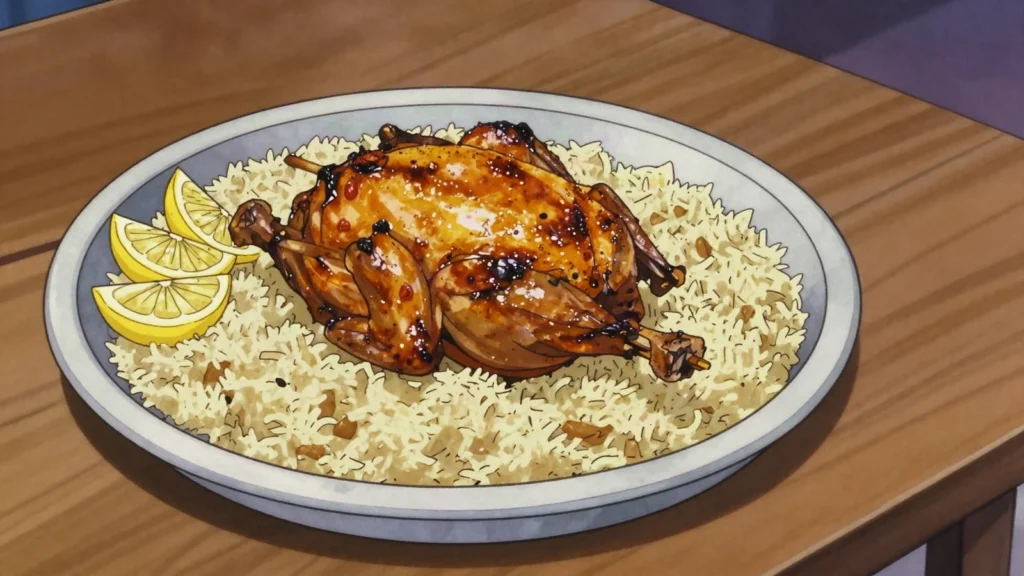
- Fry the onion in ghee with cumin, add the washed rice, then the collected roasting juices and enough water, and cook covered on the lowest heat for 20 minutes. Serve the whole bird on a platter over the rice, dusted with chaat masala. Serve with sliced raw onion, lemon and kandahari naan, and carve it at the table.
Technique
- The salt-only version is the authentic Balochi one and restaurant versions are more heavily spiced.
- Lamb sajji is the older form and chicken is the more common now.
- The rice cooked in the juices is called sajji rice and is served with it as standard.
Substitutions
- A rotisserie or a hot oven in place of the open fire.
- Yoghurt and papaya as a tenderiser for lamb.
Variations
- Made with lamb leg, which is the original.
- Restaurant style, with pepper, cumin and yoghurt.
- Stuffed with rice before roasting, which some places do.
History
Whole chicken or lamb, marinated simply in salt and sometimes green papaya paste as a tenderizer, then skewered and roasted slowly over an open charcoal fire, developed in the Balochistan region of Pakistan, reflecting the traditionally pastoral, herding-based lifestyle of the Baloch people, for whom whole-animal roasting over open fire has long been a significant cooking method well suited to their historically nomadic and semi-nomadic way of life. Its minimal seasoning, relying on salt alone rather than the complex spice blends found in much of the rest of Pakistani cuisine, reflects a specifically Baloch culinary preference for showcasing the quality of the meat itself. Sajji has since spread in popularity across Pakistan more broadly, though it remains most closely associated with Balochi cultural identity specifically.
Frequently asked questions
What is Sajji?
Sajji is a main from Pakistan: balochi whole chicken or lamb roasted on skewers, served over rice. Whole chicken or lamb, marinated simply in salt and sometimes green papaya paste as a tenderizer, then skewered and roasted slowly over an open charcoal fire, developed in the Balochistan region of Pakistan, reflecting the traditionally pastoral, herding-based lifestyle of the Baloch people, for whom whole-animal roasting over open fire has long been a significant cooking method well suited to their historically nomadic and semi-nomadic way of life. Its minimal seasoning, relying on salt alone rather than the complex spice blends found in much of the rest of Pakistani cuisine, reflects a specifically Baloch culinary preference for showcasing the quality of the meat itself. Sajji has since spread in popularity across Pakistan more broadly, though it remains most closely associated with Balochi cultural identity specifically.
How long does Sajji take to make?
Sajji takes 20 min plus 4 hr marinating of preparation and 2 hr of cooking. The recipe makes 6 servings. It is rated medium to make.
What can I substitute in Sajji?
Yes, within limits. A rotisserie or a hot oven in place of the open fire. Yoghurt and papaya as a tenderiser for lamb.
What is the most important thing to get right in Sajji?
Rub the coarse salt all over the bird, inside and out, and into every crease. Use far more salt than for a normal roast. Prick the skin all over with a fork or the point of a knife. Pricking lets the salt penetrate, which on a whole bird it otherwise barely does.