
Ingredients
Dough
- 600 gplain flour
- 300 mlwarm milk
- 100 gghee or melted butter
- 60 gsugar
- 7 ginstant yeast
- 1 tspsalt
- 1egg, optional
Saffron milk
- a generous pinch of saffron
- 100 mlwarm milk
- 2 tbspsugar
To finish
- ghee, for brushing
- nigella seeds or slivered pistachios, optional
To serve
- nihari
- kebabs
- korma
- or plain with tea
Directions
- Crush the saffron threads between your fingers and steep them in 100 ml warm milk with the sugar for at least 20 minutes. Crush the threads and give them real time in warm liquid. The milk should turn a deep orange-gold. Mix the flour and salt, then add the milk, the melted ghee and the egg.
- Bring it to a soft dough and knead 10 minutes until smooth and elastic. This is an enriched dough and it takes longer to come together than a plain one, because the fat slows the gluten forming. Prove it for about 1 hour 30 minutes until doubled. Roll each into a ball and rest them 15 minutes covered. Now roll each into a round of about 18 cm and 5 mm thick.
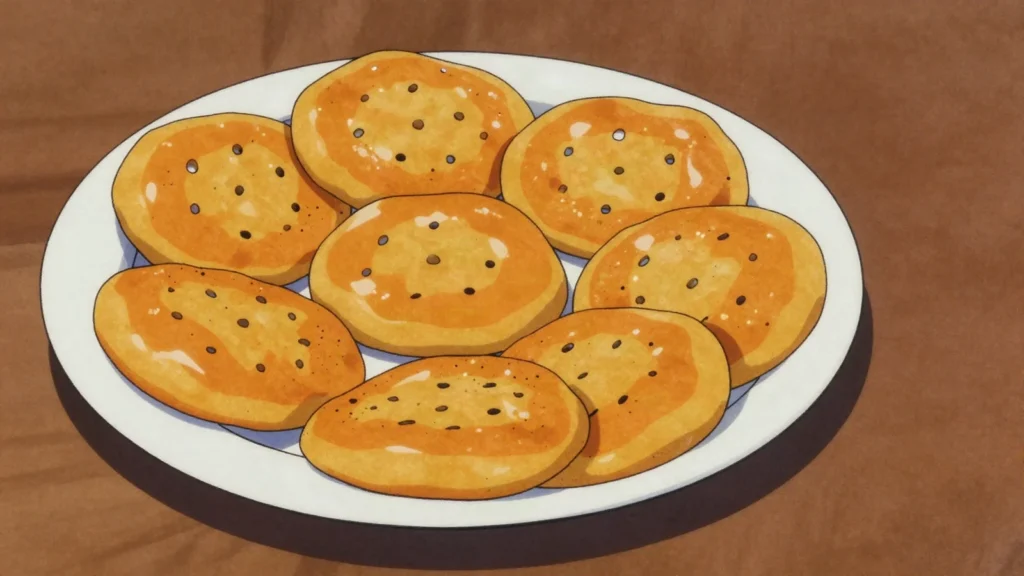
- Keep them fairly thick. Sheermal is a soft bread rather than a thin crisp one, and rolled too thin it dries into a biscuit. Prick each all over with a fork. Docking the dough stops it puffing up into a balloon, and sheermal is meant to stay flat and dense rather than pocketed.
- Heat the oven as hot as it goes, at least 250°C (480°F), with a stone or heavy tray inside for a full hour. Now bake them 6 to 8 minutes until just set and lightly coloured.
- Take them out slightly underdone, because they go back in after the saffron milk. Brush the saffron milk on partway through the bake, not before. Return them to the oven for 2 to 3 minutes only, until the surface is dry and golden with an orange blush. They should be soft and slightly chewy, never crisp.
- Brush with ghee the moment they come out. Stack them under a cloth as they come out, which traps steam and keeps them soft. Scatter nigella seeds or pistachios if you want, though plain is standard.
- Serve them warm, torn by hand, with nihari or a rich korma. In Lucknow and Karachi they are sold from tandoors in the evening and bought hot in stacks wrapped in paper.
Technique
- Sheermal is closely associated with Lucknow and with the Muhajir communities of Karachi.
- It stays soft for a day and is refreshed briefly in a hot oven.
- Baqarkhani is the flakier layered relative.
Substitutions
- A pinch of turmeric with a little saffron, if saffron is scarce, accepting a different flavour.
- Milk powder in warm water if fresh milk is short.
Variations
- Taftan, richer and cardamom-scented.
- With pistachios pressed into the top.
- Made smaller, as individual breads.
History
Saffron-and-milk flatbread developed in the Persianate kitchens of Awadh, brought to Pakistan by migrant families from Lucknow.
Frequently asked questions
What is Sheermal?
Sheermal is a bread & pastry from Pakistan: slightly sweet saffron milk bread paired with nihari or kebabs. Saffron-and-milk flatbread developed in the Persianate kitchens of Awadh, brought to Pakistan by migrant families from Lucknow.
How long does Sheermal take to make?
Sheermal takes 30 min plus 2 hr rising of preparation and 15 min of cooking. The recipe makes 8 breads. It is rated medium to make.
What can I substitute in Sheermal?
Yes, within limits. A pinch of turmeric with a little saffron, if saffron is scarce, accepting a different flavour. Milk powder in warm water if fresh milk is short.
What is the most important thing to get right in Sheermal?
Keep them fairly thick. Sheermal is a soft bread rather than a thin crisp one, and rolled too thin it dries into a biscuit. Prick each all over with a fork. Docking the dough stops it puffing up into a balloon, and sheermal is meant to stay flat and dense rather than pocketed.