
Ingredients
Grain
- 500 gjareesh, coarsely crushed wheat, rinsed and soaked 4 hours or overnight
- 2 litreswater
Meat
- 800 glamb neck or shoulder on the bone, cut into 5 cm pieces
- 2onions (300 g), 1 chopped, 1 sliced for the topping
- 3garlic cloves, crushed
- 1 tbspghee
- 1cinnamon stick
- 4cardamom pods
- 2dried limes (loomi), pierced
- 2bay leaves
- 1 tbspbaharat or kabsa spice mix
- 1 tspground black pepper
- 2 tspsalt
To finish
- 400 glaban or thick plain yoghurt
- 80 gghee
- 1large onion, thinly sliced
- 1 tbspdried mint, rubbed
- 1 tspground cumin
- Optional 2 tbsp tomato paste, for the reddened Qassim style
Directions
- Soak the crushed wheat for at least 4 hours, ideally overnight, then drain and rinse until the water runs almost clear. Skipping this leaves a gluey, uneven porridge.
- Melt the ghee in a heavy pot, brown the lamb hard in two batches for 6–8 minutes a batch, then add the chopped onion and garlic and sweat 5 minutes.
- Add the cinnamon, cardamom, bay, pierced dried limes, baharat, pepper and salt, then 2 litres of water. Bring to a boil, skim carefully, and simmer covered 1 hour until the meat is nearly tender.
- Lift the meat out and keep it warm. Strain the broth and return it to the pot; you should have about 1.6 litres. Top up with hot water if not.
- Add the drained jareesh to the broth and simmer very gently, uncovered, for 1 hour to 1 hour 15 minutes, stirring every 10 minutes with a wooden spoon and scraping the base. It burns easily.
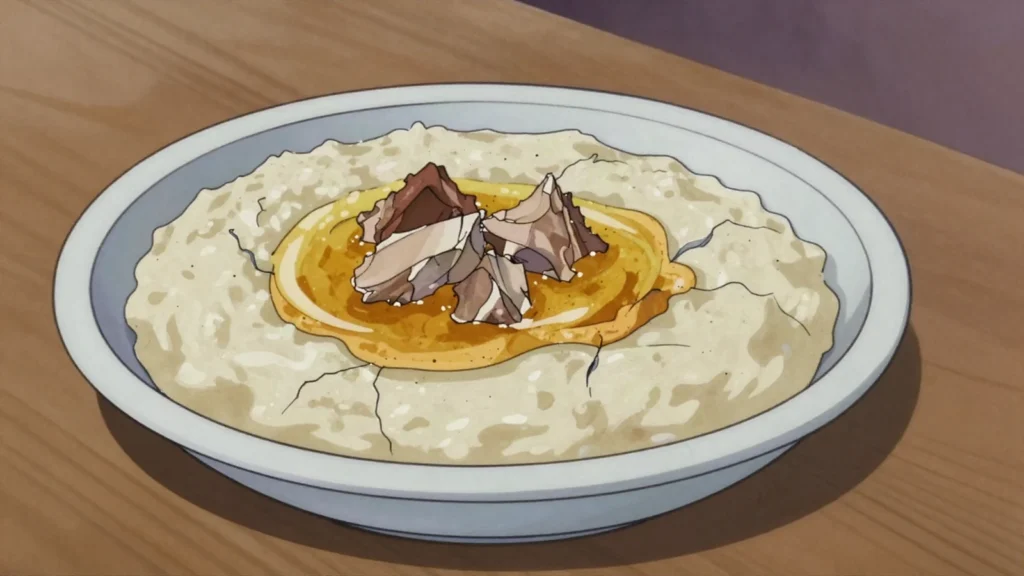
- As it thickens, return the meat and start mashing: press the grain against the side of the pot with the back of the spoon, or beat it with a wooden mishab. The dish should go from distinct grains to a thick, creamy, slightly rough puree, somewhere between polenta and mashed potato.
- Beat in the laban a ladle at a time over low heat. Add it off a rolling boil so it does not split, and keep beating until the jareesh is pale, smooth and glossy.
- Meanwhile fry the sliced onion in the 80 g of ghee over medium heat for 12–15 minutes until deep brown and sweet, then stir in the cumin and dried mint off the heat.
- Spread the jareesh in a wide shallow dish, make a hollow in the centre, pour over the onion ghee so it pools and runs, and set the lamb pieces on top. Eat with the right hand from the communal dish, or with a spoon.
Technique
- Jareesh is Najdi winter food and the texture is the whole test: it must be beaten until creamy but not so far that it becomes a paste with no character. Saudi cooks judge it by how it falls off the spoon in a thick ribbon.
- Laban, cultured drinking yoghurt, is the traditional souring agent, not plain milk. It is what gives jareesh its faint tang against the fat of the lamb and the sweetness of the onions.
- The pot must be stirred often once the grain goes in. Crushed wheat sinks and scorches, and a burnt base flavours the entire dish.
- Dried limes are pierced, not split, so they perfume the broth slowly. Burst loomi turn the pot bitter.
Substitutions
- Cannot find jareesh? Coarse bulgur or cracked freekeh both work; reduce the simmer to 40 minutes for bulgur, which is already parboiled.
- Chicken on the bone replaces lamb in many households; cut the first simmer to 35 minutes.
- No laban? Thick yoghurt loosened with 100 ml water, stirred in off the heat, gives the same effect.
Variations
- Jareesh hamra, the red version, in which tomato paste is fried into the base for a rust-coloured dish.
- Marqooq and matazeez, the related Najdi wheat dishes built on flat dough sheets rather than crushed grain.
- A vegetarian jareesh cooked in vegetable broth with extra laban, served in Ramadan.
History
Crushed wheat cooked to a porridge with meat and yoghurt, a Najdi staple older than imported rice.
Frequently asked questions
What is Jareesh?
Jareesh is a main from Saudi Arabia: cracked wheat cooked creamy with meat and yoghurt; Najdi comfort food. Crushed wheat cooked to a porridge with meat and yoghurt, a Najdi staple older than imported rice.
How long does Jareesh take to make?
Jareesh takes 20 min plus overnight soaking of preparation and 2 hr 30 min of cooking. The recipe makes 6 servings. It is rated medium to make.
What can I substitute in Jareesh?
Yes, within limits. Cannot find jareesh? Coarse bulgur or cracked freekeh both work; reduce the simmer to 40 minutes for bulgur, which is already parboiled. Chicken on the bone replaces lamb in many households; cut the first simmer to 35 minutes. No laban? Thick yoghurt loosened with 100 ml water, stirred in off the heat, gives the same effect.
What is the most important thing to get right in Jareesh?
Jareesh is Najdi winter food and the texture is the whole test: it must be beaten until creamy but not so far that it becomes a paste with no character. Saudi cooks judge it by how it falls off the spoon in a thick ribbon.