
Ingredients
The oxtail
- 2 kgoxtail
- cut into joints
- salt and black pepper
- 3 tablespoonsoil
The marinade
- 8garlic cloves, crushed
- juice of 3 sour oranges
- or 2 limes and 1 orange
- 2 teaspoonsground cumin
- 2 teaspoonsdried oregano
The sauce
- 2onions, chopped
- 1green pepper, chopped
- 1red pepper, chopped
- 400 gtomatoes, chopped
- 3 tablespoonstomato paste
- 300 mldry red wine
- 500 mlbeef stock
- 3bay leaves
- 2hot chillies, chopped
- or to taste
- 1 teaspoonsmoked paprika
To serve
- white rice
- fried plantain
- black beans
Directions
- Skim the fat during the cooking. Skim it again before serving it. That is far easier than skimming hot. Adjust it to your own taste entirely. Crush the garlic to a paste with salt.
- Salt gives the blade something to work on. Use the flat of a large knife. Combining it is straightforward enough. Mix the garlic with the citrus juice. Add the cumin and the oregano. Rub it all over the oxtail joints. Four hours is a workable minimum.
- Lift the oxtail out and pat it dry. Wet meat steams rather than browning. Keep the marinade for the pot. Heat the oil in a heavy deep pot. Brown the oxtail in small batches. Do not crowd the pot at any point. Brown every side of every piece. That takes real time and patience. Add the onion and peppers to the pot. Cook them for about twelve minutes. They should soften and turn golden.
- Add the tomato paste to the pot. Cook it out for two full minutes. Stir it constantly so it does not catch. Pour the red wine into the pot. Let it bubble hard for a few minutes. Use a dry red rather than a sweet one. It does not need to be expensive.
- Return all the oxtail to the pot. Add the tomatoes, stock and marinade. Add the bay leaves, chilli and paprika. It must boil to be entirely safe. Add more stock later if it dries out. A thick sauce is what is wanted. Bring the pot up to a bare simmer. Cover the pot and leave it alone.
- Keep it at the barest simmer only. It should barely bubble at the surface. Let it braise for at least three hours. Oxtail needs genuinely long cooking. Check it every forty minutes or so. Make sure it is not catching on the base. Add a little stock if it dries out. Stir it gently rather than vigorously.
- Skim the fat off during the cooking. Lift it off with a large flat spoon. Judging it takes a proper test. Pull at the cooked meat with a fork. It should come away from the bone easily. Take the lid off for the last half hour.
- Taste it and then adjust the salt. Season the stew right at the end. Add more chilli if you want more heat. Cook it a day ahead if you can. That is far easier than skimming hot. Bring it slowly back up to a simmer. Add a little stock if it is too thick. Serving it is always done hot. Serve it over plain white rice. Serve fried plantain alongside it. White rice soaks up the thick sauce.
Technique
- Oxtail is a tough cut full of connective tissue and needs three hours as a realistic minimum, often four — there is no way to hurry it, and rushing gives tough chewy meat. Long gentle heat turns the collagen to gelatine, which is what makes the meat fall off the bone and gives the sauce its glossy body with no flour or starch needed.
- Oxtail renders a great deal of fat which must be skimmed off or the sauce is unpleasantly greasy. Skim it several times during cooking, but the easiest route by far is cooking it a day ahead: refrigerated overnight the fat sets solid and lifts off in one clean sheet, and the stew improves as well.
- Keep it at the barest simmer, barely bubbling at the surface, since a hard boil toughens the meat fibres; a low oven at one hundred and fifty degrees is steadier than a hob and needs far less watching.
Substitutions
- Two limes and one orange approximate sour orange, the naranja agria used in Cuban marinades, which is sharper than a sweet orange.
- Use a dry red wine rather than a sweet one — it need not be expensive but should be drinkable, since cooking wine tastes harsh in the finished sauce.
Variations
- The marinade has touched raw beef and must boil to be safe; it goes into the pot and cooks for hours, which deals with it completely.
- Pat every piece dry before browning, since wet meat steams rather than browning, and brown in small batches aiming for a deep crust — pale meat gives a pale weak sauce and that browning carries most of the flavour.
- Rabo encendido means tail on fire, for the peppery sauce; some versions are genuinely very hot and others only mildly so, and it is adjusted to taste.
History
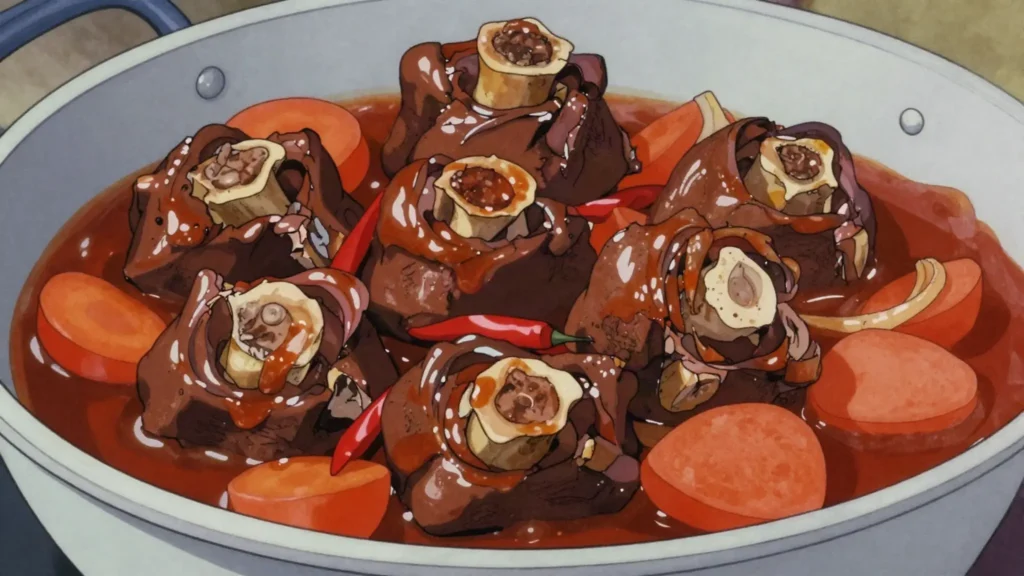
Braised oxtail, slow-cooked for many hours with tomato, wine and warming spices until the meat becomes extremely tender and falls easily from the bone, documented across Cuba as a traditional dish reflecting the island’s broader Spanish colonial and Caribbean culinary heritage, with oxtail’s long braising time transforming an otherwise tough, inexpensive cut into a rich, deeply flavourful centerpiece dish. Its name, meaning literally lit tail, is generally understood to reference the deep, fiery red colour the sauce takes on during its long simmer with tomato and wine, rather than describing any particular spiciness in the dish itself. Rabo encendido remains a beloved traditional dish across Cuba, commonly served over white rice as a hearty, comforting meal.
Frequently asked questions
What is Rabo encendido?
Rabo encendido is a soup & stew from Cuba: fiery braised oxtail in tomato-wine sauce. Braised oxtail, slow-cooked for many hours with tomato, wine and warming spices until the meat becomes extremely tender and falls easily from the bone, documented across Cuba as a traditional dish reflecting the island’s broader Spanish colonial and Caribbean culinary heritage, with oxtail’s long braising time transforming an otherwise tough, inexpensive cut into a rich, deeply flavourful centerpiece dish. Its name, meaning literally lit tail, is generally understood to reference the deep, fiery red colour the sauce takes on during its long simmer with tomato and wine, rather than describing any particular spiciness in the dish itself. Rabo encendido remains a beloved traditional dish across Cuba, commonly served over white rice as a hearty, comforting meal.
How long does Rabo encendido take to make?
Rabo encendido takes 30 minutes plus marinating of preparation and 3 hours 30 minutes of cooking. The recipe makes serves 6. It is rated medium to make.
What can I substitute in Rabo encendido?
Yes, within limits. Two limes and one orange approximate sour orange, the naranja agria used in Cuban marinades, which is sharper than a sweet orange. Use a dry red wine rather than a sweet one — it need not be expensive but should be drinkable, since cooking wine tastes harsh in the finished sauce.
What is the most important thing to get right in Rabo encendido?
Lift the oxtail out and pat it dry. Wet meat steams rather than browning. Keep the marinade for the pot. Heat the oil in a heavy deep pot. Brown the oxtail in small batches. Do not crowd the pot at any point. Brown every side of every piece. That takes real time and patience. Add the onion and peppers to the pot. Cook them for about twelve minutes. They should soften and turn golden.