
Ingredients
The coconut
- 500 gfresh grated coconut
- from about 2 nuts
- or 400 g desiccated coconut
- moistened
The syrup
- 500 gsugar
- white or raw cane
- 150 mlwater
Sometimes added
- 1 teaspoonvanilla
- a pinch of grated nutmeg
- a little grated ginger
- food colouring
To set
- a greased tray
- or a marble slab
- a little oil
Directions
- Let it soak for a good ten minutes. Too soft and it will never set. Drop a little syrup into cold water. It should form a soft pliable ball. Keep children well away from the pan. Take the pan off the heat to test. Drop the syrup with a spoon rather than fingers. Only touch it once it is in cold water.
- Brush the pan sides down with water. Crack the coconuts right open. A thin brown skin sits on the flesh. Grate the coconut flesh finely. Grease a shallow tray with oil. Have it ready before you start.
- Put the sugar and water in a heavy pan. Warm it until the sugar dissolves. The sugar must dissolve before it boils. Stir it gently while it is warming. Stop stirring once it comes to a boil. Bring it right up to a full boil. Let it boil without stirring at all.
- Brush them down with a wet brush. That stops them seeding the syrup. Take the pan right off the heat. Drop a little syrup into cold water. Understanding the soft ball is worth explaining. Add the grated coconut all at once. Stir it in thoroughly and quickly. Stir hard to combine them evenly.
- Work quickly at this whole stage. Return the pan to a medium heat. Cook it for about ten minutes. Stir it constantly throughout. Stir right into the corners of the pan. Do not stop stirring at any point.
- Stir in vanilla or grated nutmeg. Add the colouring if you want it. Add these things at the very end. Heat drives off vanilla quickly. Stir them through and take it off. Tip the mixture into the greased tray. Press it out flat immediately. It becomes unworkable within minutes. Work immediately and very quickly. Have everything ready beforehand.
- Press it down with an oiled spoon. Oil stops it sticking to your tools. Oil the spoon and both your hands. Re-oil them if it starts to stick. Press it out to an even thickness. Aim for about two centimetres. Score it into blocks with a knife.
- Warm nougat scores very easily. Cold nougat is hard to cut cleanly. Score it before it sets fully. Let it cool completely in the tray. Give it at least one full hour there.
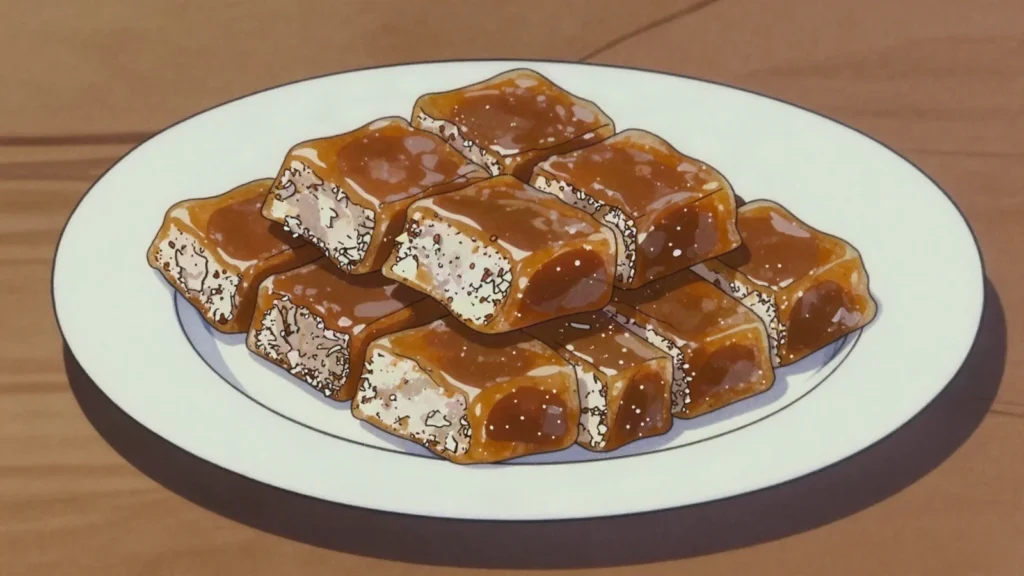
- Cut along all the scored lines. Use a sharp knife rubbed with oil. The mixture sticks to a dry blade. Oil it and wipe it between cuts. Set the blocks out on a plate. They keep two weeks in a sealed tin. Keep them somewhere cool and dry.
Technique
- Boiling sugar is far hotter than boiling water, sticks to skin and burns very badly: never touch or taste it hot, and keep children away. To test the stage safely, take the pan off the heat and drop a little syrup into cold water with a spoon, only touching it once it is in the water — it should form a soft pliable ball that flattens when lifted out.
- Sugar syrup can crystallise back into grains and give a grainy sweet, so dissolve the sugar fully before it boils, do not stir once it is boiling, and brush the pan sides down with a wet brush to dissolve any stray crystals.
- The mixture sets extremely fast and becomes unworkable within minutes, so grease the tray and have everything ready before you start; press it out immediately with an oiled spoon or oiled hands, and score it into blocks while still warm, since cold nougat is hard to cut cleanly.
Substitutions
- Desiccated coconut moistened with warm water for ten minutes stands in for fresh grated, though it is drier and less rich.
- Raw cane sugar gives a caramel colour and flavour where white sugar gives a plain one.
Variations
- It is called nougat but is not one — there is no egg white or nut in it, and the name is used loosely.
- Fine grating gives a smoother sweet and coarse a chunkier one; both are made in the Seychelles.
- Pink and other coloured versions are sold alongside the plain white.
History
A Creole sweet sold at Seychellois markets and roadside tables, made only from coconut and cane sugar.
Frequently asked questions
What is Nougat coco?
Nougat coco is a dessert from Seychelles: grated coconut boiled with sugar until sticky, then cut into blocks. A Creole sweet sold at Seychellois markets and roadside tables, made only from coconut and cane sugar.
How long does Nougat coco take to make?
Nougat coco takes 20 minutes of preparation and 40 minutes of cooking. The recipe makes about 20 pieces. It is rated medium to make.
What can I substitute in Nougat coco?
Yes, within limits. Desiccated coconut moistened with warm water for ten minutes stands in for fresh grated, though it is drier and less rich. Raw cane sugar gives a caramel colour and flavour where white sugar gives a plain one.
What is the most important thing to get right in Nougat coco?
Let it soak for a good ten minutes. Too soft and it will never set. Drop a little syrup into cold water. It should form a soft pliable ball. Keep children well away from the pan. Take the pan off the heat to test. Drop the syrup with a spoon rather than fingers. Only touch it once it is in cold water.