
Ingredients
Filling
- 1whole chicken, about 1.5 kg
- 400 gpork shoulder or game — rabbit, partridge or duck
- 2 litreswater
- 2bay leaves
- 1 tbspsalt
- 500 gstale country bread, crusts on, torn
- 1whole head garlic, crushed
- 3 tbspsweet paprika
- 1 tbsphot paprika
- 100 mlolive oil
- salt and pepper
- 2m natural hog casing, rinsed and soaked
To serve
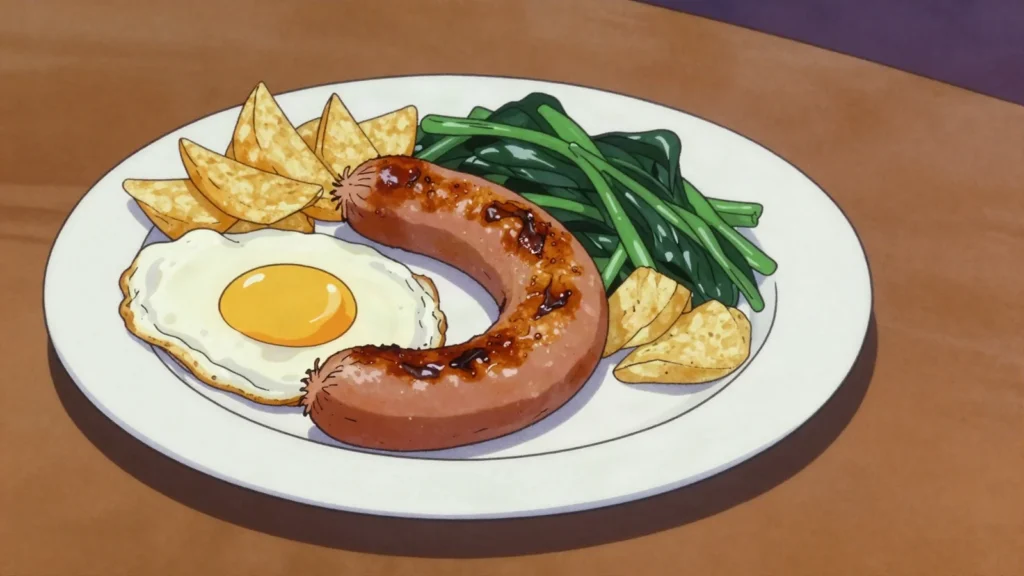
- fried egg
- chips
- grelos or salad
Directions
- Simmer the chicken and pork in the water with the bay and salt for about an hour, until the meat falls from the bone. Keep the broth — it is the liquid the bread will drink.
- Lift the meat out, cool it, and pull every scrap off the bones, shredding it by hand into fine strands rather than chopping it. That shredded texture is characteristic and a processor destroys it.
- Strain the broth and keep it hot.
- Tear the stale bread into a large bowl and pour over enough hot broth to soften it completely — it should be wet but not soupy. Let it stand ten minutes, then work it to a paste with your hands.
- Mix in the shredded meat, garlic, both paprikas, olive oil, salt and pepper. Taste it: alheira should be strongly garlicky and paprika-red.
- The bread is not a filler here. It is the point of the sausage — Jews forced to convert after 1496 made bread-and-poultry sausages and hung them in the smokehouse so that neighbours and the Inquisition would assume they were eating pork.
- Cover and refrigerate overnight, then fill the casing loosely and tie into horseshoe-shaped links. Do not pack tight; the bread swells.
- Hang them somewhere cool and airy for a day to dry, then either cold-smoke them lightly for a few hours or refrigerate and use within three days.
- To eat, prick and fry gently in a little oil for 10 to 15 minutes, turning, until the skin blisters and browns. Serve with a fried egg, chips and greens.
Technique
- Fry gently. A hot pan splits the casing and the soft bread filling escapes.
- Use genuinely stale country bread. Fresh bread turns the filling to paste.
- The unsmoked version is a fresh sausage: refrigerate and eat within three days, or freeze.
Substitutions
- Any poultry or game — duck, rabbit, partridge — which is what the original used.
- Turkey, which is common in modern Portuguese alheira.
- Skip the casing and shape it into patties, which fry perfectly well.
Variations
- Alheira de Mirandela holds a protected geographical indication.
- Baked in the oven and split open, or crumbled into rice and eggs.
History
A sausage made from a mixture of poultry, bread and garlic rather than the pork more typical of most Portuguese sausages, with its unusual composition tracing to a specific and documented historical origin: Portuguese Jews forced to convert to Christianity or hide their faith during the Portuguese Inquisition beginning in the late 1400s and 1500s are credited with developing alheira specifically to visibly resemble a pork sausage, hanging it publicly to avoid suspicion from religious authorities while actually containing no pork at all, since eating pork was and remains prohibited under Jewish dietary law. This deliberate act of religious concealment through food is well documented among Portuguese historians studying the period, giving alheira an unusually clear and specific historical origin story compared to many traditional foods with murkier origins.
Frequently asked questions
What is Alheira?
Alheira is a charcuterie & cured from Portugal: garlicky bread-and-game sausage, fried with egg and fries. A sausage made from a mixture of poultry, bread and garlic rather than the pork more typical of most Portuguese sausages, with its unusual composition tracing to a specific and documented historical origin: Portuguese Jews forced to convert to Christianity or hide their faith during the Portuguese Inquisition beginning in the late 1400s and 1500s are credited with developing alheira specifically to visibly resemble a pork sausage, hanging it publicly to avoid suspicion from religious authorities while actually containing no pork at all, since eating pork was and remains prohibited under Jewish dietary law. This deliberate act of religious concealment through food is well documented among Portuguese historians studying the period, giving alheira an unusually clear and specific historical origin story compared to many traditional foods with murkier origins.
How long does Alheira take to make?
Alheira takes 1 hour plus overnight resting of preparation and 1 hour of cooking. The recipe makes makes 10 sausages. It is rated medium to make.
What can I substitute in Alheira?
Yes, within limits. Any poultry or game — duck, rabbit, partridge — which is what the original used. Turkey, which is common in modern Portuguese alheira. Skip the casing and shape it into patties, which fry perfectly well.
What is the most important thing to get right in Alheira?
Lift the meat out, cool it, and pull every scrap off the bones, shredding it by hand into fine strands rather than chopping it. That shredded texture is characteristic and a processor destroys it.