
Ingredients
Snails
- 1.5 kgsmall live snails, caracóis
- coarse salt, for washing
- vinegar, for washing
- water, for rinsing
Broth
- 2 litreswater
- 1whole head of garlic, halved
- 2 tablespoonsdried oregano
- 1onion, halved
- 2bay leaves
- 1piri piri chilli, whole
- 1 tablespoonsalt
- a piece of chouriço, optional
Sometimes added
- a sprig of thyme
- a piece of lemon peel
- black peppercorns
To serve
- cold beer
- bread
- toothpicks or small forks
Directions
- Wash your hands thoroughly after handling live snails. Wash any surface and utensil they have touched. Never gather snails from treated ground.
- Keep them in a ventilated box with a weighted lid. Discard any snail that is not alive. Discard any with a broken or cracked shell. Put them in a large bowl with coarse salt. Add a splash of vinegar and stir them around. Rinse them under running water.
- Repeat the whole process at least four times. Keep going until the water runs clear. Put the water into a large pot. Add the halved garlic head and the onion.
- Add the dried oregano generously. Add the bay leaves and the whole chilli. Add a piece of chourico for depth if you want it. Season it with plenty of salt. Cooking the snails is done in stages.
- Put the washed snails into cold broth. Starting them cold is the traditional way. Bring it up very slowly over a low heat. Take a good twenty minutes over that. Simmer them for a full twenty minutes. Do not shorten it for any reason.
- Taste the broth and adjust the salt. It should taste strongly of garlic and oregano. Let them sit in the broth off the heat. Give them ten minutes to take up the flavour.
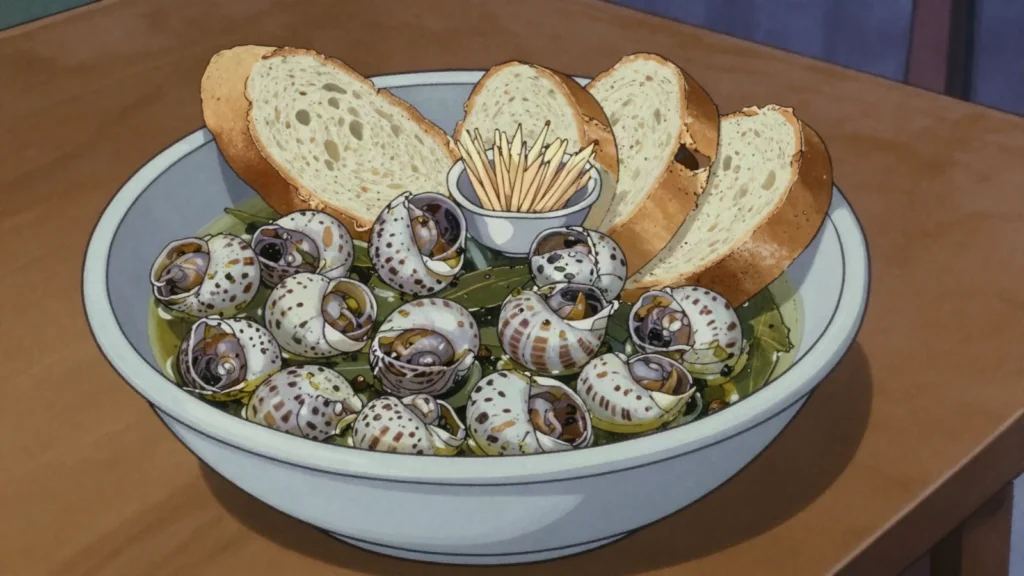
- Ladle snails and plenty of broth into bowls. Pick each snail out of its shell with the point. Discard the empty shells into a second bowl. Cold beer is the fixed accompaniment.
Technique
- Tascas across Lisbon and the Alentejo hang signs reading ha caracois from May to August, when the small snails are in season.
- Portuguese caracois are small snails simmered in broth, quite unlike the large French escargot cooked with butter.
Substitutions
- Tinned or frozen prepared snails can be used and need only heating through in the broth.
- Any small edible snail works, though the species sold in Portugal is specific.
Variations
- Caracoletas are the larger snails, cooked with more sauce and eaten later in the season.
- Some tascas add chourico or a piece of pork to the broth.
- A version with more chilli is served for those who want heat.
History
A Lisbon and Alentejo summer ritual: tascas hang há caracóis signs from May to August, when the small snails are in season.
Frequently asked questions
What is Caracóis?
Caracóis is a snack from Portugal: small snails simmered with garlic and oregano, eaten with beer. A Lisbon and Alentejo summer ritual: tascas hang há caracóis signs from May to August, when the small snails are in season.
How long does Caracóis take to make?
Caracóis takes 30 minutes plus purging of preparation and 40 minutes of cooking. The recipe makes serves 6. It is rated medium to make.
What can I substitute in Caracóis?
Yes, within limits. Tinned or frozen prepared snails can be used and need only heating through in the broth. Any small edible snail works, though the species sold in Portugal is specific.
What is the most important thing to get right in Caracóis?
Wash your hands thoroughly after handling live snails. Wash any surface and utensil they have touched. Never gather snails from treated ground.