
Ingredients
Dough
- 500 gplain flour
- 1/2 tspsalt
- 2eggs
- 60 mlorange juice
- 60 mlvegetable oil
- 1 tbspanise liqueur, or 1 tsp aniseed steeped in water
- grated zest of 1 orange
- 2 tbspwarm water, if needed
For frying
- 1 litrevegetable oil
Panela syrup
- 500 gpanela or dulce de tapa, chopped
- 400 mlwater
- 2cinnamon sticks
- 4cloves
- 1strip of orange peel
- 1 tspaniseed
To finish
- ground cinnamon, to dust
Equipment
- a rolling pin, or a pasta machine
Directions
- Chop the panela into small pieces so it dissolves properly. Put it in a pan with the water and all the spices. Heat it gently, stirring, until the panela dissolves completely. Bring it to a simmer and cook it for twenty minutes. It should darken and thicken slightly.
- Add a little hot water if it has gone too thick. Strain out the spices and keep it warm. Making the dough is quick and needs no yeast. Put the flour and salt in a bowl and make a well. Beat the eggs with the orange juice, oil and anise liqueur.
- Add the grated orange zest as well. Pour it into the well and mix with your hand. Bring it together into a firm dough. Add a spoonful of warm water only if it will not come together. Knead it for eight minutes on a lightly floured surface. It should be smooth and firm rather than soft. Cover it and rest it for thirty minutes. The rest lets you roll it thin without it springing back.
- Divide the dough into four pieces. Roll one piece out very thin, about two millimetres. Thin dough gives light crisp prestiños. Cut the rolled sheet into rectangles of about eight by five centimetres. Make a slit down the middle of each rectangle.
- Pull one end through the slit to twist it. Set the shaped pieces on a floured tray. Heat the oil in a deep pan to about 175C. Test with a scrap of dough, which should rise and sizzle steadily. Fry them for about a minute on each side. They should be pale golden and blistered. Lift them onto a rack lined with paper.
- Drop the hot fried pieces straight into the warm syrup. Turn them so they are coated all over. Let them sit in the syrup for a minute or two. Hot dough absorbs syrup far better than cool dough. Lift them out with a slotted spoon. Finishing them is done immediately. Set them on a plate with a little space between them. Pour a little more syrup over the top.
- Dust them with ground cinnamon. Serving them is done warm or at room temperature. Let them stand for at least ten minutes so the syrup settles. Serve them piled on a plate at Christmas. They keep for three days but soften as they stand.
Technique
- Keep the syrup pourable, since it must soak in rather than sit on the surface.
- Roll the dough about two millimetres thick, as thick dough will not soak properly.
- Put the fritters into the syrup while hot, since they absorb far more that way.
Substitutions
- Dark muscovado in place of panela, though the flavour is flatter.
- Aniseed steeped in warm water in place of anise liqueur.
Variations
- Twisted through a slit rather than folded.
- With more spice in the syrup.
- Dusted with sugar instead of soaked in syrup.
History
A Costa Rican Christmas sweet of Spanish descent, fried in batches for December family visits.
Frequently asked questions
What is Prestiños?
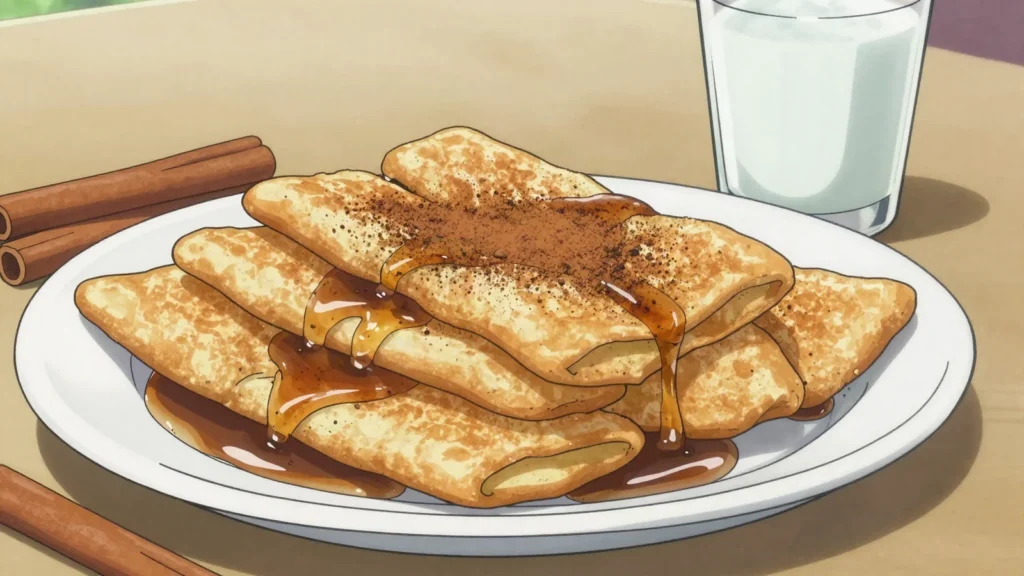
Prestiños is a dessert from Costa Rica: thin fried dough sheets folded and drenched in panela syrup. A Costa Rican Christmas sweet of Spanish descent, fried in batches for December family visits.
How long does Prestiños take to make?
Prestiños takes 40 min plus 30 min resting of preparation and 40 min of cooking. The recipe makes 30 pieces. It is rated medium to make.
What can I substitute in Prestiños?
Yes, within limits. Dark muscovado in place of panela, though the flavour is flatter. Aniseed steeped in warm water in place of anise liqueur.
What is the most important thing to get right in Prestiños?
Add the grated orange zest as well. Pour it into the well and mix with your hand. Bring it together into a firm dough. Add a spoonful of warm water only if it will not come together. Knead it for eight minutes on a lightly floured surface. It should be smooth and firm rather than soft. Cover it and rest it for thirty minutes. The rest lets you roll it thin without it springing back.