
Ingredients
Shells
- 200 gground almonds
- 200 gicing sugar
- 75 gegg whites, aged
- 75 gegg whites, aged, for the meringue
- 200 gcaster sugar
- 50 mlwater
- gel food colouring
Ganache
- 200 gdark chocolate
- 200 mldouble cream
- 30 gbutter
Equipment
- a sugar thermometer
- a piping bag with a 10 mm plain nozzle
- silicone mats or baking paper
Directions
- Sift the ground almonds and icing sugar together twice, discarding any coarse pieces that will not pass. Sift it twice and mean it. A single almond fragment gives a bumpy shell, and macaron shells are judged on being flawlessly smooth.
- Mix the first 75 g of whites into the almond and sugar to make a thick paste, and add the colouring here. Use gel colouring, never liquid.
- Boil the caster sugar and water to exactly 118°C (245°F). Meanwhile whip the second 75 g of whites to soft peaks.
- Pour the hot syrup into the whipping whites in a thin steady stream down the side of the bowl, then whip until the bowl is barely warm and the meringue is thick and glossy. It is more work than the French method and far more reliable, because the cooked syrup stabilises the whites.
- Fold a third of the meringue into the almond paste to loosen it, then fold in the rest, deflating deliberately as you go. Under-mixed batter gives lumpy peaked shells; over-mixed batter spreads flat and never forms feet.
- Bake at 150°C (300°F) for 14 to 16 minutes. They are done when the shell does not slide on its foot when nudged. Cool completely before lifting them off, because a warm shell tears its base away.
- Make the ganache by pouring hot cream over the chocolate, standing a minute, then stirring smooth and beating in the butter. Cool until pipeable. Now refrigerate the filled macarons for 24 hours before eating.
Technique
- Humidity is the real enemy and there is no defeating it; choose a dry day.
- The Parisian sandwich macaron dates from Ladurée in the early twentieth century; the older French macaron is a single almond biscuit.
- Weigh the egg whites rather than counting them, because egg sizes vary too much.
Substitutions
- The French meringue method, which is simpler and considerably less reliable.
- Buttercream, jam or curd in place of ganache.
Variations
- Macaron de Nancy, the older unfilled almond biscuit.
- With salted caramel or fruit curd fillings.
- Made large, as a single dessert-sized macaron.
History
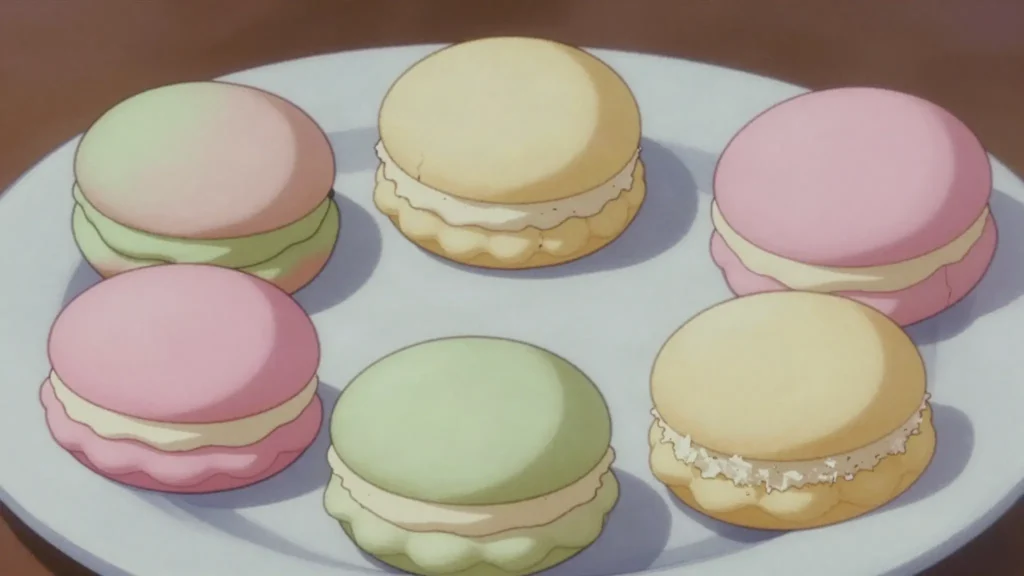
A delicate meringue-based sandwich cookie, its two almond-flour shells filled with ganache, buttercream or jam, generally traced back through Italian influence on French royal cooking, with an early, simpler almond meringue cookie believed to have arrived in France from Italy in the 1500s, possibly through the household of Catherine de’ Medici, an Italian noblewoman who became Queen of France. The now-iconic sandwiched, filled form of the macaron familiar today is a considerably more recent French refinement, generally credited to the Ladurée bakery in Paris in the early 1900s, which is widely credited with the specific innovation of joining two shells together with a filling, rather than serving the simpler single almond cookie that had existed for centuries prior. Modern macarons come in an enormous range of colours and flavours well beyond that original simpler almond version.
Frequently asked questions
What is Macaron?
Macaron is a dessert from France: almond meringue shells sandwiching ganache in pastel flavours. A delicate meringue-based sandwich cookie, its two almond-flour shells filled with ganache, buttercream or jam, generally traced back through Italian influence on French royal cooking, with an early, simpler almond meringue cookie believed to have arrived in France from Italy in the 1500s, possibly through the household of Catherine de’ Medici, an Italian noblewoman who became Queen of France. The now-iconic sandwiched, filled form of the macaron familiar today is a considerably more recent French refinement, generally credited to the Ladurée bakery in Paris in the early 1900s, which is widely credited with the specific innovation of joining two shells together with a filling, rather than serving the simpler single almond cookie that had existed for centuries prior. Modern macarons come in an enormous range of colours and flavours well beyond that original simpler almond version.
How long does Macaron take to make?
Macaron takes 1 hr plus 30 min resting of preparation and 20 min of cooking. The recipe makes about 30. It is rated hard to make.
What can I substitute in Macaron?
Yes, within limits. The French meringue method, which is simpler and considerably less reliable. Buttercream, jam or curd in place of ganache.
What is the most important thing to get right in Macaron?
Mix the first 75 g of whites into the almond and sugar to make a thick paste, and add the colouring here. Use gel colouring, never liquid.