
Ingredients
Coffee soak
- 350 mlstrong espresso, cooled to room temperature
- 1 tbspcaster sugar
Cream
- 4very fresh large egg yolks
- 100 gcaster sugar
- 40 mlwater
- 500 gmascarpone, cold
- 1 pinchfine salt
Assembly
- 300 gsavoiardi (hard Italian ladyfingers), about 30
- 20 gbitter cocoa powder, for dusting
Directions
- Brew the espresso, stir in the sugar and let it cool completely in a shallow dish. Warm coffee turns savoiardi to sludge.
- Make a pate a bombe: boil the 100 g sugar with the water to 121°C (250°F) on a sugar thermometer while whisking the yolks in a stand mixer.
- Pour the syrup down the side of the bowl in a thin stream onto the beating yolks and whip 6–8 minutes until pale, tripled and cool to the touch. This step pasteurises the eggs and is why the cream sets without gelatine.
- Beat the cold mascarpone briefly with a pinch of salt just to loosen it, no more than 20 seconds, then fold it into the yolk mousse in three additions with a spatula until glossy and thick enough to hold a ribbon.
- Dip each savoiardo in the coffee for one second a side only, turning it once. It should still be firm in the middle when you lay it down.
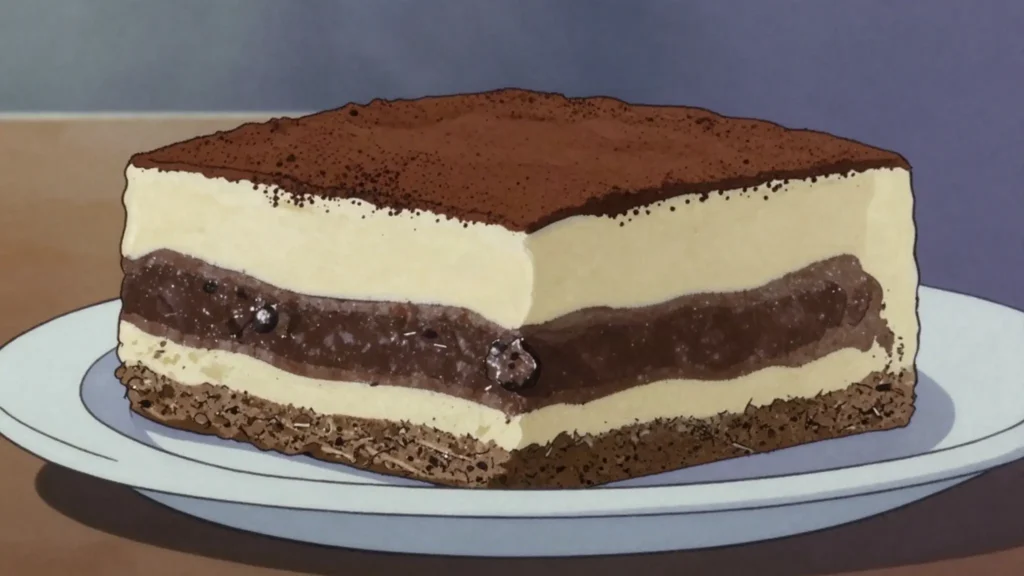
- Line a 20 x 25 cm dish with a single tight layer of soaked biscuits, spread over half the cream and level it, then repeat with a second layer of biscuits and the rest of the cream.
- Smooth the top, cover without touching the surface and refrigerate at least 6 hours, ideally overnight, so the biscuits soften into cake and the cream firms.
- Dust heavily with bitter cocoa through a fine sieve only at the moment of serving, and cut with a hot, dry knife.
Technique
- Mascarpone splits into grains if overbeaten or if it is warmer than about 8°C (45°F) when it meets the mousse. Take it from the fridge at the last second.
- Whipped cream is a modern lightening and not in the Treviso original, which is yolks, sugar, mascarpone, coffee, savoiardi and cocoa, full stop.
- The origin is disputed: Le Beccherie in Treviso claims it for the early 1970s, while Friuli restaurants and a Tolmezzo hotel claim earlier versions. Nobody disputes that it is a young dish.
- Use hard, dry Italian savoiardi. Soft sponge fingers collapse instantly in the coffee.
Substitutions
- For a no-raw-egg, no-thermometer version, whip the yolks and sugar over a bain-marie to 70°C (160°F), then cool and fold in the mascarpone.
- No espresso machine: use 350 ml of very strong moka pot coffee, or double-strength filter coffee, never instant.
Variations
- With 2 tbsp of Marsala or dark rum in the coffee, the common restaurant version across the Veneto.
- Tiramisu al pistacchio, with pistachio paste folded into the cream and chopped nuts instead of some cocoa.
- A strawberry version made in summer with fruit juice in place of coffee, popular in the north.
History
A comparatively recent Italian dessert: most food historians date its invention to the Veneto region, around the city of Treviso, in the 1960s or 1970s, considerably later than most Italian dishes with an international reputation. The restaurant Le Beccherie in Treviso has one of the strongest documented claims to creating the modern layered version of mascarpone, espresso-soaked ladyfinger biscuits and cocoa, though rival claims from other Veneto restaurants and cooks exist and the exact inventor is genuinely disputed. Its name means ‘pick me up’ or ‘cheer me up’ in Italian, referring to the jolt of the espresso and, in some early versions, a small amount of alcohol included in the mascarpone layer.
Frequently asked questions
What is Tiramisu?
Tiramisu is a dessert from Italy: coffee-soaked savoiardi layered with mascarpone, cocoa. A comparatively recent Italian dessert: most food historians date its invention to the Veneto region, around the city of Treviso, in the 1960s or 1970s, considerably later than most Italian dishes with an international reputation. The restaurant Le Beccherie in Treviso has one of the strongest documented claims to creating the modern layered version of mascarpone, espresso-soaked ladyfinger biscuits and cocoa, though rival claims from other Veneto restaurants and cooks exist and the exact inventor is genuinely disputed. Its name means ‘pick me up’ or ‘cheer me up’ in Italian, referring to the jolt of the espresso and, in some early versions, a small amount of alcohol included in the mascarpone layer.
How long does Tiramisu take to make?
Tiramisu takes 35 min of preparation and 6 hr chilling of cooking. The recipe makes 8 servings. It is rated medium to make.
What can I substitute in Tiramisu?
Yes, within limits. For a no-raw-egg, no-thermometer version, whip the yolks and sugar over a bain-marie to 70°C (160°F), then cool and fold in the mascarpone. No espresso machine: use 350 ml of very strong moka pot coffee, or double-strength filter coffee, never instant.
What is the most important thing to get right in Tiramisu?
Mascarpone splits into grains if overbeaten or if it is warmer than about 8°C (45°F) when it meets the mousse. Take it from the fridge at the last second.