
Ingredients
The batter
- 1 kgfloury potatoes
- peeled and grated
- 1onion, grated
- 1egg
- 3 tablespoonsplain flour
- 1 teaspoonsalt
- plenty of black pepper
Sometimes added
- 1garlic clove, crushed
- chopped marjoram
- a little semolina
- instead of flour
To fry
- oil or lard
- for shallow frying
- a heavy pan
To serve
- sour cream
- or a goulash sauce
- or sugar
- black pepper
Directions
- Work quickly once you start grating. Add the grated onion straight away. That water must be dealt with. Keep the starch and stir it back in. Let the grated potato sit ten minutes. Pour off the clear liquid carefully. Grate the potato finely rather than coarsely. Fine grated pancakes are smooth and dense.
- Peel the potatoes and rinse them. Grate the potatoes into a large bowl. Work as fast as you possibly can here. Have everything else ready first. Grate the onion in as you go along. Grate some of the onion in early on. Do not wait until the very end.
- Let the grated mixture sit ten minutes. Tip the bowl and pour off the liquid. Pour it off slowly and carefully. Stop pouring when you reach it. Stir the starch back into the potato. Add the rest of the grated onion. Add the egg, flour and seasoning. Flour binds the pancakes together. Too much makes them heavy and stodgy. Use less if the batter is already thick. Potato is bland and takes real salt.
- Season more strongly than seems right. The pancakes taste flat otherwise. Add a little more flour if it is loose. Do not add water at any point. Fry them as soon as the batter is mixed. Do not make it ahead of time at all.
- Heat oil in a heavy frying pan. Use a good film of oil in the pan. These are shallow fried rather than dry. Cool oil gives greasy soggy pancakes. Drop spoonfuls of batter into the oil.
- Flatten each one with the spoon back. Make all of the pancakes fairly thin. Thick ones stay raw in the middle. Spread them out with the spoon. Do not crowd the pan at any point. Work in small batches instead. Cooking them takes a few minutes. Fry them for about four minutes.
- Turn them and give three more minutes. They should be deep golden and crisp. Wait for that before turning them. Judging them takes a careful look. Break the first one open to check. The potato inside should be cooked.
- Fry them for longer if it still is. Lift them out onto a wire rack. Set paper under the rack for drips. Keeping them warm is worth doing. Keep them in a low oven as you fry. A low oven keeps them warm and dry. Serve sour cream alongside them. They are eaten hot with a fork.
Technique
- Grated potato greys and turns pink within minutes through oxidation. It is harmless but looks unpleasant, so work fast and grate some onion in early rather than at the end — onion contains compounds that genuinely slow the browning. Fry the batter as soon as it is mixed, since it greys further and releases more water as it stands.
- Let the grated mixture sit ten minutes, then tip the bowl and pour off the clear liquid slowly, stopping at the white starch layer beneath it — that starch binds the pancakes and pouring it away loses the binding. Stir it back into the potato.
- Fry them fairly thin, about half a centimetre, since thick ones stay raw in the middle, and do not crowd the pan, which drops the oil temperature and gives soggy greasy pancakes. Do not turn them early either — they stick until a crust forms and release themselves when ready.
Substitutions
- Semolina stands in for the flour as a binder; use only about three tablespoons to a kilo of potato, since too much makes them heavy and stodgy.
- A little lemon juice also slows the browning, though it changes the flavour slightly and the onion route is more traditional.
Variations
- Fine grating gives a smooth dense pancake and coarse grating one with visible shreds that crisps more at the edges; both are made in Poland and it is a matter of household preference.
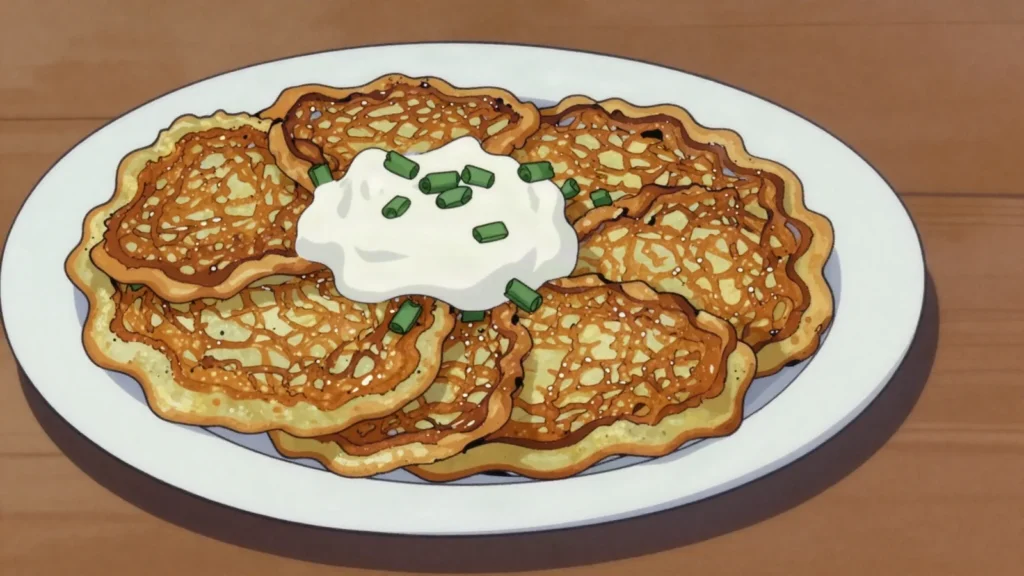
- They are served with sour cream as the everyday savoury version, with sugar as the sweet one, or with a meat goulash ladled over to make a full meal — all three are genuinely Polish.
- Potatoes spread widely in Poland in the late eighteenth century because they yield far more calories per acre and tolerate cool damp conditions, and they changed rural cooking within decades.
History
Fried potato pancakes, made from grated raw potato mixed with egg, flour and onion, documented across Polish home cooking for generations, with potato itself only becoming a widely established Polish staple crop after its introduction from South America in the 1500s and 1600s, meaning placki ziemniaczane in their now-standard form are a comparatively more recent addition to a much older tradition of savory fried grain and vegetable cakes found across the region. They are traditionally served with sour cream, sugar or a savory goulash-style sauce depending on regional and family preference, with genuine, long-running disagreement among Poles over whether a proper placek should be sweet or savory. They remain an extremely common everyday Polish comfort food, both homemade and sold at casual eateries.
Frequently asked questions
What is Placki ziemniaczane?
Placki ziemniaczane is a main from Poland: fried potato pancakes with sour cream or goulash sauce. Fried potato pancakes, made from grated raw potato mixed with egg, flour and onion, documented across Polish home cooking for generations, with potato itself only becoming a widely established Polish staple crop after its introduction from South America in the 1500s and 1600s, meaning placki ziemniaczane in their now-standard form are a comparatively more recent addition to a much older tradition of savory fried grain and vegetable cakes found across the region. They are traditionally served with sour cream, sugar or a savory goulash-style sauce depending on regional and family preference, with genuine, long-running disagreement among Poles over whether a proper placek should be sweet or savory. They remain an extremely common everyday Polish comfort food, both homemade and sold at casual eateries.
How long does Placki ziemniaczane take to make?
Placki ziemniaczane takes 25 minutes of preparation and 30 minutes of cooking. The recipe makes about 16 pancakes. It is rated easy to make.
What can I substitute in Placki ziemniaczane?
Yes, within limits. Semolina stands in for the flour as a binder; use only about three tablespoons to a kilo of potato, since too much makes them heavy and stodgy. A little lemon juice also slows the browning, though it changes the flavour slightly and the onion route is more traditional.
What is the most important thing to get right in Placki ziemniaczane?
Work quickly once you start grating. Add the grated onion straight away. That water must be dealt with. Keep the starch and stir it back in. Let the grated potato sit ten minutes. Pour off the clear liquid carefully. Grate the potato finely rather than coarsely. Fine grated pancakes are smooth and dense.