
Ingredients
The dough
- 500 gplain flour
- or strong white flour
- 7 gsachet fast-action dried yeast
- 1 tablespoonsugar
- 1 teaspoonsalt
- 250 mlwarm milk
- 1egg
- 60 gbutter, melted
- or 4 tablespoons oil
The meat filling
- 400 gminced pork
- or beef, or a mixture
- 2onions, finely chopped
- 1 tablespoonbutter
- 1 teaspoonsalt
- 1 teaspoonblack pepper
- half a teaspoon marjoram
- optional
- 2hard-boiled eggs, chopped
- optional
The cabbage filling
- 600 gwhite cabbage
- shredded finely
- 1onion, finely chopped
- 2 tablespoonsbutter
- 1 teaspooncaraway seeds
- optional
- salt and pepper
- 2hard-boiled eggs, chopped
- optional
The carrot filling
- 600 gcarrots, grated
- 1onion, finely chopped
- 2 tablespoonsbutter
- salt and pepper
- a pinch of sugar
To glaze
- 1egg, beaten
- with a splash of milk
Directions
- Warm the milk until just warm. It must not be hot at any point. Heat kills yeast. Put the flour in a large bowl. Add the yeast and sugar to one side. Add the salt to the opposite side. Now add the wet. Add the warm milk, egg and melted butter. Mix into a rough dough.
- Knead it for about ten minutes. It should become smooth and elastic. Butter and egg slow gluten development. So enriched dough needs longer kneading. Cover it and leave it somewhere warm. Give it about an hour. Make them while the dough rises. The filling must be cold and dry. Warm filling makes the dough soft and unworkable. Wet filling makes the base soggy.
- Cook the onions in butter until soft. Give them about eight minutes. Add the mince. Break it up thoroughly. Fry it until it browns. Mince releases liquid and then browns. Keep cooking until the liquid has gone. Season it well with salt and pepper. Use more pepper than feels right.
- Add marjoram if you like. Taste it and push it further. Shred the cabbage finely. Cook the onion in butter. Add the cabbage. Cook it slowly for about twenty minutes. It should soften completely and sweeten. Keep cooking until the pan looks dry. Grate the carrots coarsely.
- Cook the onion in butter. Add the carrot. Cook it for about fifteen minutes. It should soften and sweeten. Add a pinch of sugar and season it. Cook it until the pan is dry. Spread them on a tray.
- Cool them completely. Refrigerate them if you have time. Divide it into twenty pieces. Roll each into a ball. Flatten each into a disc. Roll it to about eight centimetres. Put a spoonful of filling in the centre. Leave a clear border. Do not overfill them. Bring the edges up over the filling. Pinch them together firmly.
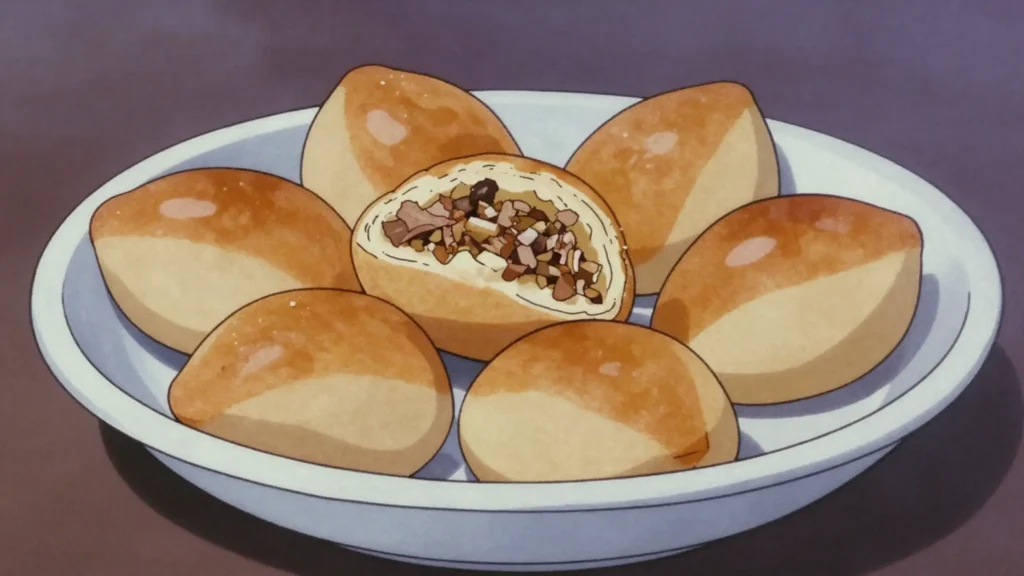
- Pinch along the whole seam. The seal must be complete. Check each one before it goes on the tray. Lay them seam side down on a lined tray. Shape them into a boat or a torpedo. Press the ends slightly. Cover them and leave them thirty minutes. They should look visibly puffed.
- Brush them with beaten egg and milk. Egg glaze gives a deep golden shine. Brush them just before baking. Bake at two hundred degrees. Give them about twenty minutes. Cool them on a rack. They are best warm rather than hot. Serve them warm or at room temperature. They keep two days in an airtight tin. Freeze them cooked and cooled. Give them fifteen minutes.
Technique
- The filling must be completely cold and dry before it goes in. Warm filling makes the dough unworkable and starts cooking it from inside; wet filling makes the base soggy and bursts the buns in the oven. That is the commonest failure with any filled bun.
- Cook cabbage and carrot fillings until the pan looks genuinely dry. Both release a great deal of water.
- Season the filling strongly and taste it. The dough is plain and slightly sweet and dilutes it considerably — Estonian pirukad are notably peppery.
- Do not overfill. A tablespoon per bun; overfilled ones burst.
- Pinch the whole seam closed and check each bun before it goes on the tray. Any gap lets filling escape and burn onto the sheet.
- Lay them seam side down. The weight of the bun holds it closed, and seam side up they open in the oven.
- Give them a second rise of thirty minutes after shaping. Skipping it makes them dense, and it costs nothing.
- Brush with egg glaze just before baking. Without it they bake pale and matt.
- Knead the enriched dough a full ten minutes. Butter and egg slow gluten development, so it needs longer than a plain dough — and it stays softer and stickier, so resist adding much extra flour.
- Give the dough the full hour to rise. Sugar and fat both slow the yeast, and raising the temperature instead makes it taste of raw yeast.
- Cool them on a rack, not a solid surface, where the base steams and goes soggy. Give them ten minutes before eating — very hot filling burns the mouth.
- A slightly sweet dough around a savoury filling is normal across Baltic and Slavic baking and surprises cooks from other traditions.
- Caraway is not cumin, though the names are confused in several languages. Its earthy anise note is what belongs in the cabbage filling.
Substitutions
- Beef, pork or a mixture all serve for the meat filling.
- Chopped hard-boiled egg is added to the meat or cabbage filling in many households.
- Oil replaces butter in the dough for a dairy-free version, though milk and egg remain.
- Water replaces milk for a plainer dough.
- Mushroom, sauerkraut or minced liver make other traditional fillings.
- Frying rather than baking gives the Russian pirozhki treatment.
Variations
- Kapsapirukad, the cabbage version, is one of the commonest.
- Lihapirukad, with meat, is the other standard.
- Porgandipirukad uses carrot and is often made for children.
- Pirozhki in Russia are frequently deep-fried rather than baked.
- Karjalanpiirakka in Finland is a quite different open rye pastry.
- A large single pirukas, baked as one long loaf and sliced, is made for gatherings.
Frequently asked questions
What is Pirukad?
Pirukad is a snack from Estonia: little baked buns filled with meat, cabbage, or carrot.
How long does Pirukad take to make?
Pirukad takes 40 minutes plus 1 hour 30 minutes rising of preparation and 25 minutes of cooking. The recipe makes makes about 20. It is rated medium to make.
What can I substitute in Pirukad?
Yes, within limits. Beef, pork or a mixture all serve for the meat filling. Chopped hard-boiled egg is added to the meat or cabbage filling in many households. Oil replaces butter in the dough for a dairy-free version, though milk and egg remain. Water replaces milk for a plainer dough. Mushroom, sauerkraut or minced liver make other traditional fillings. Frying rather than baking gives the Russian pirozhki treatment.
What is the most important thing to get right in Pirukad?
Warm the milk until just warm. It must not be hot at any point. Heat kills yeast. Put the flour in a large bowl. Add the yeast and sugar to one side. Add the salt to the opposite side. Now add the wet. Add the warm milk, egg and melted butter. Mix into a rough dough.