
Ingredients
The pastry
- 2 sheetsshortcrust or puff pastry
- for a lined tin and a lid
- or 500 g flour, 250 g butter,
- 1egg and cold water
The filling
- 1.5 kgchard or spinach
- stems removed, washed
- 2onions, chopped
- 3 tablespoonsolive oil
- 200 gricotta or fresh cheese
- 100 ggrated hard cheese
- 2eggs, beaten
- grated nutmeg
- salt and black pepper
The whole eggs
- 6eggs
- to nest whole in the filling
To finish
- 1egg, beaten
- to glaze
Directions
- Drain them thoroughly afterwards. The Genoese original uses many thin layers. Wash all of the chard thoroughly. Wash them in a large bowl of water. Lift them out and let grit settle. Repeat until no grit at all remains.
- Strip the leaves from the thick stems. Chard stems are thick and watery. Remove them for this filling entirely. Put the leaves in a large pot. Cook them with just the water clinging. The washing water alone is enough. Tip them all into a large colander. Let them drain and cool right down. They must be cool enough to handle.
- Let them sit until they finally are. Take handfuls and squeeze them hard. Squeeze it genuinely hard here. Keep squeezing until little more comes. The squeezed greens should be almost dry. Chop the squeezed greens roughly. Heat the olive oil in a wide pan. Cook the chopped onion for ten minutes. The onion should soften right down.
- Mix the greens and onion in a bowl. Add the ricotta and grated cheese. Add all the beaten eggs to them. Season it with nutmeg, salt and pepper. Grate it fresh if you possibly can. Do not confuse the two of them. Taste the filling and adjust the salt. The filling can taste flat otherwise. Line a deep pie tin with pastry. Press it right into the corners.
- Press it in properly all round. Leave an overhang at the edge. Spread the filling into the case. Make hollows in the filling with a spoon. Think about how it will be sliced. Crack one egg into each hollow. Crack each one into a cup first. Season each egg with salt and pepper. The eggs are otherwise unseasoned.
- Season each of the eggs directly. Lay the pastry lid over the top. Lay it gently over all the eggs. Do not press down on them at all. Press the edges together firmly. Trim and then crimp the whole edge. Steam builds up inside the pie. Crimp the edge properly all round.
- Cut a few small slits in the lid. Steam must have somewhere to escape. Cut them in between the whole eggs. Brush the lid with beaten egg. Heat the oven to one hundred and ninety degrees.
- Bake it for about fifty minutes. The filling must set right through. Let it cool for at least twenty minutes. Hot pie collapses as you cut it. Cut it into generous thick wedges. Cut between the eggs rather than through. It keeps three days refrigerated.
Technique
- Chard and spinach hold enormous water and that water ruins the pastry, giving a soggy base that never crisps — the commonest failure. Wilt the leaves in just the water clinging from washing, drain them, cool them enough to handle, then squeeze handfuls genuinely hard until little more comes out. They should end almost dry and hold together in a ball, having shrunk to a fraction of their volume.
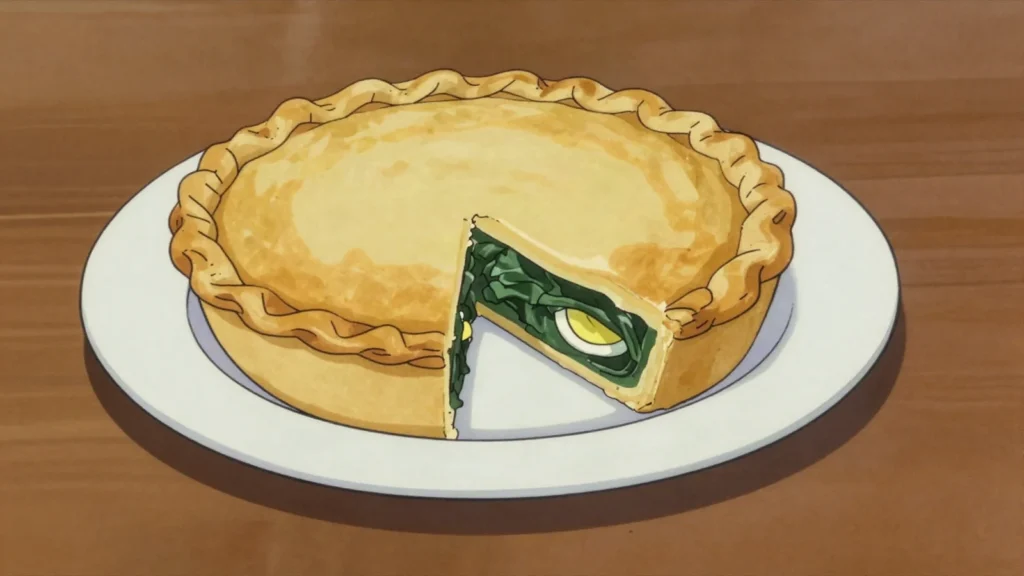
- The whole eggs nested in the filling are the point of the pie: make evenly spaced hollows thinking about how it will be sliced, crack each egg into a cup first and slide it in, and season them directly since they are otherwise unseasoned. Lay the pastry lid gently over them without pressing, since pressing breaks the yolks and loses the whole thing.
- Cut a few slits in the lid between the eggs rather than over a yolk: steam builds inside and without vents the lid lifts and cracks. Crimp the edge properly all round for the same reason.
Substitutions
- Spinach stands in for chard; strip the thick watery stems from chard leaves either way, since they stay firm when the leaf is soft.
- Ready-made shortcrust or puff pastry stands in for home-made; Uruguay generally uses two crusts.
Variations
- The Genoese original is an Easter pie — pasqualina comes from Pasqua — and the whole eggs are an Easter symbol; in Uruguay it became an ordinary year-round home lunch as well.
- The traditional claim of thirty-three thin pastry layers, said to represent the life of Christ, is a folk explanation, and the atlas records it as a claim.
- Cut between the eggs rather than through them so each wedge gets a whole one, and let the pie cool at least twenty minutes first, since hot pie collapses as you cut it.
History
Chard and whole-egg pie from the Genoese torta pasqualina, brought by Italian immigrants and baked for Easter.
Frequently asked questions
What is Pascualina?
Pascualina is a main from Uruguay: spinach and egg double-crust pie, home lunch classic. Chard and whole-egg pie from the Genoese torta pasqualina, brought by Italian immigrants and baked for Easter.
How long does Pascualina take to make?
Pascualina takes 40 minutes of preparation and 50 minutes of cooking. The recipe makes serves 8. It is rated medium to make.
What can I substitute in Pascualina?
Yes, within limits. Spinach stands in for chard; strip the thick watery stems from chard leaves either way, since they stay firm when the leaf is soft. Ready-made shortcrust or puff pastry stands in for home-made; Uruguay generally uses two crusts.
What is the most important thing to get right in Pascualina?
Strip the leaves from the thick stems. Chard stems are thick and watery. Remove them for this filling entirely. Put the leaves in a large pot. Cook them with just the water clinging. The washing water alone is enough. Tip them all into a large colander. Let them drain and cool right down. They must be cool enough to handle.