
Ingredients
Dough
- 1 kgwhite maize flour
- 2 litreswarm water, plus more as needed
- 1 tspsalt
To wrap
- banana or plantain leaves, cut into 25 cm squares and passed briefly over a flame to soften
- kitchen string
Directions
- Mix the maize flour with 1.5 litres of the warm water to a smooth, pourable batter. Cover with a cloth and leave at room temperature for three days, stirring once a day. It will separate, smell sharply sour and grow a layer of clear liquid on top — all of which is the ferment working.
- On the third day pour off the clear liquid. Stir the settled dough, then push it through a sieve into a heavy pan, adding the remaining water to loosen it to the consistency of thin cream.
- Add the salt and cook over medium heat, stirring constantly with a wooden spoon, for 20 to 25 minutes. It will thicken through several stages and finally pull away from the sides of the pan in one mass.
- Keep stirring for five minutes past the point it looks done. Undercooked akassa tastes of raw flour and slumps when wrapped.
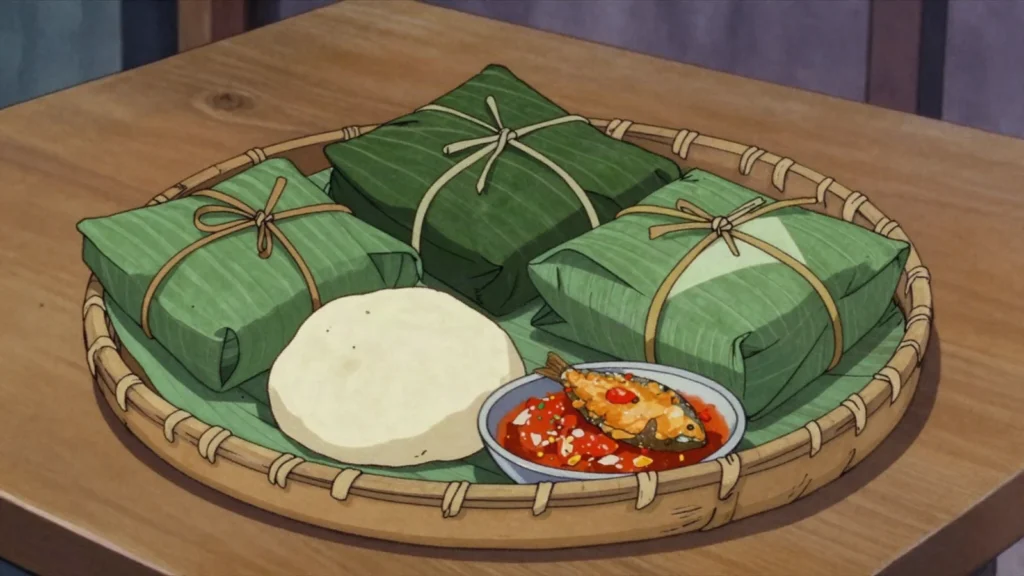
- Wet your hands, take a heaped ladle of the hot dough and place it in the centre of a softened leaf. Fold the leaf over into a parcel and tie it. Work quickly; it stiffens as it cools.
- Stand the parcels upright in a steamer and steam 15 minutes to set them, or leave them to cool and firm on their own if eating the same day.
- Serve at room temperature, unwrapped at the table, under a sauce — a tomato and chilli sauce, a groundnut sauce, or fried fish and pepper.
Technique
- Three days is a guide, not a rule. In a warm kitchen it may be ready in two; the finished batter should smell like sourdough starter, pleasantly sour and yeasty. If it smells putrid or shows fuzzy coloured mould rather than a clean liquid layer, start again.
- Stir with a strong wooden spoon and a firm pan. The dough gets extremely stiff at the end and a thin pan will scorch beneath it.
- Passing the leaves over a flame for a few seconds makes them pliable; unheated, they split as you fold.
Substitutions
- Cornmeal or fine polenta in place of maize flour, though the texture is coarser.
- No leaves: small heatproof bowls or clingfilm-lined ramekins set the dough into the same shape.
Variations
- Akassa is the Beninese and Togolese name; the same fermented maize dough is kenkey in Ghana, wrapped in maize husks, and eko in Nigeria.
- Some cooks reserve a cup of the ferment to start the next batch, which shortens it to a day and gives a more consistent sourness.
History
Steamed balls of fermented maize dough wrapped in leaves, a Fon staple that arrived with maize after sixteenth-century Portuguese contact.
Frequently asked questions
What is Akassa?
Akassa is a main from Benin: tangy fermented corn dough wrapped in leaves, base for sauces. Steamed balls of fermented maize dough wrapped in leaves, a Fon staple that arrived with maize after sixteenth-century Portuguese contact.
How long does Akassa take to make?
Akassa takes 30 min plus 3 days fermenting of preparation and 40 min of cooking. The recipe makes makes 10 parcels. It is rated medium to make.
What can I substitute in Akassa?
Yes, within limits. Cornmeal or fine polenta in place of maize flour, though the texture is coarser. No leaves: small heatproof bowls or clingfilm-lined ramekins set the dough into the same shape.
What is the most important thing to get right in Akassa?
Keep stirring for five minutes past the point it looks done. Undercooked akassa tastes of raw flour and slumps when wrapped.