
Ingredients
Aubergine
- 1.5 kgaubergines
- coarse salt for drawing
- oil for frying
Tomato sauce
- 800 ggood tinned or fresh tomatoes, passed
- 3 clovesgarlic
- 1onion, optional
- 4 tbspolive oil
- a large bunch basil
- salt
Cheese
- 400 gfior di latte or mozzarella, torn and drained
- 150 ggrated Parmigiano Reggiano or pecorino
Sometimes
- 2hard-boiled eggs, sliced
- a little cured ham
To serve
- warm rather than hot, with bread
Directions
- Slice them lengthways about seven or eight millimetres thick. Cut them evenly, since thin slices disintegrate and thick ones stay spongy in the middle.
- Layer the slices in a colander with coarse salt and leave them for at least an hour under a weight. That alone is worth the hour, since an unsalted aubergine will drink an alarming quantity of olive oil.
- Rinse the salt off and press the slices dry between cloths, genuinely dry rather than damp. Fry the slices in hot oil in batches until golden on both sides. Do not crowd the pan, which drops the temperature and makes the slices absorb far more oil.
- Drain them on a rack rather than on paper, so steam does not soften the surface. Now the tomato sauce, which should be simple. Cook the garlic gently in olive oil, add the passed tomatoes and simmer for twenty-five to thirty minutes.
- Cook it until it thickens noticeably and the oil begins to separate at the edges. Season it and tear plenty of basil into it off the heat. Now the mozzarella, which needs draining.
- Tear it into pieces and leave it in a colander for at least half an hour, pressing it lightly. Now assemble, and keep the layers thin. Spread a little sauce in the base of the dish so nothing sticks. Use a thin film of sauce on each layer rather than a generous one, since too much sauce is what makes it sloppy.
- Finish with sauce and grated cheese but no mozzarella on top, which would burn before the middle heats. Now bake it at 180°C for thirty-five to forty-five minutes. Let it stand for at least thirty minutes before cutting, and an hour is better. Serve it with bread and nothing else, since it is a substantial dish on its own.
Technique
- The name’s origin is disputed and it is not from Parma.
- Salting draws out water so the slices absorb far less oil.
- It must rest before cutting or it collapses on the plate.
Substitutions
- Grilled or roasted aubergine slices, for a lighter version.
- Pecorino or caciocavallo in place of Parmigiano, as in the south.
Variations
- With the slices floured and egged before frying, as in Campania.
- With hard-boiled egg and ham layered in, as in some Neapolitan versions.
- Made with courgette instead of aubergine.
History
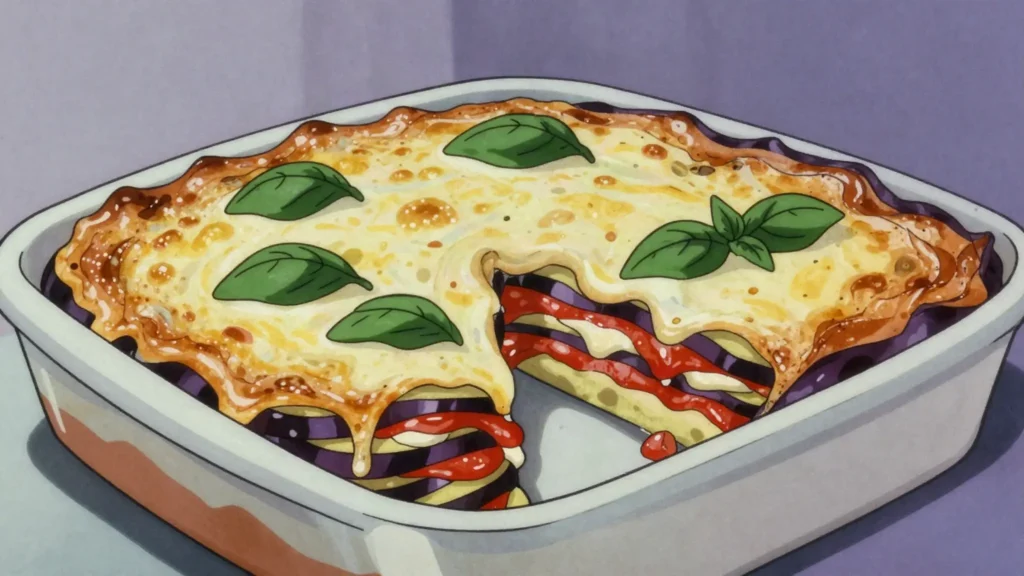
Layers of fried aubergine slices, alternated with tomato sauce, mozzarella and Parmesan cheese, then baked until bubbling, developed in southern Italy, with its specific regional origin genuinely disputed between Campania, Sicily and Emilia-Romagna, each of which claims a role in the dish’s development, and food historians have not fully resolved the question given limited documentary evidence from the relevant period. Its layered structure, closely related in technique to lasagne despite using fried aubergine rather than pasta sheets, reflects a broader southern Italian tradition of baked, layered dishes built around a single vegetable rather than meat or pasta as the primary component. Parmigiana di melanzane remains one of the most beloved and widely prepared dishes across southern Italy.
Frequently asked questions
What is Parmigiana di melanzane?
Parmigiana di melanzane is a main from Italy: fried aubergine baked with tomato, mozzarella, basil. Layers of fried aubergine slices, alternated with tomato sauce, mozzarella and Parmesan cheese, then baked until bubbling, developed in southern Italy, with its specific regional origin genuinely disputed between Campania, Sicily and Emilia-Romagna, each of which claims a role in the dish’s development, and food historians have not fully resolved the question given limited documentary evidence from the relevant period. Its layered structure, closely related in technique to lasagne despite using fried aubergine rather than pasta sheets, reflects a broader southern Italian tradition of baked, layered dishes built around a single vegetable rather than meat or pasta as the primary component. Parmigiana di melanzane remains one of the most beloved and widely prepared dishes across southern Italy.
How long does Parmigiana di melanzane take to make?
Parmigiana di melanzane takes 45 min plus 1 hr salting of preparation and 1 hr of cooking. The recipe makes 6 servings. It is rated medium to make.
What can I substitute in Parmigiana di melanzane?
Yes, within limits. Grilled or roasted aubergine slices, for a lighter version. Pecorino or caciocavallo in place of Parmigiano, as in the south.
What is the most important thing to get right in Parmigiana di melanzane?
Rinse the salt off and press the slices dry between cloths, genuinely dry rather than damp. Fry the slices in hot oil in batches until golden on both sides. Do not crowd the pan, which drops the temperature and makes the slices absorb far more oil.